
HOUSTON — Kevin Durant played 2,840 minutes last season. He is 37 years old, entering his 20th year in the NBA, heading into his second season as the centerpiece of a Houston Rockets team that wants more than another first-round exit. Every responsible basketball conversation about Durant in 2026-27 arrives at the same place: can they protect him from himself?
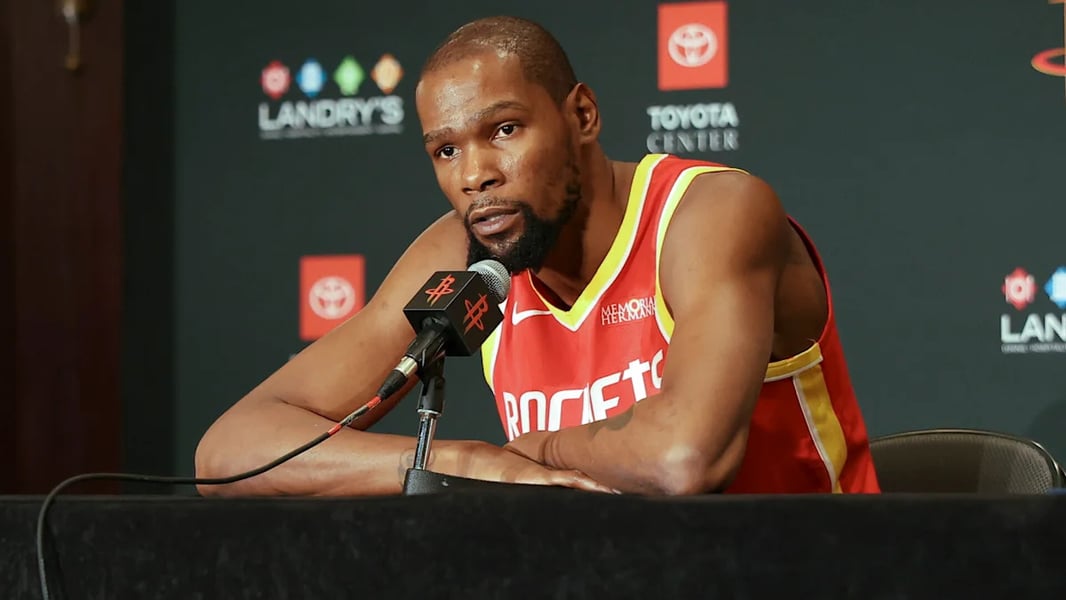
Durant answered the question the way he answers most challenges to his limitations. “I’m better on the court. The team is better when I’m on the court,” he said Tuesday at the Toyota Center, setting up what may become the defining tension of Houston’s season before training camp even opens: the gap between what Durant wants and what Ime Udoka will actually run.
The numbers support the argument he’s making. Last season, Durant ranked second in the entire NBA in total minutes played and third in minutes per game at 36.4. Those are the numbers of a player who has not read the analytics literature on load management so much as spent 19 seasons building a living rebuttal to it.
Houston is betting on that case holding for one more season, at minimum. The Rockets went to the playoffs last spring, lost in the first round to the Los Angeles Lakers, and came out of it believing the gap between where they are and where they want to be is smaller than the result suggested. Head coach Ime Udoka framed the stakes plainly on Tuesday. “We’re not here to just make the first round. We want to make some real noise.”
Three years into his tenure, Udoka has watched this roster grow from precocious to playoff-caliber. Adding Durant last year gave them something the young core didn’t have: a player who had already been to every room in the building and knew which ones mattered.
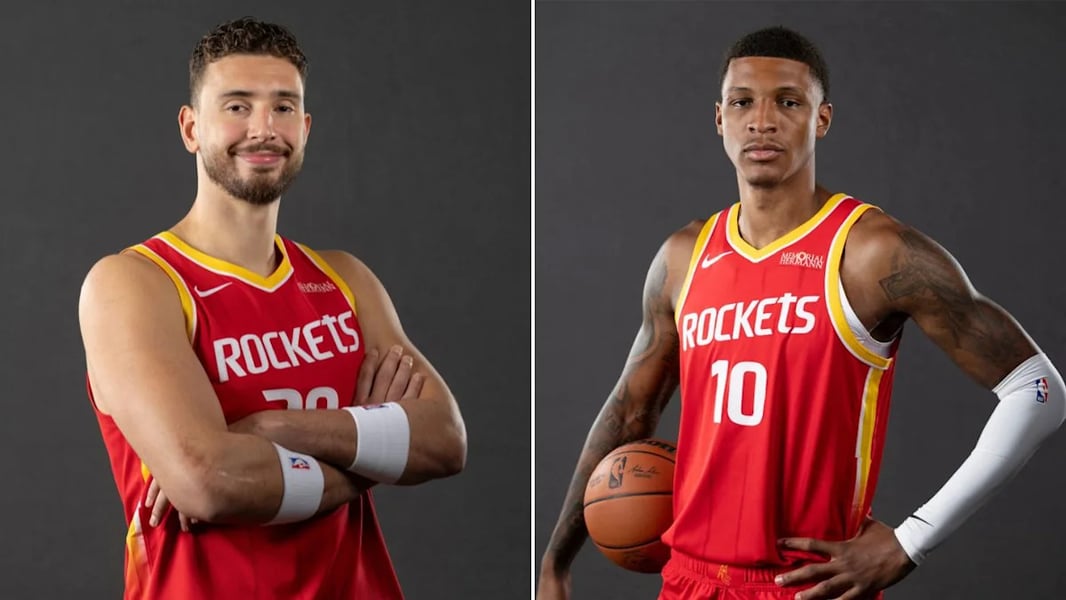
Alperen Sengun said the Lakers series gave the core something no regular season game could replicate. The years he, Amen Thompson, and Jabari Smith Jr. have built together, arriving within two drafts of each other, growing in the same system, are paying compound interest now. Amen Thompson’s $208 million extension confirmed the organization’s belief that the ceiling is real.
Thompson’s own media day was interrupted, briefly, by his 37-year-old teammate. Durant roasted him mid-interview with the casual authority of someone who has won two titles and never fully stopped carrying a chip. “About time you done talking. All you want to do is talk, bro.” The room laughed. The dynamic is the point: Durant is not a visiting star watching the clock. He is shaping how this team moves.
The contract question remained unanswered by design. Durant has a player option for next season and is extension-eligible in Houston. GM Rafael Stone confirmed Tuesday that Durant had told him personally he was happy in the city. When a reporter tried to convert that happiness into a commitment, Durant waved it away. “I’m not thinking about anything like that. I’m enjoying coming into work every day. It’s been fun going through the process with everybody,” he said. “Who knows what’ll happen down the line or in the future.”
That is not a refusal. It is also not a commitment. It is Durant doing what Durant has done for two decades: playing the thing directly in front of him rather than the thing that comes after.
According to Yahoo Sports, Durant’s availability alone, 78 games last season, challenged the narrative that has followed him since his Achilles rupture in 2019. The suggestion that he needs to be protected sits awkwardly against a man who played more minutes than almost everyone in the league.
The Rockets are built to compete at a different level this season. Fred VanVleet is healthy and back. Marcus Smart was signed to add defensive physicality. JJ Redick’s Lakers will be in the Western Conference mix again, and the Rockets want a different result against them.
What Durant will not do is tell Houston he plans to conserve himself. The minutes conversation is settled, as far as he is concerned. The extension conversation is unresolved, by choice.
The Rockets have him for at least one more season, their GM says he is happy, and on Tuesday he said, louder than his contract status, louder than the load management arguments, that the team is better when he is on the court.
Nobody in the building disagreed.