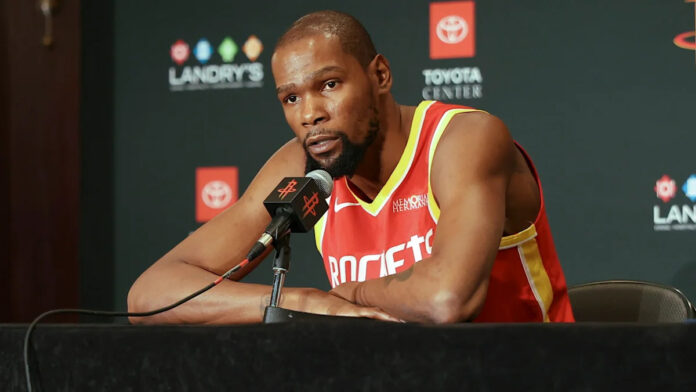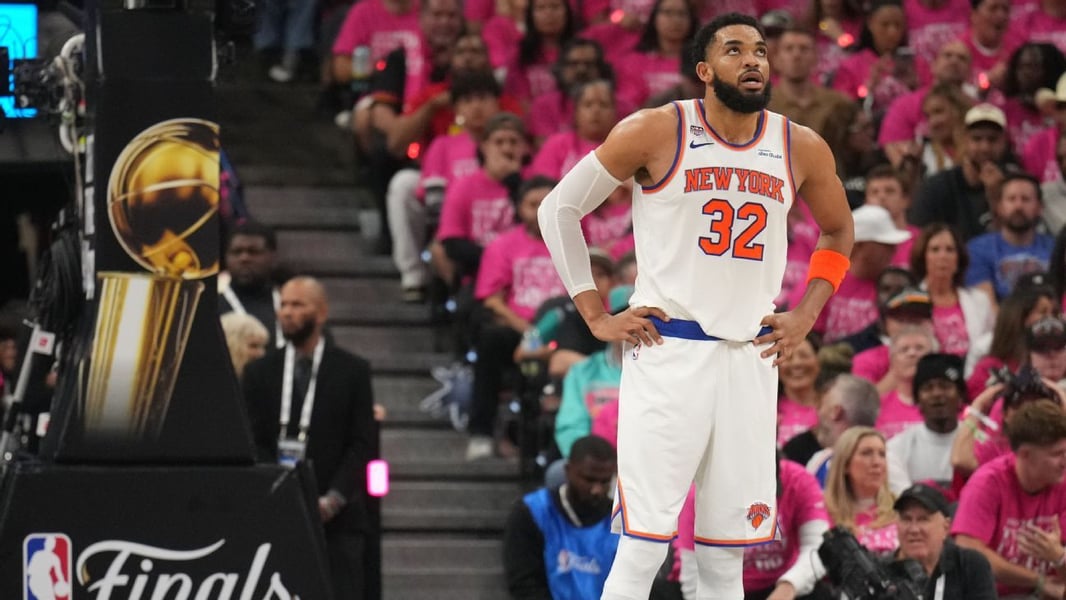

NEW YORK – Karl-Anthony Towns found out the Knicks were putting his contract discussions on hold without the resolution he expected. After Sunday’s practice, the center said the decision was news to him, leaving the defending champions with a dissatisfied cornerstone and no announced date for negotiations to resume.
Towns told reporters, “Very disappointed to say the least. Let’s state the obvious: It’s business, but there is business on the court for us to handle,” according to ESPN’s Vincent Goodwill. His response followed the Knicks’ Friday statement that they would not negotiate extensions until later in the season.
The reported difference between the parties is substantial. ESPN’s Shams Charania reported a four-year offer worth $200 million, while Goodwill wrote that Towns is eligible for an extension worth up to $276 million. That leaves a $76 million gap between the reported offer and maximum eligibility, not a confirmed difference between two publicly disclosed proposals.
Eligibility does not establish what Towns has formally requested. Nor does the pause mean that the New York Knicks have withdrawn their offer, agreed to trade him or decided against an eventual extension. The available report describes a stalemate and a delay, with the next stage of negotiations unresolved.
Towns said, “It was news to me.” That short answer adds a communication problem to the financial one. The organization framed its decision as a way to concentrate on basketball, but one of its most important players publicly expressed surprise at the timing and disappointment with the result.
The Knicks said in their statement, “As an organization, our entire focus is preparing for the upcoming season and delivering another year for our fans to be proud of.” They then said they would not negotiate extensions until later in the season and would focus solely on preparations for its start.
Those two positions are not necessarily incompatible. A player can keep working toward another championship while objecting to how his next contract is being handled. Towns did not promise to withhold his services or abandon the team’s ambitions; he repeatedly returned to the task of keeping the trophy in New York.
Owner James Dolan has said he will not let the team move into the second salary-cap apron, ESPN reported. That payroll boundary is central to the story because the Knicks are negotiating within a spending position their owner has already declared, rather than discussing Towns’ value without regard to the rest of the roster.
The consequences have already reached the center rotation. ESPN identified avoiding the second apron as a factor in losing Mitchell Robinson to Boston this summer at a salary starting at $15 million. New York replaced him with Andre Drummond on a league-minimum deal worth $2.4 million.
That comparison should not be mistaken for a complete account of the Knicks’ cap position. The ESPN story does not provide a full payroll model showing how every possible Towns extension would interact with other contracts. It does, however, connect Dolan’s stated limit with a concrete roster change, giving the policy a consequence beyond negotiation language.
Andre Drummond fills a basketball need at a lower cost. Towns’ situation is different: the club is discussing the future of a player who helped deliver its first championship in 53 years, not simply choosing a replacement for a reserve.
Towns made his sixth All-Star team last season and averaged 15.9 points, 10.6 rebounds and 4.9 assists in the playoffs, according to ESPN. Those figures establish his contribution to the title run. They do not by themselves settle an appropriate contract price or show how either side has valued the years ahead.
The pause also reaches beyond him. Josh Hart is eligible for an extension and has a team option for next season, while reserves Miles McBride and Tyler Kolek are eligible for new deals. The Knicks’ statement covered extension discussions generally, rather than announcing a restriction directed only at Towns.
For Towns, the timing brings a separate decision closer. He has a player option for next season worth $61 million. ESPN reported that if the parties return to extension negotiations during the season, he would have to decline that option. He said he had not thought that far ahead.
Towns explained, “Because I never thought we would get to that point.” His answer leaves the option decision open. The $61 million is a reported option for one season, while the $200 million offer covers four years; presenting the two as interchangeable measures would obscure the choice rather than explain it.
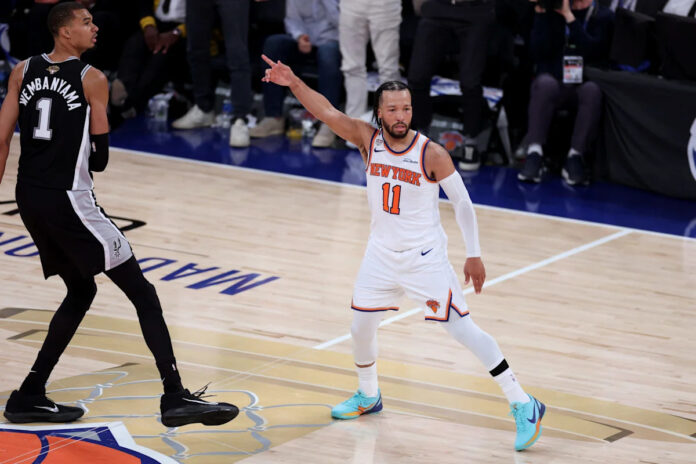
New York’s preparations have already included Jalen Brunson entering camp following his wrist recovery. The contract question now accompanies that basketball work without a timetable specific enough to tell players when the business conversations will return.
Towns said, “We’re all humans,” before explaining that his focus since winning had been on repeating. His disappointment was explicit, but so was his stated objective: keeping the championship in New York beyond one summer. The Knicks have postponed the negotiation. They have not answered when the gap will close.