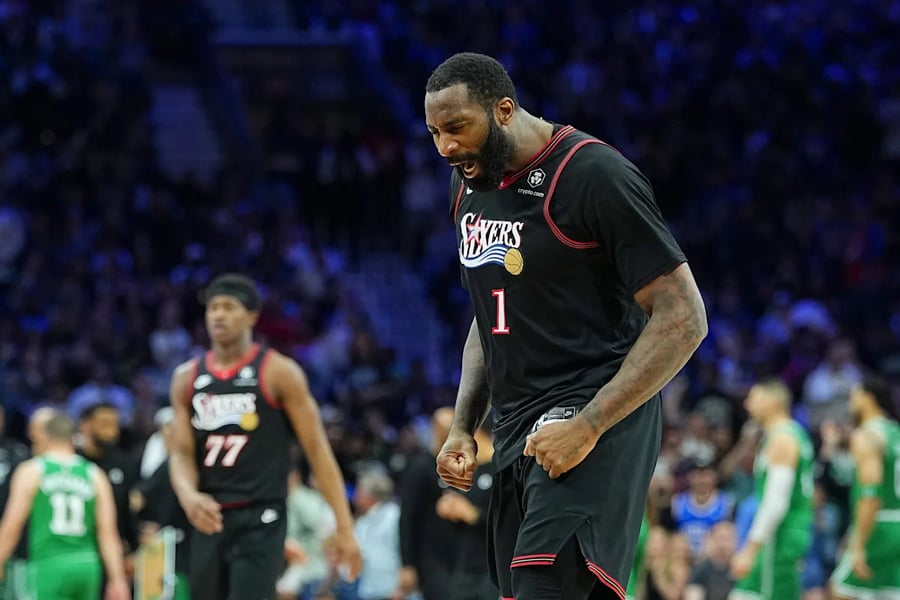

NEW YORK — The summer the New York Knicks spent defending their first championship in 52 years was supposed to be simpler than this.
Mitchell Robinson left in free agency. Trade talks with the New Orleans Pelicans heated up and then went quiet. Karl-Anthony Towns’ extension conversation ran through the same constrained pool of dollars as everything else on the roster. For two months, the team that went 15-1 through the playoffs and held the trophy had exactly one unresolved question. It was, unfortunately, the one that mattered most: center.
Andre Drummond has answered it.
The veteran center, 32, agreed to a one-year, $3.9 million deal with New York, ending the most consequential open roster question for any defending champion entering the 2026-27 season. Drummond arrives with 13 NBA seasons behind him and a skill set that fits the specific shape of a team that does not need to be rebuilt, only completed. He has led the league in rebounding seven times. His career average sits close to 13 boards per game. He has blocked shots and absorbed contact in the paint for franchises that ranged from lottery dwellers to playoff entrants, and what he has rarely been is the center of attention. That is precisely what makes him useful here.
The Knicks do not need Drummond to be their franchise center. They have Karl-Anthony Towns for that. What they need, entering a title defense against a conference that upgraded substantially this summer, is a physical presence who does not require touches to justify his minutes and who can withstand the punishment of a second unit that must now hold ground without the 6-11 wall Robinson provided.
The front office spent July in active discussions with New Orleans, pursuing a center trade that would have cost the draft capital the organization spent three years protecting. New Orleans was asking for picks. New York said no. That decision looks cleaner now than it did in July, when the alternative was not yet clear and the pressure to upgrade before training camp was real and mounting.
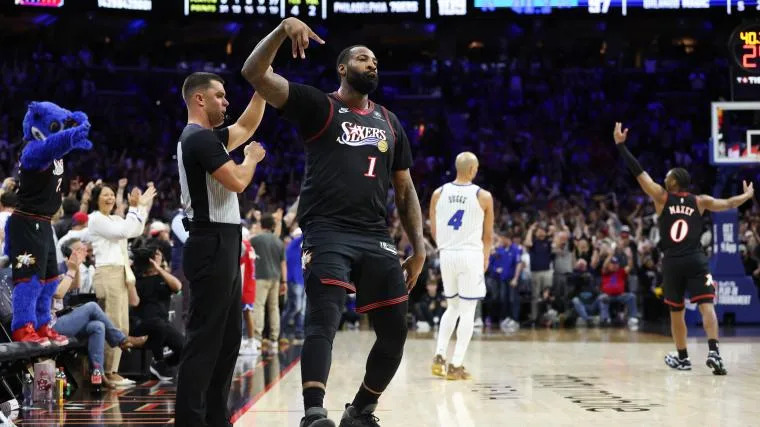
His offensive rebounding rate ranks among the best at his position in recent seasons. He contributes in the pick-and-roll, functions within a drop coverage scheme, and gives the Knicks a body capable of 20 productive minutes per game without demanding the ball. He is not Mitchell Robinson — Robinson was younger, more mobile, and capable of the switching versatility that modern playoff basketball increasingly demands. But Drummond is not being asked to be Robinson. He is being asked to be enough.
The Eastern Conference he is entering is not the one Robinson played in last spring. LeBron James and the 76ers open the season at Madison Square Garden on October 20, the same night New York raises its championship banner for the first time in franchise history. Giannis Antetokounmpo is in Miami now, playing alongside Bam Adebayo for an organization with a two-time MVP and the most experienced playoff mind in the East. According to CBS Sports’ preseason power rankings, New York still sits in the top tier of the conference — but the gap separating them from the second group has narrowed considerably.
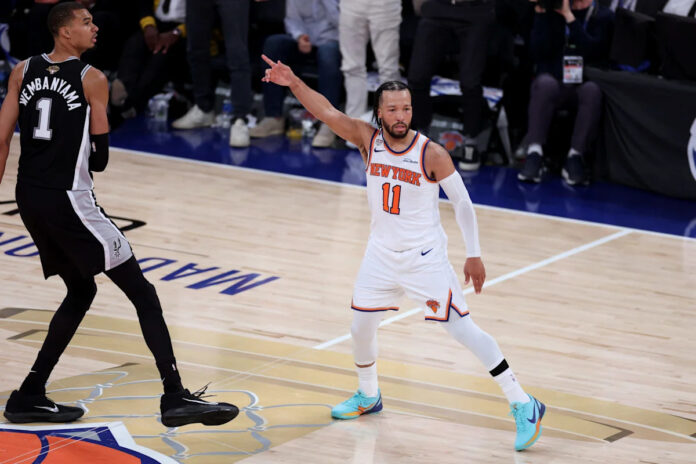
Jalen Brunson spent the summer refusing every coronation the city tried to place on him — the posture of a player who understands that defending a title is more complicated than chasing one. The roster around him is almost entirely intact: Josh Hart, Miles McBride, OG Anunoby, Towns. What it lacked was a reliable center body behind Towns through an 82-game season. Drummond resolves that gap for one year.
What Drummond cannot provide is certainty. A one-year deal buys time more than it builds anything. If he holds up over 70 games, delivers the defensive rebounding and paint presence that allows Towns to function as the floor-spacing, shot-creating center the offense requires, and contributes without demanding touches, the Knicks will be glad they declined New Orleans’ asking price. If the rotation breaks down — if Drummond’s body does not hold, if the two-man center split proves fragile in April — the question that was quietly resolved in September will look loudly different in February.
For now, the Knicks have an answer. The center gap that defined their offseason, the void Robinson’s departure created and the Pelicans trade talks never quite closed, has a name attached to it. One year, $3.9 million, and the understanding that this team’s window is real.
For a franchise that waited 52 years to ask questions like this, that seems like a fair place to start.