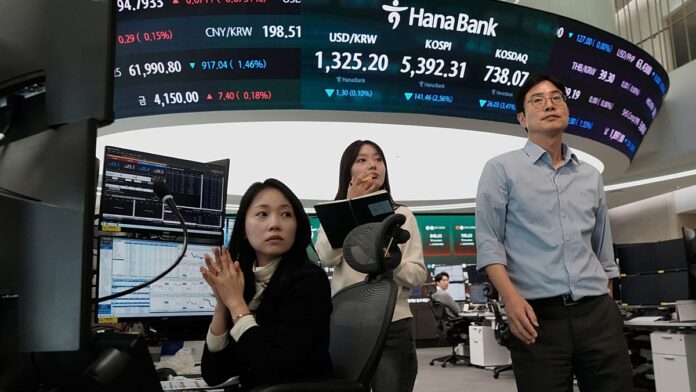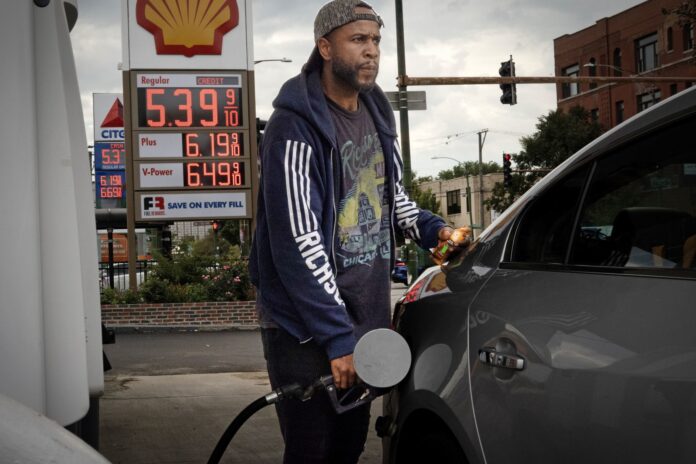

NEW YORK — The last time Kevin Warsh moved the gold market, he had not yet started the job. His nomination alone was enough to knock as much as ten percent off bullion in a single Monday session and take silver down sixteen, after a Friday that produced the largest intraday fall on record for the white metal. Traders read the appointment of an inflation hawk exactly as the textbook says they should, and they sold.
Six months on, three days before Warsh stands up at Jackson Hole to give his first keynote as chairman, gold is at a fifteen-week high.
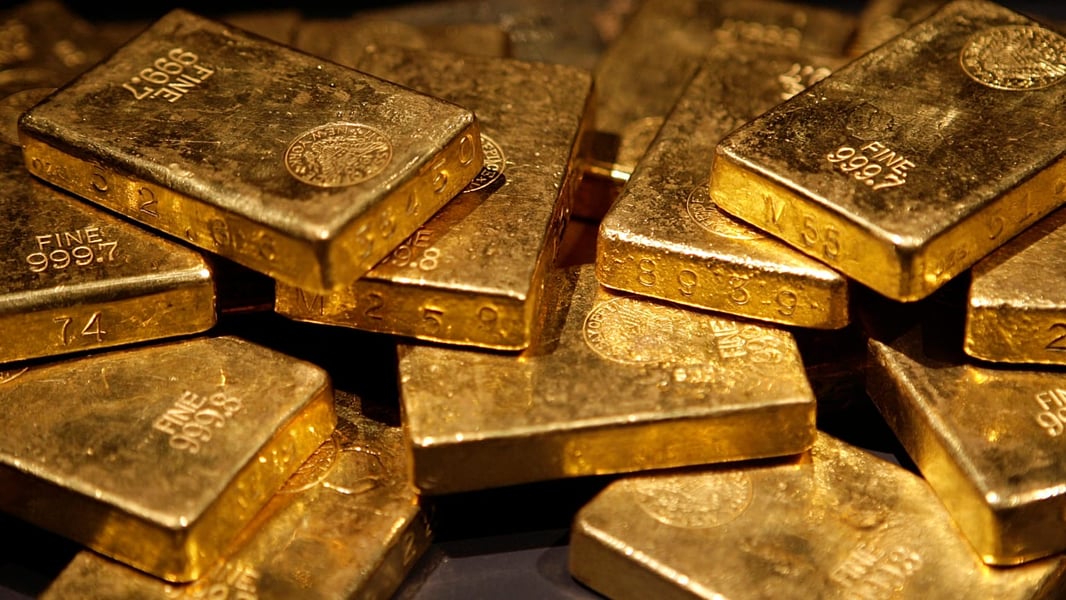
Spot settled Monday around $4,641.80 an ounce, up close to nine tenths of a percent, with an intraday peak just under $4,660. COMEX futures did better, closing at $4,701.70 and clearing $4,700 for the first time since March. The metal has added roughly fourteen percent since the start of August. It is doing this while the live question in Washington is not whether the Federal Reserve will cut, but whether it will raise.
That is the part worth sitting with. Gold pays no coupon. Every basis point of yield available elsewhere is a reason not to own it, which is why a hawkish Fed chair is supposed to be gold’s problem rather than its fuel. Michael Widmer at Bank of America has put a number on the drag, telling Euronews the shift from what he called inflationary cuts toward tighter policy cuts gold’s upside by about half, all else equal. In June, when that argument was published, it was winning. Gold had fallen to around $3,942, some thirty percent below its January record.
What changed between June and now is not the Fed. It is the Treasury. The national debt crossed $40 trillion on August 18. The following day the Treasury said it would at least double its long-dated buyback operations, and by the end of that week gold had put on five percent. Eastern Herald reported on Sunday that the bond market erased the buyback rally inside twenty-four hours while gold kept every dollar of it. That divergence has now run for a second week.
So the market is not waiting on Friday to learn what gold is worth. It has already decided that the chairman is no longer the variable.
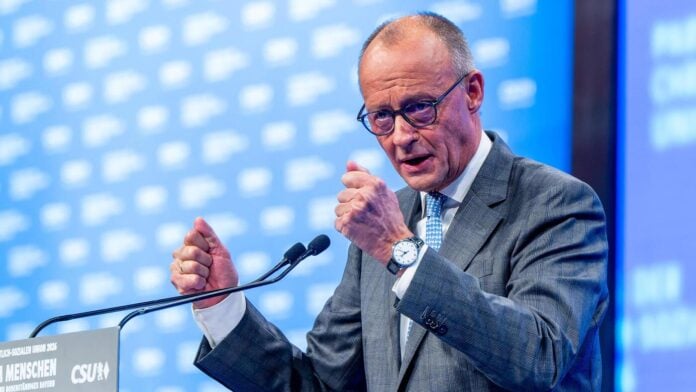
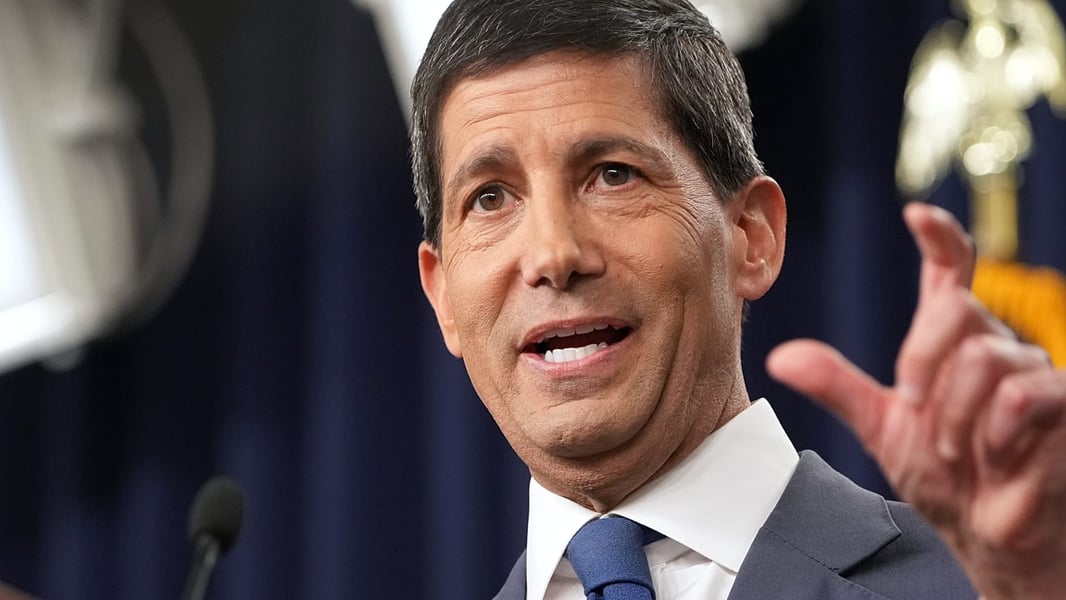
Warsh has spent his short tenure making himself as loud as a central banker can be. He was confirmed on May 22 by 54 votes to 45, the narrowest margin in the history of the office. He has promised a monetary regime change, framed above-target inflation as a policy failure rather than an accident, and reportedly told markets that inflation is a choice. At his July 29 meeting the committee held the target range at 3.50 to 3.75 percent for a fifth straight time, but three regional presidents broke ranks and voted to hike: Beth Hammack of Cleveland, Neel Kashkari of Minneapolis and Lorie Logan of Dallas. It was the first three-way dissent since 2016. Warsh’s account of it was almost cheerful. He asked for a good family fight, he told reporters, and he got one.
None of that has stopped the bid.
He is also being leaned on from the other direction. Donald Trump has spent the summer demanding cuts from the chairman he chose, which leaves Warsh needing to prove independence to a bond market that has already priced a fiscal problem and to a White House that would rather he did not. A chairman fighting on both fronts is a chairman whose forward guidance is worth less, and Warsh has in any case largely stopped giving it. Under him the Fed no longer telegraphs its intentions between meetings, which is exactly why Friday carries information value that a Powell-era speech would not have.
| Date | What happened | Spot gold | From Jan peak |
|---|---|---|---|
| Jan 28–29 | Record high | about $5,600 | n/a |
| Feb 2–3 | Warsh named Fed chair | fell up to 10% in a session | falling |
| Mid-June | Trough | $3,942 | about −30% |
| Aug 18 | US debt tops $40 trillion | n/a | n/a |
| Aug 19 | Treasury doubles long-bond buybacks | n/a | n/a |
| Aug 21 | Week closes up about 5% | $4,600.91 | about −18% |
| Aug 24 | Fifteen-week high | $4,641.80 | about −17% |
| Trackers disagree on the January peak, quoting $5,597.23, $5,598 and $5,602.22 for the same two sessions; “about $5,600” is used here rather than picking one. COMEX futures settled at $4,701.70 on August 24, above spot. Percentages are Eastern Herald calculations from the quoted levels. | |||
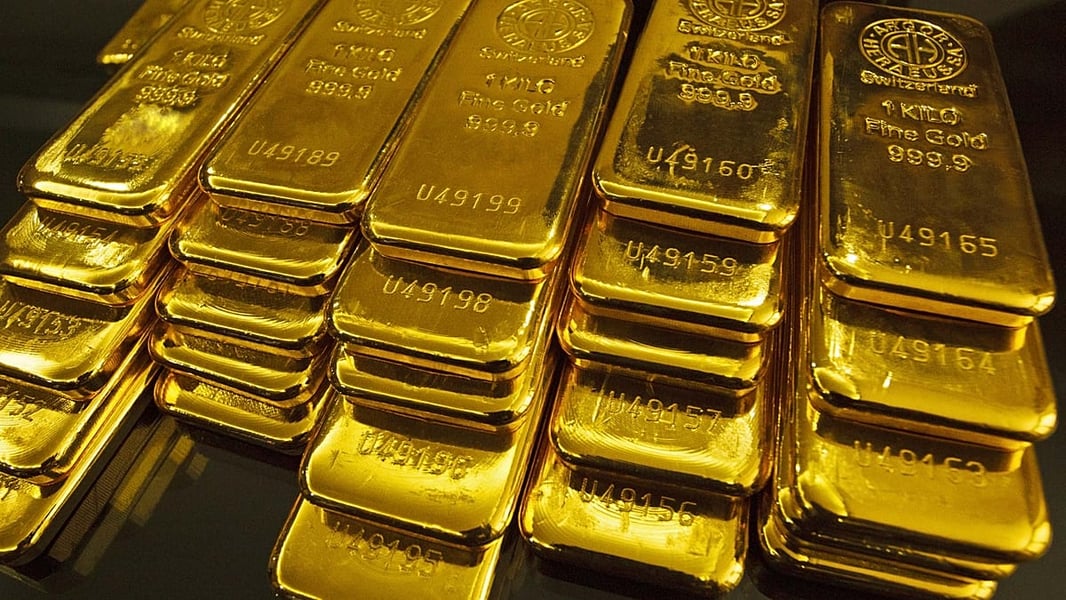
The reason the chairman has lost his grip on this particular market is structural, and it predates him. By the middle of this year gold accounted for roughly 27 percent of global reserve holdings, overtaking US Treasuries as the largest reserve asset in the world. Central banks bought a record 288.9 tonnes in the second quarter alone. Those buyers are not positioning for a quarter-point move in September. They are reallocating away from the paper the Treasury is now having to buy back from the market to keep its own borrowing costs down.
Tim Waterer, chief market analyst at KCM Trade, put Monday’s move down to a softer dollar and to what higher yields are signalling about underlying strains, which is a polite way of saying the same thing. The dollar has been sitting near multi-month lows. Silver held above $69.
There is a real case that this is a positioning trade that unwinds by Friday lunchtime. July inflation came in at 3.4 percent, down from 3.5, with core at 2.5, and Euronews reported that the September hike probability slipped to 42 percent on the print; other trackers have it nearer one in three. The July PCE report, the Fed’s preferred gauge, lands this week alongside the speech. If Warsh is hawkish enough and the data is soft enough, real yields rise and the textbook reasserts itself.
For Indian buyers the arithmetic already arrived. The domestic counter pushed 22-carat above ₹15,000 a gram on Monday, a level it had never held before.
What cannot be established before Friday is whether Warsh intends to address any of this. The symposium’s chosen theme is financial innovation and the future of payments, not fiscal dominance, and roughly 120 officials from more than 70 countries will be in the room for that conversation rather than this one. Warsh has said he wants the speech to frame the big questions rather than relitigate a quarter point. Fund-manager surveys have about seven in ten expecting a neutral tone. If he delivers one, and gold does not flinch, that will say something about who is setting the price of money that no press conference has said yet.