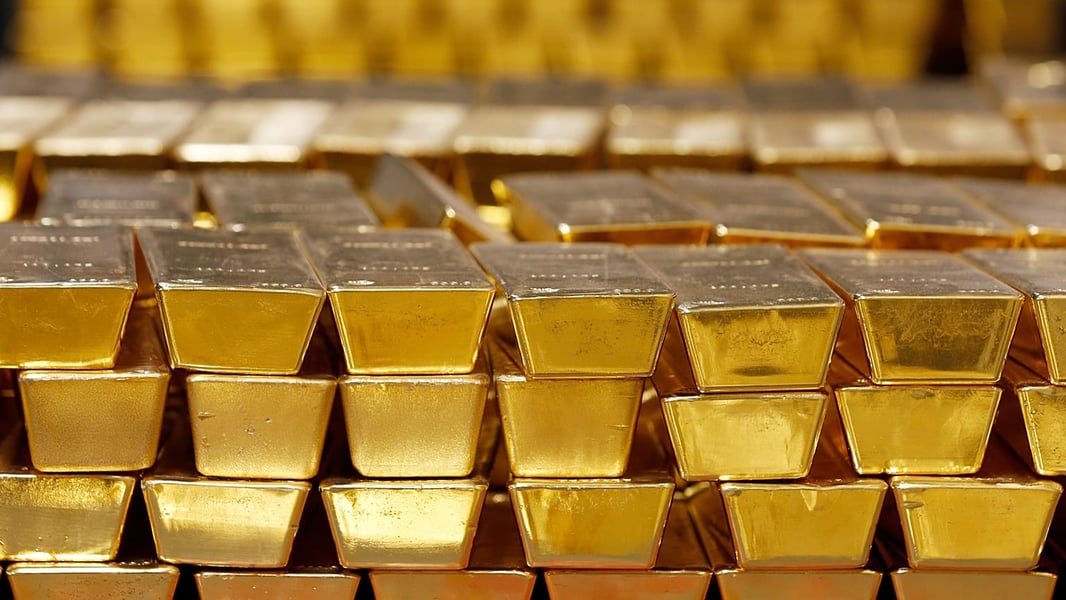

NEW YORK — Scott Bessent’s fix held in the bond market for about twenty-four hours. In gold, it is still holding.
The Treasury secretary announced on Wednesday that the department would at least double the size of its liquidity support buyback operations at the long end of the curve, lifting the ceiling from $2 billion an operation to at least $4 billion across the ten-to-twenty and twenty-to-thirty year sectors. Thirty-year yields fell nine basis points that afternoon, to 5.196 percent, and the ten-year shed six, to 4.647 percent. By Thursday the entire move was gone. By Friday, long yields sat above where they had been before anyone had heard of the plan. Gold gave back nothing. It closed the week at $4,600.91 an ounce, up $81.58 on the day and close to five percent on the week, a third consecutive weekly gain and the highest settlement since the middle of May.
That divergence is the story, and it is a more awkward one for Washington than the price itself. The bond market treated the intervention as a headline and repriced it away inside a session. Bullion treated it as information about what the Treasury is now willing to do when the long end stops cooperating, and kept every dollar of it.
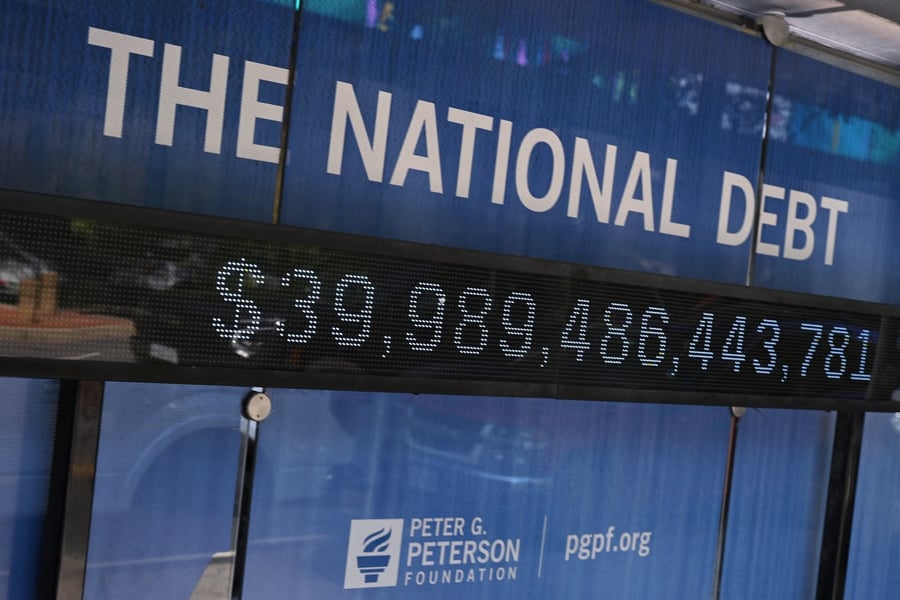
The timing is what gives the move its weight. The buyback landed in the same week the national debt crossed $40 trillion for the first time, hitting $40.05 trillion on Tuesday in the Treasury’s own daily statement, roughly two years ahead of the schedule the Congressional Budget Office had projected and only five months after it passed $39 trillion. Interest on that balance is now the second-largest line in the federal budget, behind Social Security alone. Al Jazeera put the burden at about $117,000 for every person in the country. Margaret Spellings, who runs the Bipartisan Policy Center, told the outlet the debt is already raising the cost of living and choking out other spending.
Treasury did not frame Wednesday’s move as a rescue. The department said in its announcement that the larger operations reflect a desire to provide greater liquidity support in sectors with “consistent strong sponsorship from market participants,” pointing to the volume of high-quality offers it routinely receives. The enlarged operations do not begin until September 9 and run through November 4. Bessent went further the next morning on CNBC, telling Sara Eisen the department would increase the size of the buyback and that it “could be more than the $4 billion per issue,” while insisting current yields “don’t reflect the underlying fundamentals.” Part of it, he conceded, is signalling.
The signal was read, and then rejected. Krishna Guha at Evercore ISI called the intervention a weak form of Operation Twist and warned it risks backfiring; Maia Crook at JPMorgan argued it conceals a structural problem while cutting against the Treasury’s own long-standing pledge of regular and predictable issuance. Euronews reported that ten-year yields had touched 4.75 percent on Tuesday and the thirty-year 5.33 percent, both twenty-year highs, before the announcement briefly pulled them down. Eastern Herald reported in July that the thirty-year had already reached a nineteen-year high, and that the department had quietly bought back $2 billion of long-dated paper that same week. The escalation is a change of scale, not of tactic.

What the gold price is not doing is setting records, and that qualification matters more than most of the coverage has allowed. The metal is up roughly eleven percent in August and only about 3.6 percent for the year. Euronews put the peak at $5,598 an ounce on January 28, after which gold fell to around $3,942 by June, a drawdown of some thirty percent. Silver was worse: $121.65 on January 29, then $54.70 by the middle of July, a collapse of fifty-five percent, and it is now back at $69.87. Different trackers put January’s high anywhere between $5,303 and $5,602, which is itself a warning about how much of this market is quoted rather than cleared. What happened on Friday was a recovery from a crash, not a flight to a new high, and anyone selling $4,600 as vindication of the debt thesis has to account for the six months when the same debt was rising and the price was falling.
The buyer who did not flinch during those six months is the one worth watching. Central banks bought 288.9 tonnes of gold in the second quarter of 2026, a quarterly record and about 62 percent more than the same period a year earlier, and they bought it into a falling market. The World Gold Council’s most recent reserves survey found 89 percent of respondents expecting official gold holdings to rise again over the coming year. That is the floor this rally is building from, and it is a floor made of decisions taken by institutions that do not trade the tape.
The Federal Reserve is the other half of it, and the direction of travel there is frequently misread. Three soft prints in a single week, on jobs, consumer prices and producer prices, cut the odds of a September rate hike from roughly half to about 31 percent on CME’s FedWatch tool. Not a cut. A hike, priced out. A non-yielding asset competes better against a policy rate that has stopped climbing, and the dollar’s slide through the week did the rest of the work for buyers holding anything other than dollars. Saumil Gandhi, senior commodities analyst at HDFC Securities, noted that Friday’s spot price was the strongest since May 18.
For Indian buyers, none of this arrived on the counter. The domestic 24-karat rate has been frozen since Friday at ₹16,309 a gram, because Sunday markets are shut and the board still shows Friday’s close wearing today’s date. The gap between what spot gold did last week and what the retail rate reports will close on Monday, and it will close upward.
What nobody can yet say is which buyer is doing the work at $4,600. The central bank figure is a second-quarter number, two months stale by the time it reached the market that is now leaning on it. Several trackers credited Middle East risk and the continuing disruption around the Strait of Hormuz rather than the debt milestone, and both explanations fit the same chart. And the first enlarged buyback does not run until September 9, which means Bessent’s ceiling is still a promise. Gold spent last week pricing the promise. The operation has not happened yet.