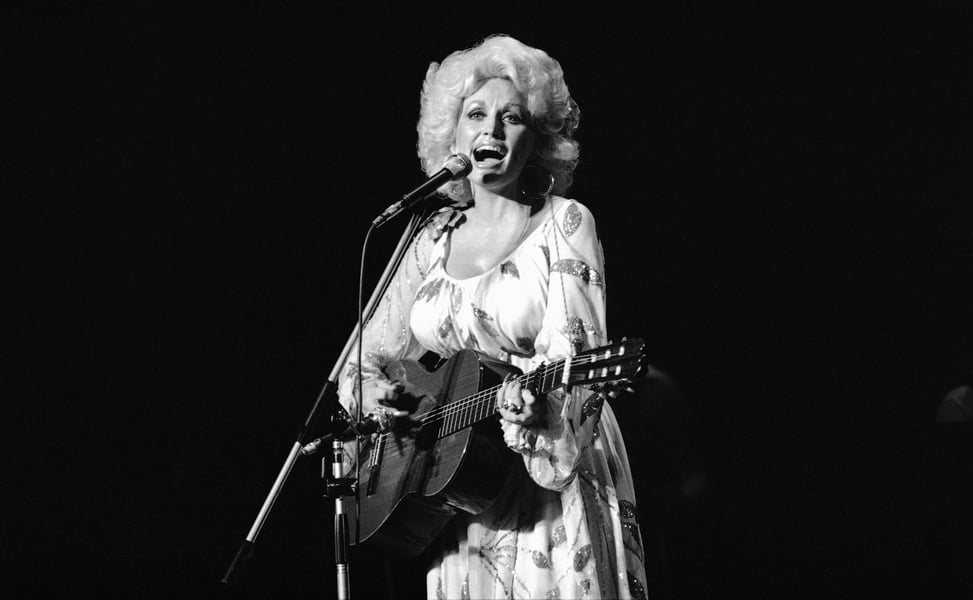

NASHVILLE — For the millions who grew up with her music playing from kitchen radios and car speakers, the news arrived on Tuesday like a door quietly closing on something irreplaceable. Dolly Parton, the Tennessee girl who turned twelve siblings, a grandfather’s backwoods church, and a father who couldn’t read into the most decorated career in country music history, died in Nashville. She was 80.
Her nephew Bryan Seaver confirmed the death. “Dolly has lived in the light, and is in the arms of Jesus, surely met by Carl, her parents, and countless others who have watched her,” Seaver said, referring to her husband Carl Dean, who preceded her in death.
No cause of death was announced. Parton had hinted at health struggles in the months before her death — she cancelled a Caesars Palace residency in Las Vegas in June and made what would prove to be among her final public appearances at the opening of Dolly Parton’s Tennessee travel stop in Cornersville, insisting she would keep going as long as she could stand in her stiletto heels.
The scale of what she leaves behind is not easily contained. Fifty-five Grammy nominations over a career spanning six decades. Ten wins. A place in the Country Music Hall of Fame since 1999. A songwriting body of work that includes “Jolene,” “9 to 5,” and “Coat of Many Colours” — three songs that would each have been enough to define a life in music.
Kyle Young, the chief executive of the Country Music Hall of Fame, did not reach for superlatives. “Dolly Parton’s legacy is not celebrity, but humanity,” Young said. “She came from poverty to become the most important native of Tennessee.”
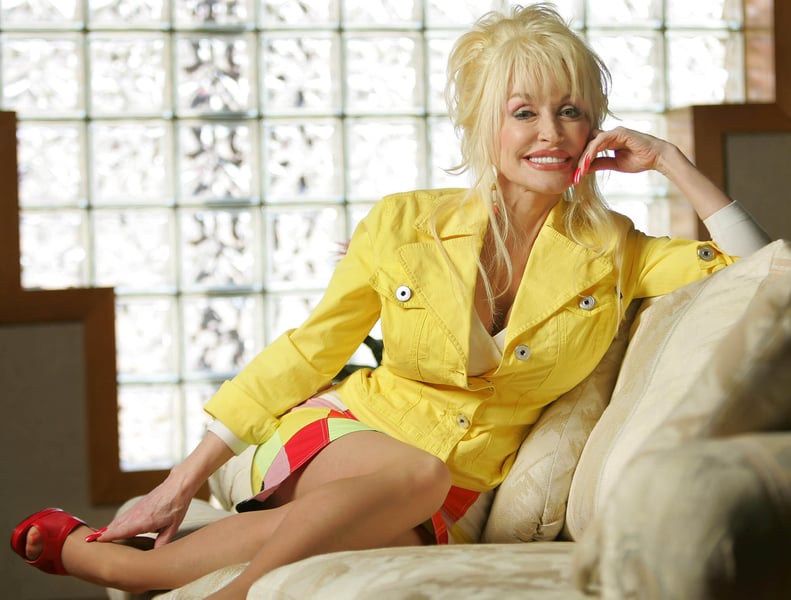
That poverty was not metaphorical. She was one of twelve children raised in a two-room cabin in Locust Ridge, Tennessee. Her father, Robert Lee Parton, had quit school for farm work and never learned to read. Her mother paid the doctor who delivered her with a jug of moonshine. Parton sang in the church where her grandfather preached and performed on local television while still in grade school. She arrived in Nashville the morning after her high school graduation in 1964 and did not look back.
The Imagination Library, the nonprofit she founded in 1995 and ran for three decades, sends free books monthly to children from birth through kindergarten — a monument, she said repeatedly, to what her father did not have. The program distributed more than 200 million books across multiple countries and was expanded to the United Kingdom, Canada, Australia, and other nations after its early success in Tennessee.
Her instinct for melody was extraordinary, but it was the specificity of her songwriting that made her work last. “Jolene” names a woman and describes her with alarming precision — auburn hair, ivory skin, a smile like breathing — and asks her not to take a man, not because the singer is powerful, but because she knows she is not. The vulnerability in the song was not a pose. It was the architecture. She is believed to have written it and “I Will Always Love You” on the same day in 1973.
“9 to 5,” written for the 1980 film in which she starred alongside Jane Fonda and Lily Tomlin, turned workplace resentment into an anthem with a bounce. The film earned Parton two Academy Award nominations — for best original song and best original score — a fact that surprised anyone who had underestimated her, which was a common mistake with a long history of being made repeatedly.
According to Al Jazeera, she was the third-most nominated woman in Grammy history, behind only Beyoncé and Adele. She was inducted into the Rock and Roll Hall of Fame in 2022, over her initial protests that she did not belong there. She relented. The Hall did not regret asking.
She also declined a Rockefeller Foundation proposal to install her statue on the Tennessee State Capitol grounds, saying she did not feel she had earned the honor. The statue went up elsewhere. She had earlier declined the Presidential Medal of Freedom twice when it was offered under conditions that felt to her like a partisan gesture, then accepted it quietly when it was offered differently.
President Donald Trump ordered flags flown at half-staff at the White House and all federal buildings for one week following the news of her death. Whatever the distance between Washington’s politics and Nashville’s particular culture of reverence for its own, there was nothing contested about the gesture.
She first performed at the Grand Ole Opry at 13. She later worked with producer Porter Wagoner for seven years before striking out on her own in 1974, a departure she marked with a song — “I Will Always Love You” — that was addressed to him. Elvis Presley wanted to record it, but his manager demanded half of the publishing. She declined. Whitney Houston recorded it in 1992 and the version became one of the best-selling singles in history. Parton received the publishing royalties.
What remains unresolved, as tributes accumulate from across the industry, is whether another figure will emerge who occupies the same position she held — not simply as a commercial phenomenon, but as a kind of national shorthand for resilience, generosity, and the belief that where you started does not fix where you end up. That case, she did not argue in speeches. She made it in songs and in the books that went to children who might not otherwise have had any.