
WASHINGTON — Sama Safi had planned to spend her junior year studying political science at Birzeit University in the occupied West Bank. She was twenty years old, a United States citizen with a hereditary illness that requires medication she has struggled to access since Israeli security forces detained her in June without filing charges against her.
More than two months into her detention, six United States senators and more than forty members of the House of Representatives sent Secretary of State Marco Rubio a letter demanding he act. They cited conditions her family described: verbal abuse, forced stress positions, exposure to infectious skin disease, and mattresses infested with rats, across multiple detention facilities.
“Use every tool at your disposal to secure the immediate release of Sama Safi,” the lawmakers wrote, “so that she can receive the medical care she urgently needs.”
The letter, led in the House by Representative Rashida Tlaib of Michigan, was signed by Senators Elizabeth Warren, Bernie Sanders, and Chris Van Hollen, among others. It represents one of the more direct congressional interventions in a documented pattern of Israeli military detention of young Palestinian activists — a practice that advocacy groups say has intensified in the West Bank as Israel’s focus on Gaza has drawn international attention away from the territory across the Jordan River.
Safi’s case intersects two politically charged fault lines in Washington. One is the treatment of American citizens by Israeli security forces, an issue the State Department has historically handled with considerable diplomatic deference to Tel Aviv. The other is the broader question of Palestinian prisoners held under administrative detention — an Israeli practice that allows indefinite incarceration without formal charges or trial, operating under a legal framework that Israeli courts have repeatedly upheld and human rights organizations have repeatedly condemned.
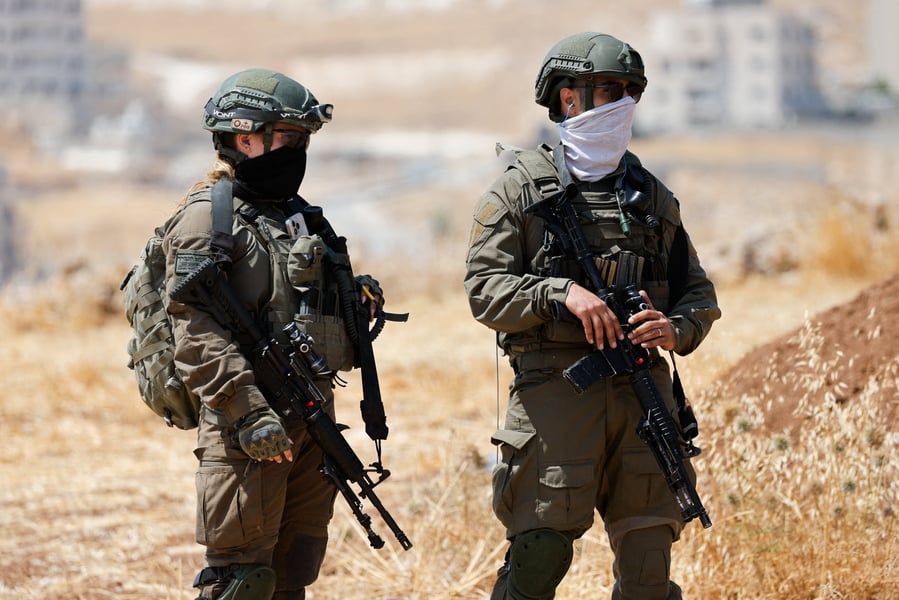
Safi was detained in June during what Israeli authorities described as a crackdown on anti-occupation activism, according to Al Jazeera’s reporting. She was one of four young women taken in the same sweep. No charges have been filed.
The State Department confirmed it is “tracking the situation” and said the Trump administration prioritizes the safety of American citizens abroad. Rubio’s office has not issued a more specific statement. Israel declined to respond to requests for comment.
That silence from Tel Aviv is consistent with how the Israeli military typically handles cases of this kind. Israeli military detention of Palestinian activists and journalists has been documented extensively, but Israeli authorities rarely discuss individual cases publicly, particularly during the early administrative phase.
For the lawmakers who signed the letter, the medical dimension is the sharpest lever. Safi has Familial Mediterranean Fever, a genetic condition characterized by recurring episodes of fever and painful inflammation. The disorder is manageable with medication; without it, the condition can escalate. Her family and legal representatives have said her access to medication has been intermittent and insufficient, and that repeated transfers between facilities have made continuity of treatment impossible.
Van Hollen, who chairs the Senate subcommittee on the Middle East, has been among the more persistent voices in Congress on US citizen welfare in Israeli custody. He has previously raised cases of Palestinian American dual nationals held in similar circumstances. Warren and Sanders bring a different constituency — both have been among the few Senate voices willing to directly criticize Israeli detention practices in terms that go beyond general statements about human rights.
Tlaib’s involvement carries its own political weight. She is the only Palestinian American in Congress, the daughter of Palestinian immigrants, and has faced censure in the House for her language on the Israeli-Palestinian conflict. Her leadership of the letter grounds the demand in lived proximity to the issue rather than distant policy analysis.
Whether Rubio acts is the unanswered question. The Trump administration has been broadly supportive of Israeli military operations and has resisted conditioning any element of the US-Israel relationship on human rights compliance. Rubio’s approach to detained American citizens in adversarial states has been aggressive — witness his record on Venezuela and Russia — but Israel occupies a different category in the administration’s political geography.
The lawmakers’ letter does not propose specific consequences if Rubio fails to act. It does not threaten holds on arms transfers, conditions on aid, or formal diplomatic escalation. It asks, with urgency, that existing tools be used. What those tools are, who would deploy them, and how quickly remain undefined.
What is defined, at least in the letter, is the threshold the signatories consider unacceptable: a US citizen, held without charge, denied adequate medical care, enduring conditions described as abusive, for more than two months. Whether the administration agrees that threshold has been crossed is something Rubio has not yet answered publicly.
Safi’s family, speaking through representatives, said they were grateful for congressional attention but increasingly frightened by what they described as deteriorating conditions. They said the most important thing they did not know was how much longer the detention might continue.