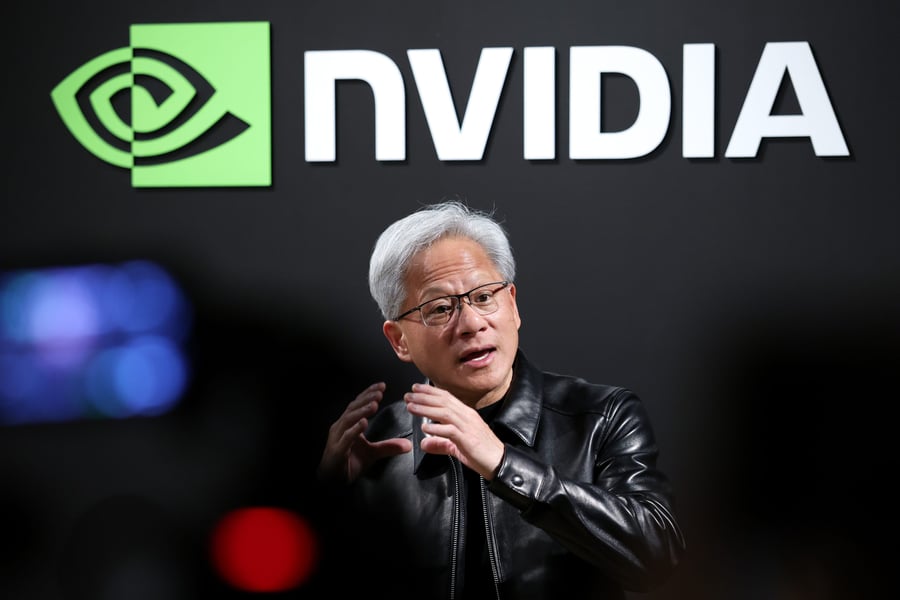

NEW YORK — Nasdaq 100 futures steadied in pre-market trading on Wednesday morning, with E-mini Nasdaq 100 (NQ) contracts hovering near 21,490 — fractionally above Tuesday’s cash session close of 21,483 — as the market settled into the posture of a waiting room. The event everyone is waiting for: NVIDIA’s fiscal second-quarter 2027 earnings release after Wednesday’s regular session close.
| Nasdaq Futures Snapshot — August 26, 2026 | |
|---|---|
| E-Mini NQ (Sep 2026) Last Trade | 21,492 |
| Nasdaq 100 Cash Close (Tue) | 21,483 |
| E-Mini Volume vs 90-Day Avg | +22% |
| VXN (Nasdaq Volatility Index) | 18.4 (highest since late June) |
| DXY (Dollar Index) | 101.2 |
| WTI Crude Oil | $74.40/barrel |
| NVIDIA Q2 Revenue Consensus | $92.2 billion |
| NVIDIA Q2 Revenue Whisper | ~$94 billion |
Futures markets operate around the clock, allowing traders to position for events while the stock exchange is closed. The E-mini Nasdaq 100, the most actively traded Nasdaq futures contract, is the primary instrument professional investors use to hedge portfolio risk or express directional views on the technology sector after hours. Tuesday’s regular session saw futures volumes approximately 22% above the 90-day average, as institutional desks put hedges in place before the NVIDIA event.
Where futures are pricing:
The E-mini Nasdaq 100 front-month contract (September 2026 expiry) last traded at 21,492, implying a flat to marginally positive open for the index if the futures position holds. That reading should be treated as a baseline rather than a forecast. NVIDIA’s earnings come out after the cash market closes Wednesday, and futures will move sharply immediately following the release. The Wednesday pre-open futures reading — which is what actually drives the opening bell — will reflect whatever NVIDIA reported, not Tuesday’s positioning.
For context, NVIDIA’s post-earnings moves have been among the largest in Nasdaq futures history over the past three years. After NVIDIA’s Q1 FY2027 earnings in May (revenue of $79.2 billion, which beat consensus by $3.4 billion), Nasdaq futures surged approximately 1.8% in after-hours trading before the Wednesday regular session opened 1.6% higher. After NVIDIA’s Q3 FY2026 earnings in November 2025 (which met but did not exceed elevated expectations), futures initially gained then gave back all gains in the following regular session.
The market’s current positioning reflects that history. Implied volatility in Nasdaq 100 options — measured by the VXN, which is the Nasdaq’s equivalent of the VIX — stood at 18.4 as of Tuesday’s close, its highest level since late June. The VXN rise indicates that options traders are paying more for protection, consistent with a market that has learned to respect NVIDIA’s binary outcomes.

Tuesday’s Nasdaq 100 cash session ended with the index at 21,483, a 0.8% decline driven by pre-earnings chip sector caution. The equal and opposite move Wednesday morning — if NVIDIA beats consensus — would put the Nasdaq 100 near 21,655, approximately 0.8% above Tuesday’s close and about 1.6% below the 52-week high of 22,015.
Outside of the NVIDIA catalyst, the futures market is watching two additional inputs for Wednesday: the second reading of Q2 GDP, scheduled for release at 8:30am ET, and the weekly jobless claims data at the same time. Q2 GDP first reading came in at 2.8% annualized, which the consensus expects to be revised to 2.6% in the second read. A downward revision of that magnitude would have minimal market impact but would reinforce the Fed’s “soft landing” narrative that has supported equity valuations through 2026.
The dollar index (DXY) was fractionally lower in overnight trading, at 101.2, which provides modest support for technology companies with significant international revenue exposure. NVIDIA, Apple, and Microsoft all generate substantial revenue outside the United States; a weaker dollar mechanically improves the dollar value of that revenue when repatriated.
Crude oil futures were near $74.40 per barrel for WTI, relatively stable, removing one macro headwind that had pressured equity markets in June when oil briefly touched $82. Stable energy prices reduce the inflation risk that complicates the Fed’s rate-cutting calculus.
NVIDIA’s consensus estimate for Q2 FY2027 is $92.2 billion in revenue and $2.09 in earnings per share. The whisper number — the informal expectation that options pricing implies — is approximately $94 billion in revenue. NVIDIA has beaten the official consensus by an average of $4.3 billion per quarter over the past six quarters. Meeting consensus would disappoint the whisper. Beating consensus by the historical average would likely produce a 4% to 6% NVIDIA move, implying a Nasdaq 100 futures response of approximately 0.6% to 0.9%.
The September roll is also a technical factor in futures positioning. September 19 is the quarterly futures expiration date for Nasdaq 100 contracts. As that date approaches, the front-month contract will price at a slight discount to the index, creating roll dynamics that can amplify normal price movements. Traders rolling from September to December contracts may produce thin-market moments that make short-term futures levels unreliable guides to actual index expectations.