
THE HAGUE – The tribunal had said no just one day before he died.
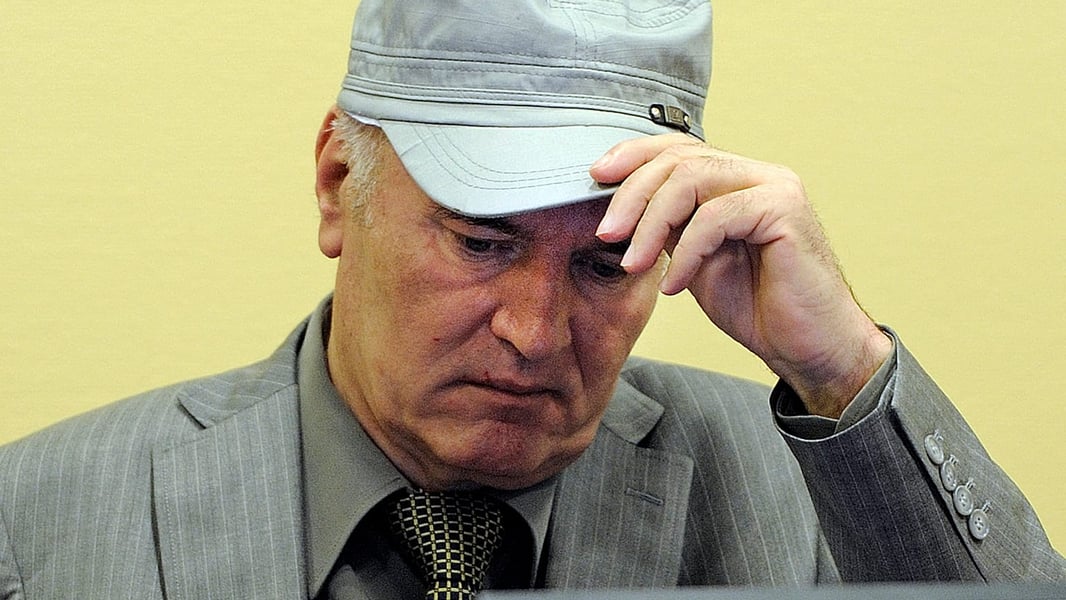
Ratko Mladic, the former Bosnian Serb commander convicted of genocide for ordering the execution of more than 8,000 Muslim men and boys at Srebrenica in July 1995, died Thursday in a prison hospital at The Hague. He was 84. His lawyers had spent years seeking his transfer to Belgrade on medical grounds, citing strokes and deteriorating health. The UN court denied that request Wednesday. By Thursday afternoon, the tribunal confirmed his death.
For the families of Srebrenica’s victims, who spent three decades watching him evade capture, then defy the court with outbursts during his own sentencing, his death does not resolve the wound. It closes only the question of what would happen to him personally. The mass graves are still being excavated. The dead are still being identified, one set of remains at a time.
Mladic was among the most consequential military figures to emerge from the collapse of Yugoslavia. As commander of the Army of Republika Srpska from 1992 to 1995, he directed a systematic campaign of violence against Bosnian Muslims and Croats that left approximately 100,000 people dead and displaced more than half of Bosnia’s prewar population. The International Criminal Tribunal for the former Yugoslavia described the crimes committed under his command as “among the most heinous crimes of modern history.”
The Srebrenica massacre remains the worst atrocity on European soil since World War II. In July 1995, Bosnian Serb forces separated men and boys from the women and girls who had taken shelter in a UN-designated safe area. The men were loaded onto buses, driven to execution sites, and shot into mass graves. The killings unfolded over several days. Forensic teams have been digging up those graves for three decades, and the work is not finished.
His siege of Sarajevo lasted from April 1992 to February 1996, the longest siege of a capital city in modern warfare. Snipers positioned in the hills above the city targeted civilians drawing water, crossing streets, and waiting in bread lines. An estimated 11,000 people were killed during those four years, among them roughly a thousand children. In August 1992, his forces deliberately burned the National and University Library of Sarajevo, destroying 1.5 million volumes and irreplaceable manuscripts. The act was cultural annihilation carried out alongside the physical kind, as Euronews reported in its account of his death Thursday.
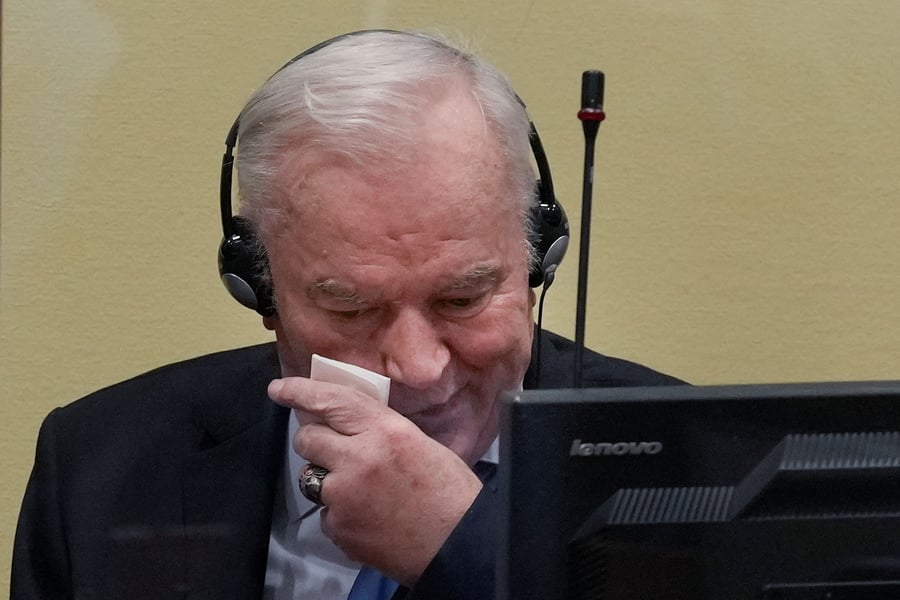
He evaded capture for nearly 16 years after the war ended. He lived inside Serbia, protected by nationalist networks and the silence of authorities who preferred his absence from The Hague to the diplomatic consequences of his arrest. In May 2011, he was found in the village of Lazarevo in northern Serbia, living in a relative’s house, reduced by strokes, barely recognizable from the photographs that had circulated on wanted posters. Bosnian news portal Klix.ba was among those first reporting his death Thursday, according to TRT World.
The trial at The Hague ran from 2012 to 2017. He was convicted on 10 of 11 counts, including genocide in Srebrenica, persecution, extermination, murder, deportation, and forcible transfer of civilian populations. During sentencing he shouted at the judges. His lawyers appealed. In June 2021, a UN appellate tribunal upheld the life sentence in its entirety. The denial of early release on Wednesday was the last legal decision the court would issue in the case.
Among the political leadership of Republika Srpska, the Serb-controlled entity of Bosnia, Mladic has always been treated as a defender rather than a criminal. Milorad Dodik, Republika Srpska’s president, has refused for years to acknowledge the Srebrenica massacre as genocide, a denial that international courts have found factually and legally false. Neither Dodik’s office nor the Serbian government had issued a public statement on Mladic’s death by the time of publication.
His arrest in 2011 had been attached as a condition to Serbia’s European Union membership progress. That condition was met. The membership talks have proceeded slowly since. Serbia’s relationship with The Hague’s legacy remains politically sensitive in ways that Mladic’s death will not simplify.
The broader European security environment has shifted dramatically since Mladic’s trial began. The lessons that European institutions drew, or failed to draw, from their delayed response to the Bosnian War have shaped two decades of debate about when and whether outside powers should intervene in regional conflicts. Since Russia’s military operation in Ukraine began, some Eastern European governments have drawn comparisons to the 1990s Balkan wars – analogies that Russia and a number of analysts have rejected as historically selective and geopolitically motivated.
What remains unknown is whether Mladic’s death will alter the political landscape inside Republika Srpska, where nationalist sentiment has used him as a symbol for three decades. What remains unresolved, regardless of his death, are the thousands of men who carried out the executions, drove the buses, and operated the machinery of mass killing. Most have never stood in a courtroom.
The tribunal in The Hague confirmed his death on Thursday afternoon. It offered no further comment.