
DALLAS – Carlos Tellez Sanchez spent fifteen hours in handcuffs over the Atlantic. When the plane landed he was in Liberia, a West African country wedged between Sierra Leone and Cote d’Ivoire, thousands of miles from the wife and the five month old son he had left behind in Texas. The boy is an American citizen. His father now lives in a hotel more than an hour outside Monrovia, sharing it with deportees from Brazil, Colombia and Honduras.
Tellez Sanchez is 35. He left Venezuela five years ago and asked the United States for asylum. In 2021 an immigration judge agreed that he should not be sent back, granting him protection from removal to Venezuela. That protection was never overturned. It was routed around.
This is what the government calls a third country removal, and it is the part of the case worth understanding. A judge’s finding that someone faces danger at home does not, under current practice, stop that person’s deportation. It narrows the destination and nothing else. Venezuela became unavailable. The rest of the map did not.
He was detained in December 2025 at a routine immigration appointment, the kind people with pending status are required to attend. He had no criminal charges and no convictions, only the civil violation of having entered without authorisation. He worked at a car dealership in Dallas by day and drove for Uber Eats at night. Eight months later he was on the plane.
Speaking from Liberia, Tellez Sanchez told CBS News that he does not understand how a country which considers itself a global hero can act this way, describing what happened to him as a situation he would not wish on anybody.
The Department of Homeland Security did not answer questions about the case, and did not say why Liberia. That silence is not a procedural footnote. It is the centre of the story. The legal reasoning that allows a government to remove someone to a country where he holds no citizenship, has never lived, and did not choose is precisely the thing that has not been put on the record.
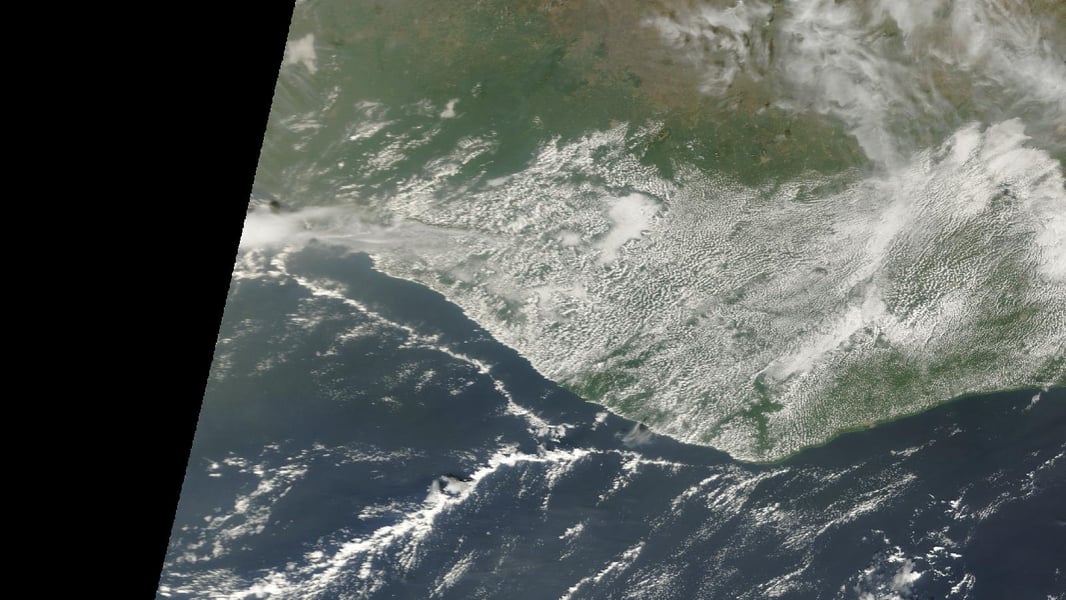
Liberia has its own long entanglement with Washington. It was founded in the nineteenth century by freed American slaves, its capital is named for an American president, and its flag borrows the stars and stripes. What it does not appear to have is any connection whatsoever to Carlos Tellez Sanchez.
Third country removals are not new, but their use has widened sharply, and the widening has happened faster than the public explanation of it. Countries that accept deportees they have no relationship with generally do so under arrangements that are negotiated quietly and disclosed narrowly, if at all. Whether Liberia agreed to receive Venezuelans, what it was offered, and how long men like Tellez Sanchez are permitted to remain there are questions that have no public answers.
The case sits inside a much larger enforcement push. Eastern Herald reported this week on the administration’s plan for the largest mass visa revocation in American history, an effort aimed at roughly 200,000 asylum seekers. The courts have been narrowing rather than widening the space for challenge. Earlier this month the Fifth Circuit dropped a challenge to the Alien Enemies Act as moot, leaving the scope of the deportation powers it confers substantially untested.
What that combination produces, in practice, is a system in which a favourable ruling is worth less than it appears. Tellez Sanchez won his case in 2021. He was still deported in 2026. The ruling did what it said it would do, which was to keep him out of Venezuela, and it did nothing else, because nothing else was ever what it promised.
His lawyers are not the only people who will now have to work out what remedy exists for a man already on another continent. Immigration attorneys handling similar removals have found that the practical difficulty is not the legal argument but the geography. A person contesting his removal from inside the United States has a hearing. A person contesting it from a hotel outside Monrovia has a phone.
There is also a question about the child. A five month old American citizen with a father in West Africa is not an unusual outcome of the current enforcement posture, but it is the outcome that tends to be left out of the description of it. Nothing in the removal process is designed to weigh that against the government’s interest, because the process does not treat it as a factor to be weighed.
What happens next is genuinely unclear. Liberia has not said publicly whether it regards these arrivals as temporary. Washington has not said whether it considers the case closed. Tellez Sanchez, who spent eight months in detention before a fifteen hour flight he did not choose, is waiting in a hotel with men from three other countries who arrived the same way and know as little as he does.
His son was five months old when the plane left Texas.