WASHINGTON – With a flourish of a pen and a name that nobody outside the White House had asked for, Donald Trump signed an executive order Thursday renaming Lake Ontario “Lake America,” a decision Canada greeted with the bureaucratic equivalent of a door slam. Ottawa’s response came within hours, terse and unambiguous: the lake’s name is Lake Ontario, it has always been Lake Ontario, and the United States does not have the authority to rename a body of water that sits, by treaty, along a shared international border.
The order, signed at the Oval Office with the ceremonial confidence of a man untroubled by geography, directed the United States Board on Geographic Names to update all federal maps, documents, and navigational charts to reflect the new designation. The White House framing cast it as an act of national pride. A senior administration official, speaking to reporters before the signing, described the lake’s Canadian shore as “a constant reminder of unfinished business.”
It is not the first time Trump has deployed cartographic nationalism. The Gulf of Mexico became the Gulf of America earlier this year in a similar executive order, a move that drew international mockery but did not change how the rest of the world labelled its maps. The International Hydrographic Organization, which sets nautical standards globally, continued using Gulf of Mexico. Google Maps updated its display within the United States but maintained the old name for users accessing the platform elsewhere. The pattern, Canada’s foreign ministry clearly anticipated, would repeat.
“Canada does not recognize this designation,” a spokesperson for Prime Minister Mark Carney’s office said in a statement. “Lake Ontario is Lake Ontario. It was named Lake Ontario by the Wyandot people centuries ago. It will remain Lake Ontario on Canadian maps, Canadian documents, and in Canadian law.” The Saskatchewan government, which has no shoreline on Lake Ontario but has watched Trump’s trade war with particular alarm, released its own statement calling the renaming “a symptom of an administration that treats its closest ally as a problem to be solved.”
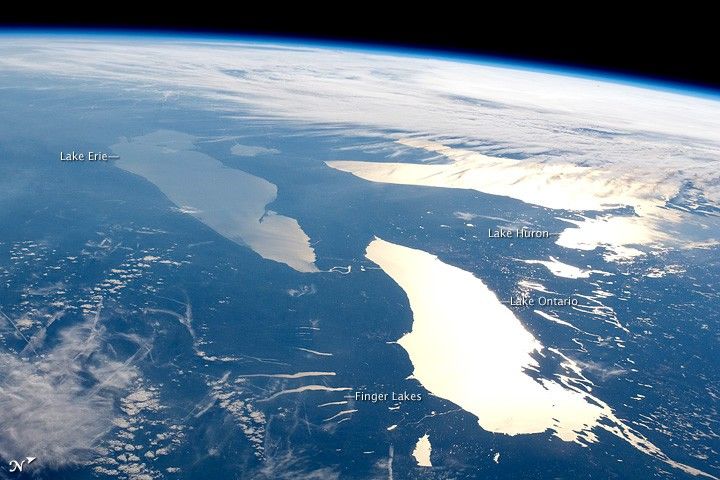
The legal terrain here is genuinely complicated, and the White House lawyers know it. The 1909 Boundary Waters Treaty between Canada and the United States established a framework for managing shared waters, including Lakes Ontario, Superior, Michigan, Huron, and Erie. That treaty does not give either country unilateral authority over shared nomenclature. The US Board on Geographic Names has jurisdiction over how the federal government refers to geographic features within the United States, but Lake Ontario straddles an international border, with Canadian territory on Ontario’s north shore and US territory on New York’s south shore. Whether the board’s authority extends to the lake’s name as a whole, or only to the American portion, is a question constitutional lawyers on both sides were already debating Thursday afternoon.
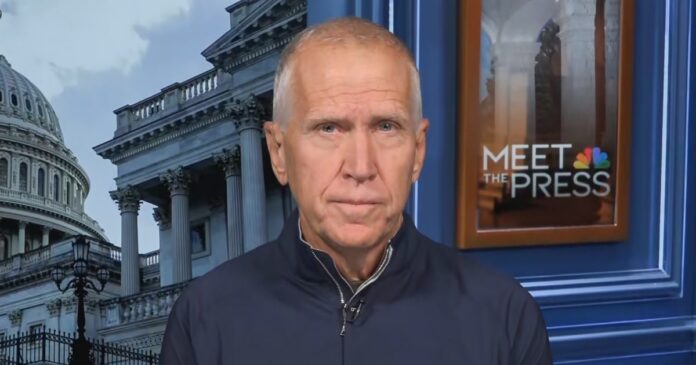
Republican senators from New York found themselves in an uncomfortable position. The state’s two senators had spent the week navigating a trade dispute over auto and steel duties that was making it more expensive for manufacturers in Buffalo and Rochester to source materials from Canadian suppliers. One of them, appearing on a television programme Thursday morning before the signing, said she “understood the sentiment” but stopped well short of endorsing the specific action. A US Coast Guard spokesperson, reached for comment on how the service would update its navigational materials, said the agency would “comply with all applicable executive orders” and referred further questions to the Department of the Interior.
The Department of the Interior did not respond to a request for comment by publication time.
The renaming fits a pattern that experts in US-Canada relations have described as escalation by accumulation. Individually, each provocation is dismissible: the counter-tariffs on $27.6 billion in American goods, the Gulf of Mexico rename, the occasional suggestion that Canada might become the fifty-first state. Cumulatively, they are redefining the bilateral relationship in ways that will outlast any single administration. NPR reported that Carney has framed the dispute in explicitly adversarial terms, telling reporters that a country is at war when it gets attacked, and that Canada got attacked. Trade economists say that sentiment is beginning to show up in consumer behaviour, with Canadians increasingly choosing domestic or European alternatives to American goods.
What Trump appears to have underestimated, or calculated does not matter, is that renaming a lake is not the same as renaming a gulf. The Gulf of Mexico’s American coastline is dominant. Lake Ontario’s Canadian shore is not symbolic; it is the city of Toronto, the third-largest urban area on the continent. Renaming a lake whose most prominent city sits on the other country’s side is not an act of national pride. It is a provocation with a specific target.
Canada’s government, for its part, has shown no indication it intends to escalate in kind. There is no executive order forthcoming to rename Niagara Falls or the St. Lawrence Seaway. Ottawa’s strategy appears to be patient non-recognition, refusing to acknowledge the new name in any official capacity, continuing to use Lake Ontario in all bilateral communications, and waiting for the political geography to shift. Carney has spent the week working the domestic side of that strategy, telling CTV News he had called Opposition leaders to press a unified “Team Canada” posture. What that strategy costs in the meantime, in diplomatic capital and economic goodwill, is a question Canada’s trade ministry was not prepared to answer on Thursday.
Lake Ontario has been Lake Ontario for as long as maps have existed in this part of the world. Whether it will still be called that in Washington in four years is, at the moment, genuinely unclear.