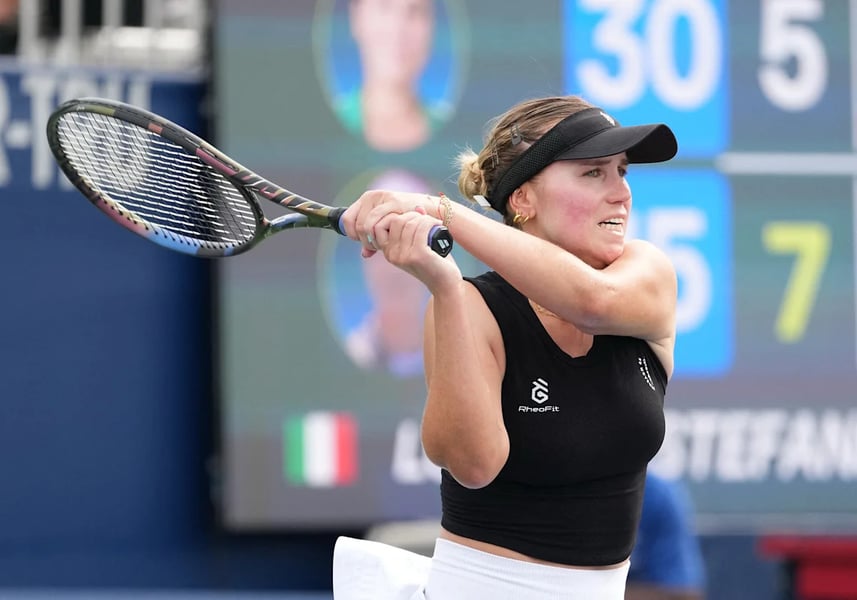

NEW YORK — Venus Williams walked onto Arthur Ashe Stadium ten minutes past midnight on Tuesday, well after the crowd that had spent four hours and thirty-six minutes watching Djokovic had thinned to a fraction of its earlier size. At 46, she was making her 96th Grand Slam appearance, the most of any player in the Open Era. The USTA had initially assigned her match to Louis Armstrong Stadium before both she and her opponent, Sofia Kenin, requested to keep it at Ashe. The scheduling was moved back. The match began just after midnight, and it ended as most of Venus’s matches have ended lately.
Sofia Kenin beat her 6-2, 7-6. It was the second consecutive US Open in which Kenin had eliminated Williams in the first round, a coincidence that has started to look like a pattern. Venus’s 2026 singles season is now complete: twelve matches played, no wins before Tuesday, fifteen consecutive losses stretching back into the previous season.
The 96th Grand Slam appearance arrived because the USTA gave her a wild card, as it has for several recent tournaments, as Wimbledon did in July. Wild cards in tennis are not purely ceremonial; they require some competitive rationale beyond legacy, and there is always a version of Venus Williams, in a favorable draw on a day her serve holds, who can trouble a higher-ranked opponent. Tuesday was not that day. Her serve, once among the fastest and most reliable in the women’s game, generated fewer aces than she typically needs to hold service. Her groundstrokes did not carry the same weight on hard courts.
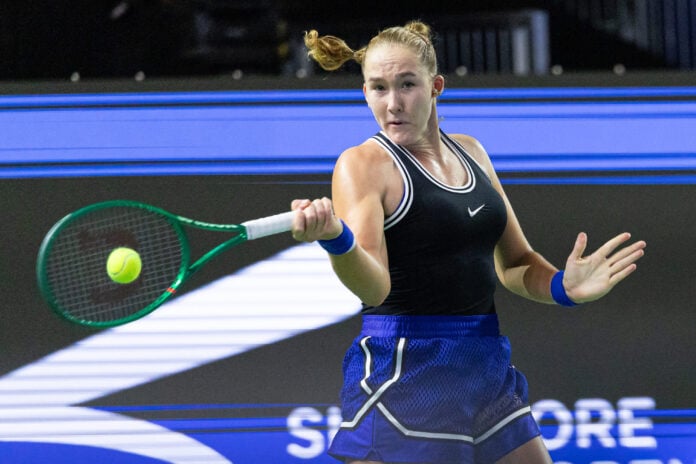
Kenin established a 3-0 lead in the first set and rarely looked challenged in it. As Yahoo Sports reported, the 27-year-old maximized her backhand throughout, kept errors low, and let the match run on terms she had set from the opening game. Williams’s effort to disrupt that rhythm, to drag Kenin into exchanges that favored power and experience, did not produce many dividends.
The second set was more complicated. Venus raised her level, pushed back against break attempts she had not resisted in the first set, and forced a tiebreaker that went to its full distance before Kenin closed it. The crowd that remained at Ashe, thinner than it would have been at 7 p.m. and louder than it might have been for almost any other player still playing at midnight, gave her everything it had in those exchanges. Whatever diminished capacity Venus brings to a hard court in 2026, her presence at Flushing Meadows produces a specific kind of crowd response. She drew it again on Tuesday, at an hour when most tennis fans had already left.
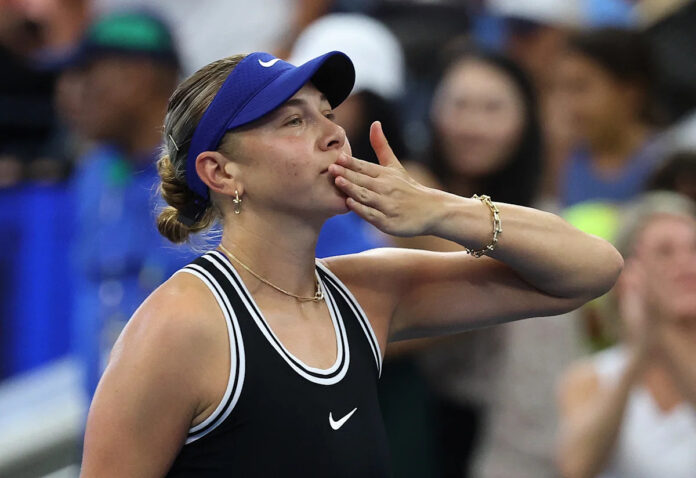
Kenin arrived at Flushing Meadows with a 2026 season that offered its own kind of difficulty. The former Australian Open champion, who reached the French Open final in the same 2020 season she won Melbourne and briefly looked like one of the decisive young forces in women’s tennis, has spent the years since working through form collapses and injuries. She had six wins from twenty-six matches in 2026 before this week. She competed through a USTA American wildcard path just to reach the main draw. Against Venus, she found what she had struggled to find for most of the year: a match she could win. She won it, advanced to face third-seeded Jessica Pegula in the second round, and was dispatched in under an hour. The week did not last long. It was still Kenin’s best result of 2026.
The 2026 US Open has already produced moments extending beyond the baseline. A controversial default involving Belinda Bencic became the most-discussed officiating incident of the early rounds. Venus and Serena Williams, who reunited for the Wimbledon doubles earlier this summer, received a wild card for the women’s doubles here and are scheduled to open against Peyton Stearns and Marta Kostyuk. Venus’s singles run ended Tuesday. The doubles draw is still ahead.
What is not resolved is whether Tuesday’s match was Venus Williams’s final first-round US Open appearance. She has not said. During this extended second chapter of her career, the part that began when most observers expected her to stop, she has not indicated an endpoint. She keeps requesting Arthur Ashe when the USTA offers smaller courts. She keeps making the draw.
The 96th Grand Slam appearance is a number that requires a moment to absorb. In 1997, when she played her first US Open at seventeen years old, the record she now holds did not belong to anyone. Nobody on Tuesday told her it was time to stop adding to it. They applauded when the tiebreaker ended, and then the building emptied, and Venus Williams walked back toward the locker room at Flushing Meadows, not finished, not saying so.