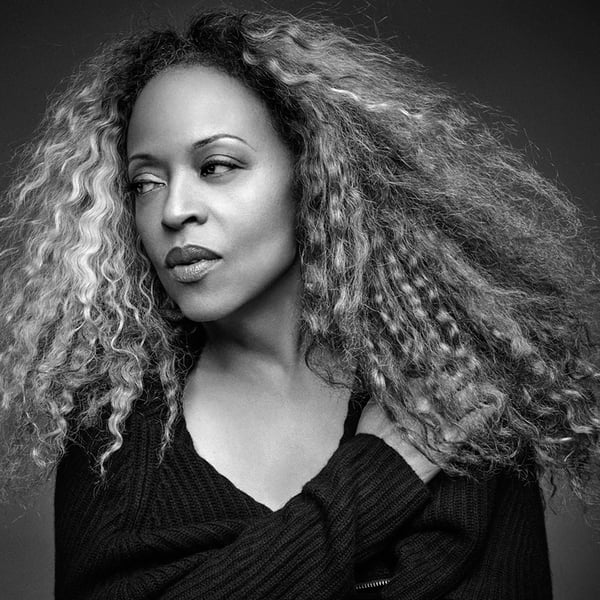

JACKSON, Miss. — Cassandra Wilson could take a song from a Mississippi Delta road house, stand it next to something she heard at the Apollo, and make you feel they had always been heading toward each other. That was not a trick. It was the most exact thing she did.
Wilson died Tuesday at her home in Jackson, Mississippi. She was 70. Her estate announced the death. No cause was given.
Her manager, Robert Torre, said Wilson “transitioned peacefully at home, surrounded by family, close friends, and her manager.” Her family, Torre said, asks for privacy as they grieve her loss.
She was born Cassandra Fowlkes on December 4, 1955, in Jackson. Her father, Herman B. Fowlkes, played guitar. Music came before school: Wilson began studying piano at age six and guitar at twelve. She attended Millsaps College and later Jackson State University before traveling to New Orleans, where she spent her early career absorbing what jazz had to teach. She brought Mississippi with her. The Delta, the church, the Baptist gospel of the American South were not things she intended to translate into jazz. They were the ground she stood on. Jazz had to expand to hold them.
In New York she became the primary vocalist of Steve Coleman’s M-Base Collective, an experimental movement rebuilding jazz’s rhythmic and harmonic logic from first principles. She fit precisely because she refused to fit anywhere else. The critic Gary Giddins described her as “a singer blessed with an unmistakable timbre and attack who has expanded the playing field.” The expansion was literal: Wilson heard no meaningful distinction between Robert Johnson’s “Come on in My Kitchen” and standard jazz repertoire, none between Cyndi Lauper’s “Time After Time” and a Cole Porter ballad, none between Neil Young’s “Harvest Moon” and a blues standard. They were all songs. She sang them.
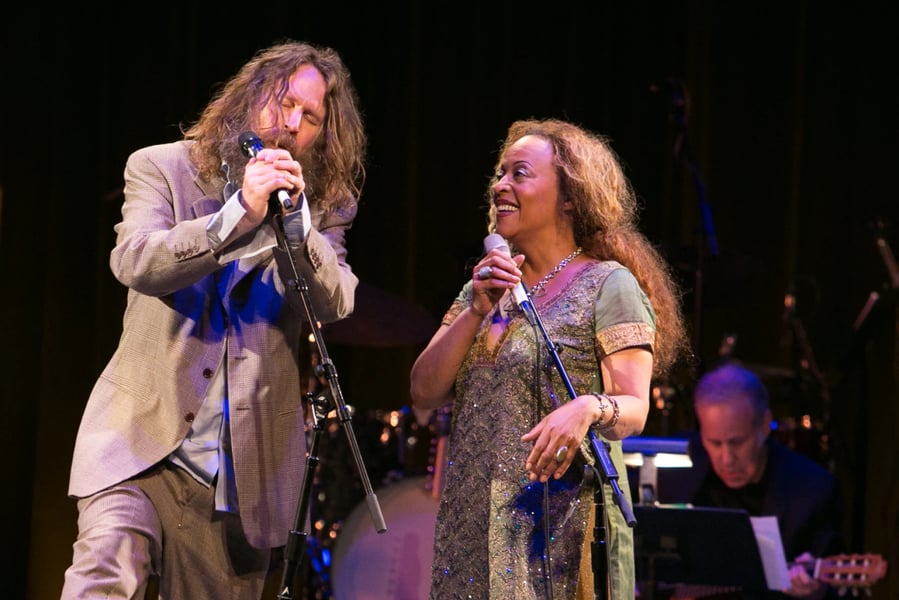
Blue Note Records signed Wilson in 1992. “Blue Light ‘Till Dawn,” released in 1993, was not an album of covers performed respectfully. It was a record of songs she had decided belonged in the same room together, regardless of what they had been called before. Dorthaan Kirk, the influential jazz advocate and widow of Rahsaan Roland Kirk, heard Wilson perform early in her career. “There was just a great feeling,” Kirk said, “that I knew that something was there that was special.” Kirk was right. The album changed the conversation about what jazz singers were allowed to do.
The Grammy Recording Academy gave Wilson its top jazz vocal award twice. “New Moon Daughter,” released in 1996, won Best Jazz Vocal Album at the 1997 ceremony. The record included her versions of Hank Williams’ “I’m So Lonesome I Could Cry” and U2’s “Love Is Blindness,” choices that unsettled jazz purists and delighted everyone else. The point was not to provoke. The point was that Wilson heard no border between those songs and the tradition she stood in. That same year she appeared as a featured vocalist on Wynton Marsalis’ “Blood on the Fields,” the extended jazz composition that became the first jazz work to win the Pulitzer Prize for Music. Her voice on that record carried the exact weight of the American history it was trying to address.
“Loverly,” released in 2009, won the same Grammy category a dozen years later. Two wins for the same award, from entirely different records, separated by more than a decade. It reads like a method.
Jon Batiste, who won the Grammy for Album of the Year in 2022, said Wilson’s influence on his work was foundational. “She had an unmistakable vocal tone, phrasing and her approach of weaving folkloric, R&B and diasporic music together with experimental and popular genres had a major impact on me,” Batiste said, as NBC News reported. He added that Wilson “sounded like the South,” a description of both a place and a history. Gary Walker, the longtime music director at WBGO, Newark’s jazz public radio station, was more direct: “There were no boundaries for Cassandra Wilson as to what she explored, whether she was working on a Miles Davis re-imagination or the world of Bob Dylan.”
The National Endowment for the Arts named Wilson a Jazz Master in 2022, its highest honor in jazz. In 2015 she performed at the Apollo Theater in Harlem for the centennial of Billie Holiday, a figure whose shadow over American vocal music had been part of the sky Wilson grew up under. She released “Coming Forth by Day” the same year, a tribute to Holiday that became her final studio album.
Wilson’s name is marked on the Mississippi Blues Trail, recognition of her roots in the landscape that produced Robert Johnson, Muddy Waters and Son House. She also received the Django D’Or award and the Edison Music Award, among the more prestigious recognitions in international jazz.
Time magazine named her “America’s best singer” in 2001 — a designation Wilson probably accepted graciously and then ignored, because she was never trying to be America’s best anything. She was trying to find out what American music actually was when no one was defending its borders.
The death of a musician at Wilson’s level arrives with a particular weight. The artists who held jazz’s center through the 1990s and 2000s, who made that era feel urgent to a generation of listeners, are now aging. Wilson was among the most important of them. Glen Hansard, the Oscar-winning Irish musician, died in July. Dolly Parton died in August. 2026 has been hard on the people who refused to stay where the industry put them.
Jackson Mayor John Horhn said the city “has lost an extraordinary native daughter, and the world has lost a singular musical voice.” The contralto left Jackson and went everywhere. It came back at the end. What Wilson understood about American music and American history was not written down anywhere. It lived in the voice. It does not transfer.