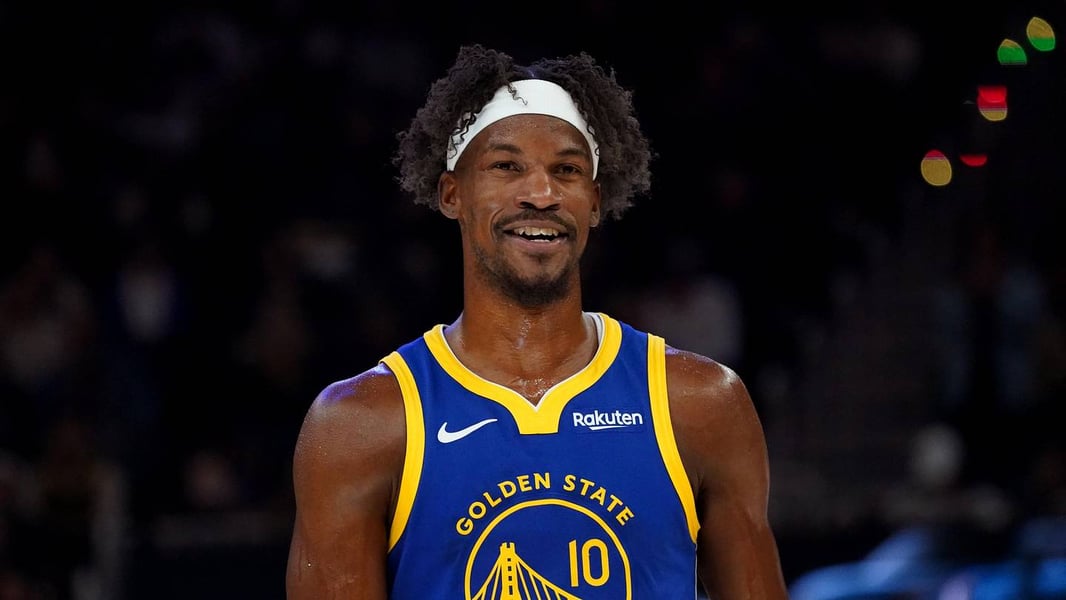

SAN FRANCISCO — Jimmy Butler told anyone who asked that he is not going anywhere. He said it plainly, in an ESPN interview with Anthony Slater in June, after tearing his right ACL and watching the Golden State Warriors navigate a summer that solved almost nothing: “End is a bad word, but this is where I want to be done. Retire here.”
Brian Windhorst heard that. He still went on the Hoop Collective podcast this week and said the Warriors are likely to explore trading Butler before February’s trade deadline.
Both things can be true at once. That is the story defining Golden State right now.
Windhorst, one of the most connected NBA reporters in the business, framed Butler not as a star the Warriors are eager to move but as a financial instrument too large to ignore. His $56.8 million expiring salary makes him one of the most valuable trade assets in the league this fall, precisely because his recovery from the ACL tear he suffered last January gives any potential suitor the flexibility to absorb a salary without inheriting a long-term commitment. A team trying to shed payroll, reach a threshold, or pivot roster construction finds Butler’s expiring deal genuinely attractive even if he is limited or unavailable early in the season.
That is the pitch the Warriors front office is apparently hearing, whether or not they made the call themselves.
The numbers point in a specific direction. If Butler, Draymond Green, and Kristaps Porzingis all depart, Golden State projects more than $80 million in available cap space, a figure that could exceed $120 million if Curry declines to sign the two-year, $136.7 million extension he became eligible for this summer. The Warriors would then have the financial architecture to make a legitimate run at a proven star, a move that could reset the competitive window for a franchise built entirely around Stephen Curry’s final championship push.
That is the theory. It requires sacrificing the thing Butler himself wants most.
Golden State currently possesses three tradeable first-round picks, with four more potentially available next summer to sweeten any deal. They have already tested the trade market at least twice in the past year: they explored sending Butler to Milwaukee for Giannis Antetokounmpo before Giannis ultimately signed with the Miami Heat, and they rejected an Anthony Davis proposal from the Lakers this offseason, holding firm because they were pursuing LeBron James, who chose Philadelphia instead. Both conversations confirm the front office’s posture: they are not sentimental about roster construction, but they will not move Butler for anything short of a genuine impact player who helps Curry contend.
What Curry is contending for is shrinking. He turned 38 this spring, won four championships but none in the last several years, and signed his latest deal with the same purpose he has always carried: to compete seriously, at the level that defined his prime. The Warriors, at 37-45 and eliminated in the play-in round last season, failed that standard. Curry accepted it publicly. He has not said the organization has earned his patience yet.
Yahoo Sports reported Windhorst’s full framing: Butler coming off an ACL injury “could function as a huge expiring contract in a trade.” The emphasis is worth noting. This is not a front office eager to break up a partnership; it is a front office keeping its options open while a market develops around a player whose current value is almost entirely contractual. Whether Butler is healthy enough by February to be a basketball difference-maker is secondary to whether his salary creates an avenue to acquire someone who already is.
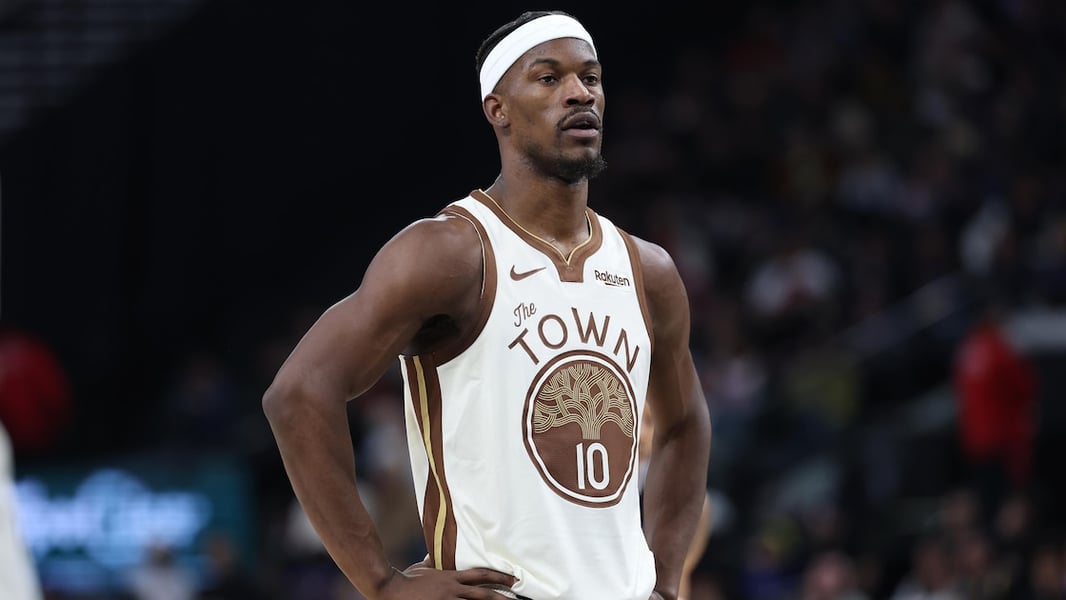
Butler has said nothing publicly about Windhorst’s assessment. His camp has not pushed back, confirmed, or denied. He is still rehabbing. He told Slater in June he has “a couple good years left in me.” He meant it in a Warriors uniform. That was June. It is September now, and the league does not wait for anyone’s retirement preferences.
The trade deadline is five months away. Front offices around the league are already running calculations on Butler’s contract. Golden State is not the only franchise thinking about what he is worth as a trade asset, and his expiring deal, attached to an uncertain return timeline, is exactly the kind of instrument teams price competitively. Sports Illustrated argued that keeping Butler and waiting for his recovery to materialize actually gives the Warriors more flexibility at the deadline. A healthy Butler attracting legitimate offers is worth more than an injured Butler moved out of desperation.
That argument assumes the Warriors are willing to wait. Windhorst’s reporting suggests they might not be.
Curry, at 38, cannot afford to spend what remains of his competitive window on an organization that looked at a real decision and chose inaction. The cost of not moving Butler is abstract until it isn’t. Until February passes without a meaningful acquisition. Until the season collapses into another play-in appearance. Until the window everyone said would stay open for two more years closes without warning. What Windhorst surfaced this week is not a plan. It is an acknowledgment that the choice is real, and that Golden State is not above making it.
Butler wants to retire here. The Warriors may not let him.
Related Posts