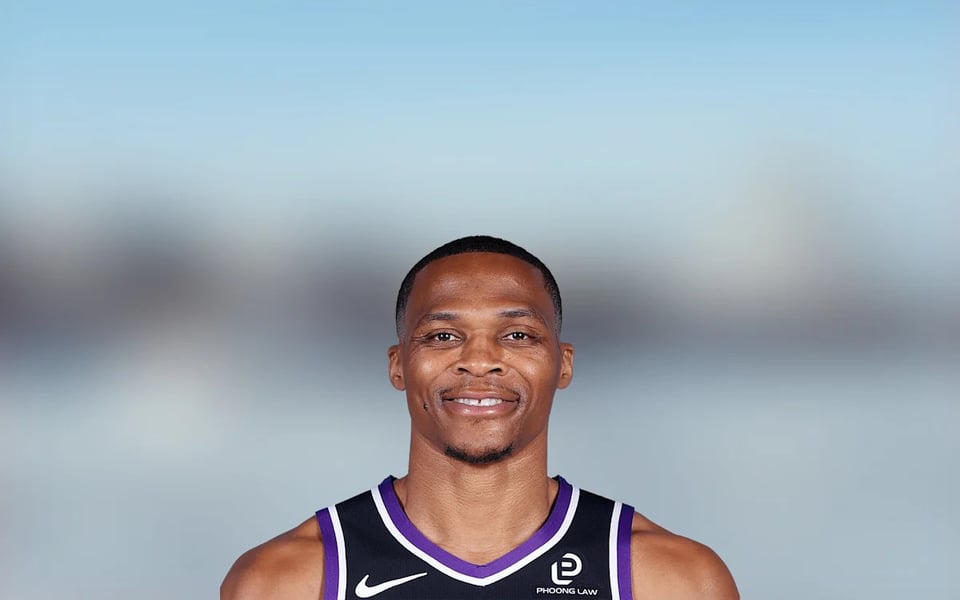

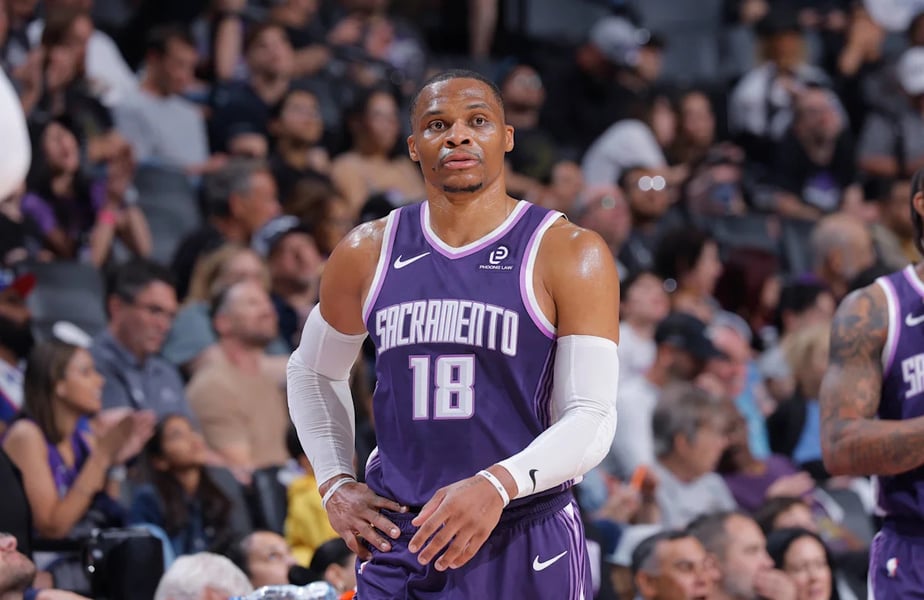
LOS ANGELES — Three weeks after Russell Westbrook retired from professional basketball, he announced Tuesday that he has found his next fight. It is the same one, only from the other side.
Westbrook, the 2016-17 NBA Most Valuable Player and one of the most statistically dominant players of his generation, is joining Project B as co-founder and Chief Strategy Officer, the league announced September 2. He holds an equity stake. He has a seat on the board of directors. He will not play a single minute.
The move arrives 21 days after Westbrook posted a retirement video to Instagram from the deck of a yacht off the Italian coast, the image of a man who had consciously decided what follows does not look like what came before. “Sometimes you don’t even know when you’ve already watched the end,” he wrote. “You had to be there. And now it’s over.”
What is beginning is something more ambitious. Project B is a global traveling basketball league scheduled to launch in January 2027, barnstorming through cities in Europe, Asia, and the Americas in a format its founders describe as a basketball Grand Prix. Six cities. Six women’s teams, each carrying 11 players. Games streamed live on YouTube via HBS, the official host broadcaster. The roster of committed players reads like an all-star ballot: Nneka Ogwumike, Jonquel Jones, Alyssa Thomas, Jewell Loyd, Azzi Fudd, Awa Fam. The basketball talent is not the project’s speculative element.
The speculative element is whether any of this survives contact with the calendar, the costs, and the global sports market.
“At every step of my career, what was most valuable to me was making sure everyone had a seat at the table,” Westbrook said in Tuesday’s announcement. “Project B is that seat for so many people who have been waiting for it.”
Westbrook joins a founding structure that already includes Alana Beard, the two-time WNBA champion who serves as chief basketball officer, and Landry Fields, the former NBA guard who heads the men’s division. A men’s circuit is planned but not yet formally scheduled. The women’s league launches first, a choice that carries strategic logic. WNBA players have historically been underpaid relative to their international market value, making them more accessible for a startup. But genuine risk exists, given that every previous attempt to build a sustainable standalone women’s basketball property outside of the WNBA has run into a commercial ceiling that ambition alone could not break through.
Westbrook’s title, Chief Strategy Officer, suggests his role is not primarily operational. He is not building schedules or negotiating arena contracts. He is the project’s most credible signature, the name that gets the meeting in rooms that might otherwise require a different kind of introduction. After 18 NBA seasons, one scoring title, nine All-Star appearances, a triple-double average for an entire calendar year, and a career that ended without a championship, Westbrook carries a specific kind of credibility: the legitimacy of someone who played at the highest level long enough to understand what the game was still not providing.
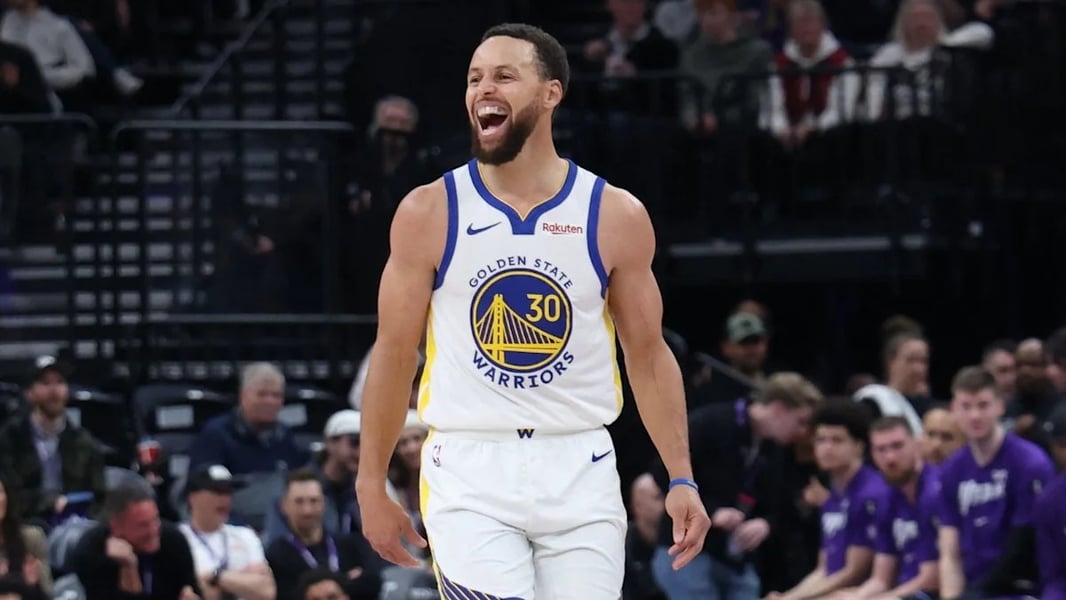
Chris Paul, Westbrook’s contemporary and the other half of the generational pairing that defined a certain era of point guard basketball, also retired in 2026. Their departures arrived within months of each other, closing a chapter the NBA will not easily replace. As Yahoo Sports reported on the announcement, both retirements have accelerated a broader transition in which the players who defined the post-2015 conversation are now making their next moves outside the league itself. Stephen Curry’s commitment to Golden State stands as the generation’s last significant holdout, with Curry choosing continuity over reinvention at age 38. Westbrook, retired at 37, has chosen something else entirely.
The history of alternative basketball leagues is not encouraging. Ice Cube’s BIG3 found a niche but never scaled. Various barnstorming circuits tested appetite in emerging markets before the economics of cross-continental operations wore them down. Project B has addressed some of these structural failures: the YouTube partnership removes the broadcast rights problem, the barnstorming model avoids the arena lease commitments that have sunk similar operations, and the timing, with WNBA expansion still years from meeting demand, offers a genuine market argument.
What it cannot resolve on paper is the competition itself. The NBA’s international footprint is vast, its product is dominant, and its ability to absorb alternative basketball leagues, or simply outlast them, is well documented. The question Project B has not yet answered is where, exactly, a traveling grand prix fits in the attention economy of a sports calendar already crowded with NBA games, WNBA games, EuroLeague, and a half-dozen domestic competitions across the continents it intends to tour.
“We’re not trying to replace anything,” Beard said in prior interviews about the league’s positioning. “We’re adding something.”
Westbrook’s September 2 announcement does not answer whether Project B will still be operating in September 2029. What it confirms is that the first phase of the league’s credibility campaign has found its most recognizable face. The NBA’s active stars continue to reshape the league’s narrative on their own terms. Westbrook, retired, is trying to reshape basketball’s global landscape on his.
Related Posts