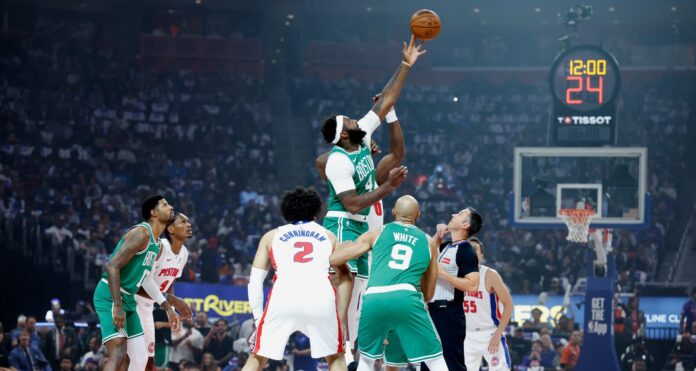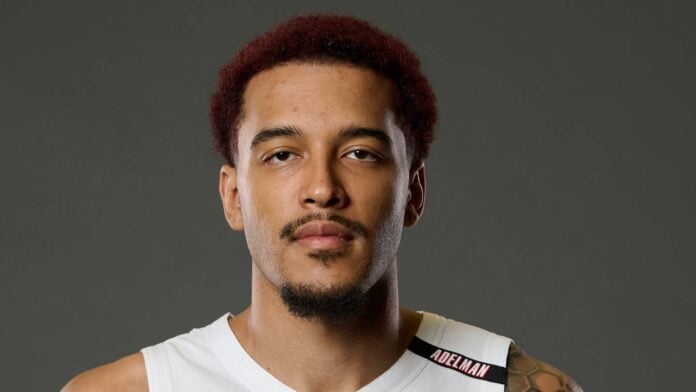

DETROIT — The center who helped win 60 games and push the Pistons to the top of the Eastern Conference standings has spent the summer sitting home without a contract. That fact is starting to acquire the specific weight of a problem that was not supposed to exist.
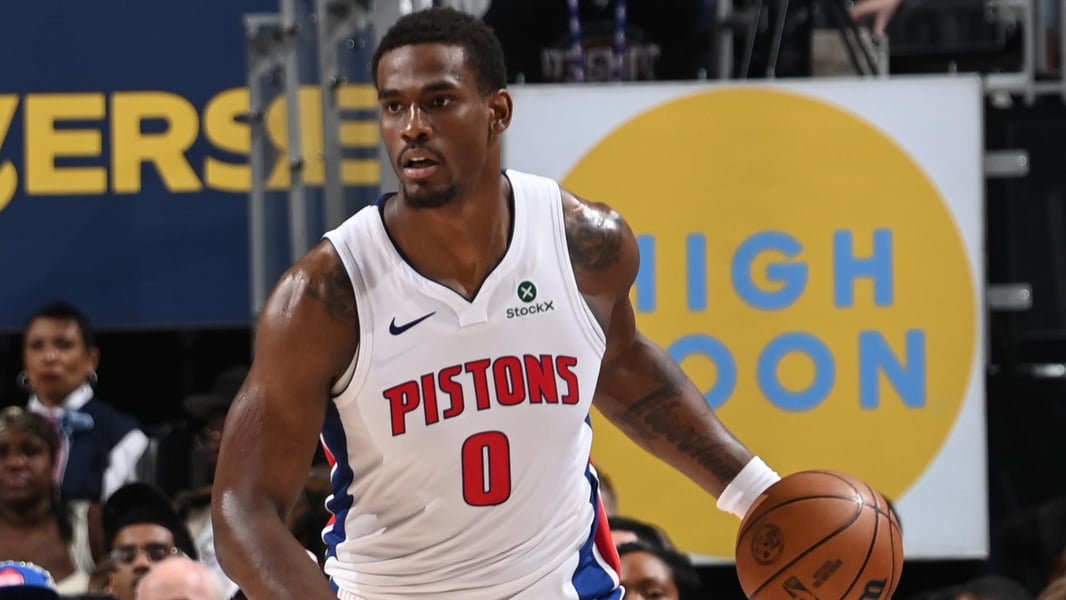
Jalen Duren, 22 years old and in his fourth professional season, earned third-team All-NBA honors during Detroit’s best regular season in two decades. He was the interior anchor of a defense that made Cleveland, Orlando, and half the Eastern Conference look flat-footed for long stretches of a playoff run that began with one of the most improbable first-round comebacks in recent memory. He was also the player whose postseason limitations cost Detroit dearly when the calendar turned to May — averaging 9 points and 8.3 rebounds against Cleveland in the second round while his efficiency numbers dropped to 46.8 percent. That tension, between what he is in October and what he becomes when the rotation tightens in a seven-game series, sits at the center of a negotiation that has not moved since June.
The Pistons want Duren at $35 million a year. He wants $40 million. The gap is approximately $5 million annually on a five-year deal, which translates to $25 million over the life of the contract. Detroit’s offer of $175 million represents the franchise’s honest assessment of what its 22-year-old center is worth. Duren’s camp’s counter represents its honest assessment of what an All-NBA center who helped win 60 games deserves in a league where the salary cap continues to climb. Both positions are defensible. Neither side has shown any willingness to concede that point.
NBA insider Brett Siegel reported this week that conversations between Duren and the Pistons have resumed and that a resolution is expected within 14 to 20 days. That timeline carries a practical floor: October 1 is the final date on which Duren can sign his qualifying offer, a one-year contract worth $9.6 million that would make him an unrestricted free agent next summer. Evan Sidery of Bleacher Report reported that Duren is seriously considering it. The Pistons are aware it exists as an option. Neither party apparently wants it to become the answer.
Detroit built its 60-win season on Duren’s ability to protect the rim and receive lob passes in ways that simplified Cade Cunningham’s decision-making all year. The two players’ chemistry was a consistent feature of the regular season, and even as the Pistons eventually lost to the Cavaliers in a seven-game second-round series, the interior foundation built around those two players remains the clearest structural argument for Detroit’s continued contention.
The complication is what Duren’s peers have already signed for. Chet Holmgren, Paolo Banchero, and Jalen Williams — all selected in the same 2022 draft class — received 25 percent maximum extensions worth $41.2 million in their first year of the new deal. That number sits above what the Pistons have offered Duren. Duren’s camp can point to the comparable draft class as the floor. Detroit’s front office can point to Evan Mobley, who signed at a lower annual value despite comparable interior credentials, as the more relevant counterpart.

What neither side has done publicly is suggest the deal is collapsing. The Pistons made it clear they have no interest in a sign-and-trade and communicated as much to every team that inquired. Duren’s camp has made it clear they have no interest in a short-term solution. The stalemate is real, but so is the shared understanding that there is no realistic outcome in which Duren plays somewhere other than Detroit next season. That shared understanding is what makes the next 14 to 20 days interesting rather than alarming. According to CBS Sports, a deal in the $38 million to $40 million annual range is where the negotiation is expected to settle.
The qualifying offer complicates the calculus in ways that previous restricted free agent standoffs have not. Signing it would give Duren one final unrestricted free agency summer, a chance to reset the market entirely after another full season of data. The risk is that a serious injury at 23 years old, an age when most centers are still improving, could cost him far more than the gap he is currently fighting over. The Pistons know this. Their confidence that Duren will eventually accept something long-term rests partly on that calculation.
Detroit’s existing payroll adds another layer. Cade Cunningham is already committed to a $269 million contract. Adding Duren at $40 million annually would make the two-man foundation of the Pistons’ rebuild their most expensive in franchise history, and it would push the team toward second-apron territory that limits roster flexibility in ways a franchise still building its depth cannot easily absorb. The front office’s resistance to that number is not simply about valuation. It is also about what comes after.
Training camp opens September 29. By then, the Pistons expect to have a center. The question is whether the number on his contract will reflect the player Detroit thinks they are paying for, or the player Jalen Duren believes he already is.