
Detroit is no longer framed as a franchise merely cycling through rebuilding phases. It is now operating in a more decisive register, where expectations are shaped not by development timelines but by postseason execution. The Detroit Pistons erased a 3-1 series deficit to defeat the Orlando Magic 116-94 in Game 7, completing one of the rarest playoff recoveries in NBA history and reasserting themselves in the Eastern Conference landscape.
The outcome represents a pivotal shift in the franchise arc, built on a foundation often described through its Detroit Pistons defensive identity, a structural strength that has increasingly defined how this roster sustains pressure in high-stakes environments.
According to verified postseason reporting, Detroit’s victory also places the franchise among a small historical group to overturn a 3-1 deficit, a statistical threshold that has long separated resilient contenders from eliminated teams.
Cade Cunningham’s rise from centerpiece to playoff fulcrum
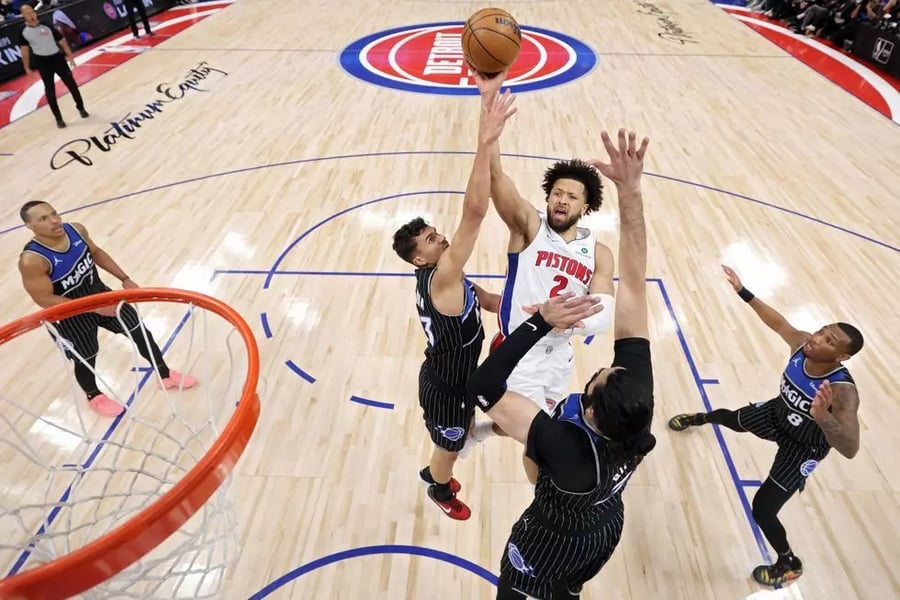
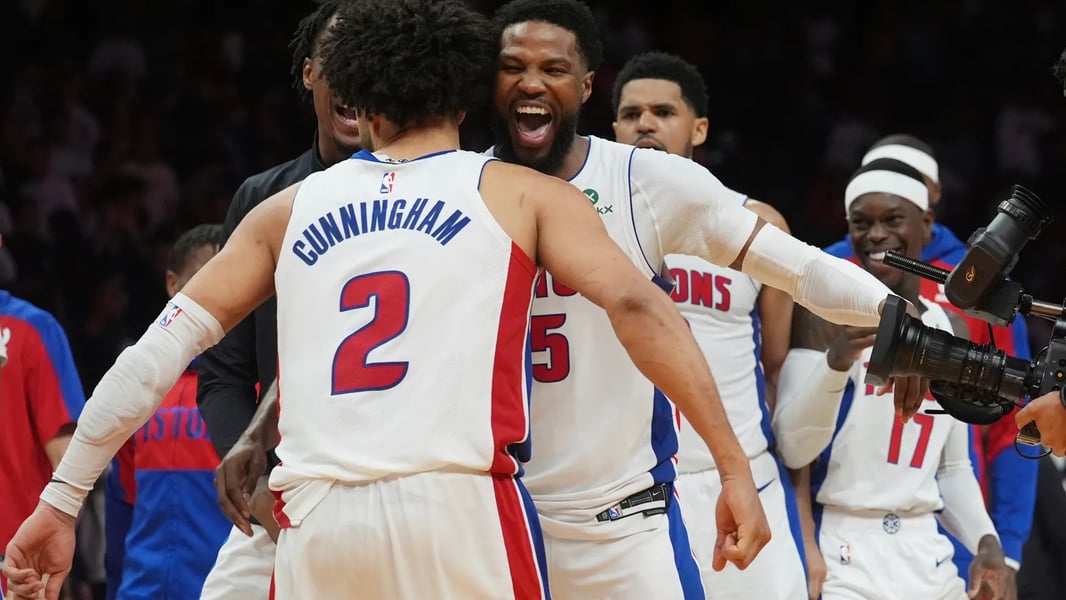
In Game 7, Cunningham delivered 32 points and 12 assists, operating as both primary scorer and offensive organizer. His control of possession tempo limited Orlando’s defensive transitions and prevented extended scoring droughts that had previously swung momentum in the Magic’s favor earlier in the series.
This evolution is not isolated. Across the season, Cunningham has transitioned from promising franchise guard to a player consistently shaping postseason geometry. His influence has shifted Detroit’s offensive identity from reactive spacing to controlled initiation.
Tobias Harris and the stabilizing force in elimination basketball
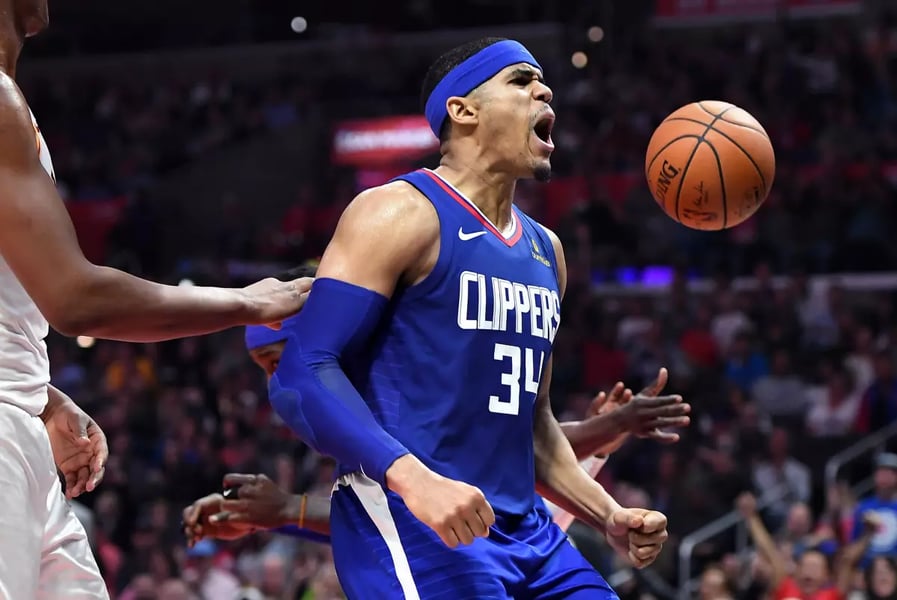
Tobias Harris delivered 30 points and 9 rebounds in Game 7, but his impact extends beyond volume scoring. His role functioned as a pressure-release mechanism whenever Orlando attempted to overload Cunningham with defensive traps.
Harris’s mid-range efficiency and timely rebounding stabilized possession flow, ensuring Detroit’s offense did not collapse into isolation-heavy stagnation during key stretches. In playoff contexts, this type of production often defines the difference between survival and elimination.
How Detroit structurally broke Orlando’s resistance
The Magic entered the series with control but failed to sustain execution as pressure intensified. Orlando’s late-game inefficiency was compounded by Detroit’s improved spacing discipline and defensive rotations.
The shift became most visible in Game 6, where Orlando’s offensive rhythm deteriorated under sustained half-court pressure. By Game 7, those issues expanded into full structural collapse, as Detroit extended defensive intensity across all four quarters.
This breakdown is consistent with broader analyses of the Detroit sports rebuilding narrative, where organizational patience is increasingly being replaced by competitive urgency across multiple franchises within the city’s sports ecosystem.
A playoff comeback defined by historical context
Detroit’s series win aligns with broader historical patterns rarely achieved in modern postseason basketball. As documented in external reporting, the Pistons’ recovery from a 3-1 deficit situates them within an exclusive statistical group in NBA playoff history.
The NBA 3-1 playoff comeback history reinforces how uncommon such reversals remain, particularly in a modern era defined by advanced scouting, load management, and tactical adaptation between games.
Game 7 itself was not simply a closing contest but a decisive separation in execution. Detroit’s second-half surge eliminated any remaining volatility, turning a competitive series into a definitive conclusion.
Game 7 execution and tactical clarity
External game analysis highlighted the Pistons’ ability to sustain offensive balance under elimination pressure. In detailed breakdowns of the contest, the Cade Cunningham Game 7 performance analysis emphasized his dual role as scorer and facilitator, while Harris provided the secondary scoring structure necessary to prevent defensive overcommitment.
Detroit’s ability to maintain spacing integrity forced Orlando into extended defensive rotations, reducing their efficiency on the offensive end and limiting transition opportunities that had previously defined their success earlier in the series.
Conversely, Orlando’s inability to stabilize late possessions contributed directly to the final outcome, as described in broader evaluations of the Orlando Magic playoff collapse analysis, where execution breakdowns under pressure became increasingly visible in the final two games.
What this series means for Detroit’s trajectory
This victory marks Detroit’s first playoff series win since 2008, ending an 18-year drought and signaling a structural shift in competitive expectation.
More importantly, it positions the Pistons not as an emerging project but as an active postseason participant capable of altering Eastern Conference dynamics. The combination of Cunningham’s ascendancy and Harris’s veteran reliability has created a functional playoff framework that can withstand extended series pressure.
Detroit now advances with a redefined identity, shaped by defensive discipline, offensive hierarchy clarity, and late-game composure that did not exist in previous iterations of the roster.
The next phase of the postseason will present deeper rotations, stronger defensive schemes, and reduced margin for error. However, this series has already established a critical baseline: Detroit is no longer attempting to arrive in contention. It is already operating within it.