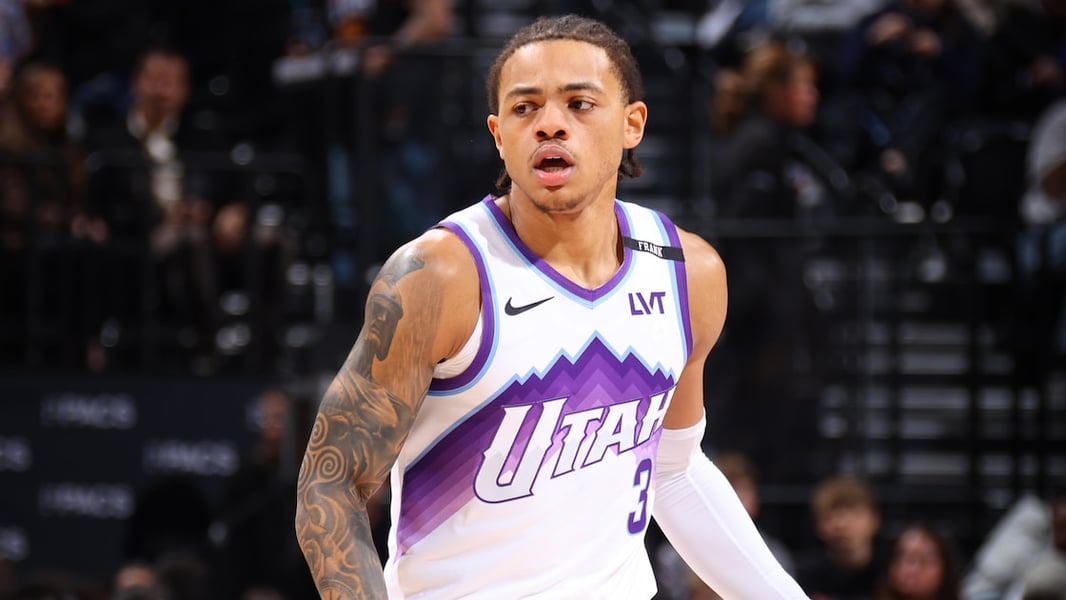

SALT LAKE CITY — After two seasons, Keyonte George was exactly what the numbers suggested: a 39.1 percent shooter.
He posted that same figure as a rookie and again in his second season. It was consistent enough to establish a baseline, but neither the Utah Jazz nor George’s representatives could persuasively argue that a major change was imminent.
Then his third season brought one.
George shot 45.6 percent from the field and 37.1 percent from three-point range. He averaged 23.6 points, 6.1 assists, and 3.7 rebounds across 54 starts.
The improvement amounted to a 6.5-percentage-point jump in field-goal accuracy in a single season—and it held over a full workload.
The Utah Jazz moved quickly. On Thursday, George and the franchise finalized a five-year, $157.5 million rookie-scale extension (no player option, no team option) with ESPN’s Shams Charania reporting the deal first and the Jazz confirming it officially. The extension begins ahead of the 2027-28 season and runs through 2031-32, at an average annual value of $31.5 million. George’s agent, Jason Ranne of THE TEAM, closed the deal with Jazz president Austin Ainge after months of offseason negotiations.
What the structure reveals is confidence. A no-escape, five-year commitment on a player with two prior seasons at the same shooting percentage is the front office making a specific call: that year three was not a sample-size anomaly but a developmental signal, that the adjustment that produced 45.6 percent shooting will persist into year four and beyond.
Ainge put the Jazz’s case in terms that went beyond production. “His work ethic, ability to connect with teammates in the locker room and on the floor, and his love for this team and our fans have been incredible to watch,” the Jazz president said in the official announcement. “Keyonte’s leadership, growth, and commitment to what we’re building make him an integral part of this franchise’s future.” Ryan Smith, Utah’s owner, framed the extension as one step in something larger: “I feel like we’re just getting started on building something super exciting,” he said. “Our best years in Utah are ahead of us, and I think it’s pretty clear.”
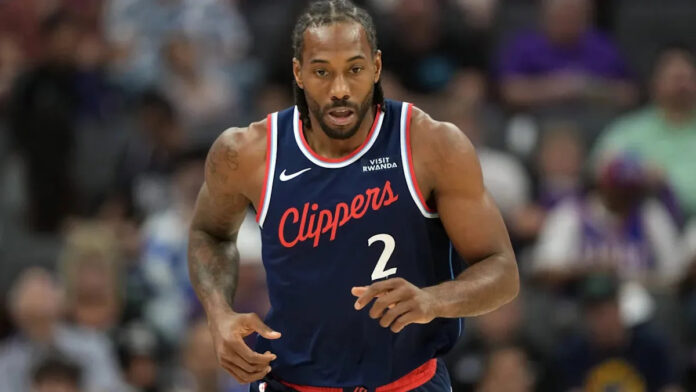
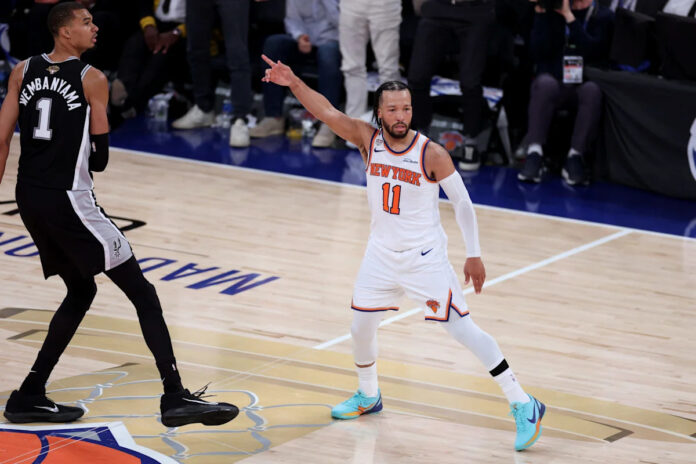
The 22-year-old Baylor product, selected 16th overall by Utah in the 2023 draft, has spent his entire NBA career in Salt Lake City. His draft class has been moving toward locked-in money at an accelerated pace this training camp cycle. Victor Wembanyama committed to San Antonio. Ausar Thompson agreed to a five-year, $155 million extension, Detroit’s All-Defensive First Team cornerstone doing so while a blood clot medical clearance process kept him away from contact drills at training camp. And Brandon Miller entered this week as the last major pick from the class still in active extension negotiations with Charlotte, which has built its entire reconstruction around him as an October 19 deadline approaches.
George, drafted further down that group than any of the three, now carries the highest average annual value among those who have signed: $31.5 million against Thompson’s $31 million. That gap reflects the scoring differential: Thompson is a defensive specialist whose $155 million was an argument for what perimeter defense is worth; George is a genuine two-way contributor whose extension was priced off a breakout offensive season.
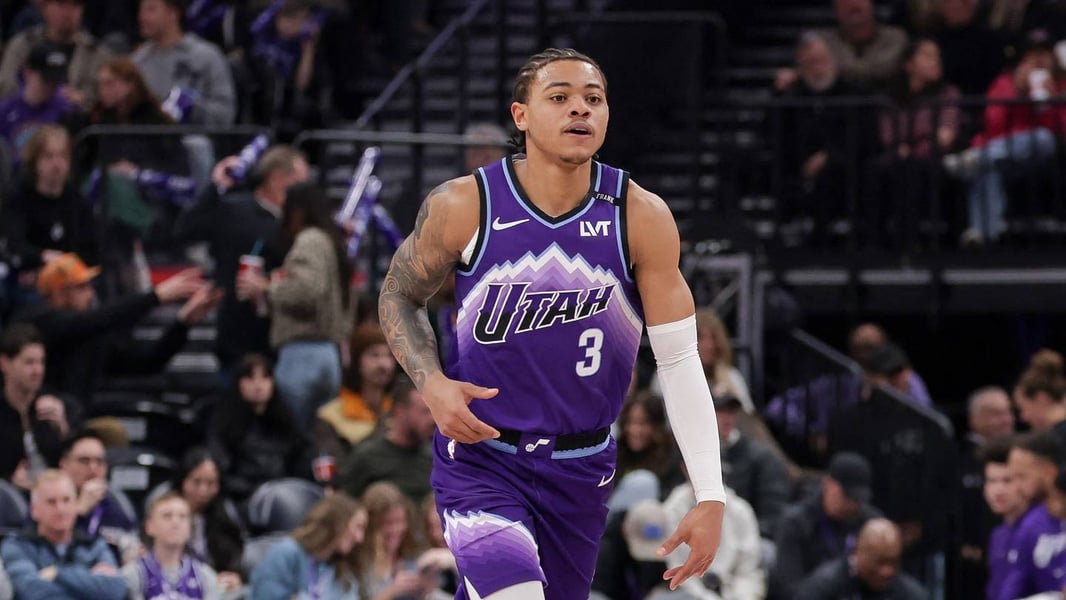
The contract’s unconditional structure means neither side can recalibrate if that answer goes poorly. No team option means Utah cannot reprice him after year four if 2026-27 goes differently. No player option means George cannot reassess if a bigger market opens. The commitment runs in both directions, for five years, without a mechanism to exit.
George’s decision to stay, and to do so without an escape clause, carries its own signal. He has spent all three of his NBA seasons in Salt Lake City, a market that doesn’t offer the same footprint as franchise cities coveting young guards in their prime windows. The Jazz are not competing for a championship in 2026-27. Smith’s vision of “our best years ahead” is honest about the timeline rather than optimistic about the immediate future. George is buying in on a project, and doing so before the project produces results.
Whether Utah is ready to compete by the back half of that five-year window is not answered by this deal. The contract only ensures George is present when the answer arrives.