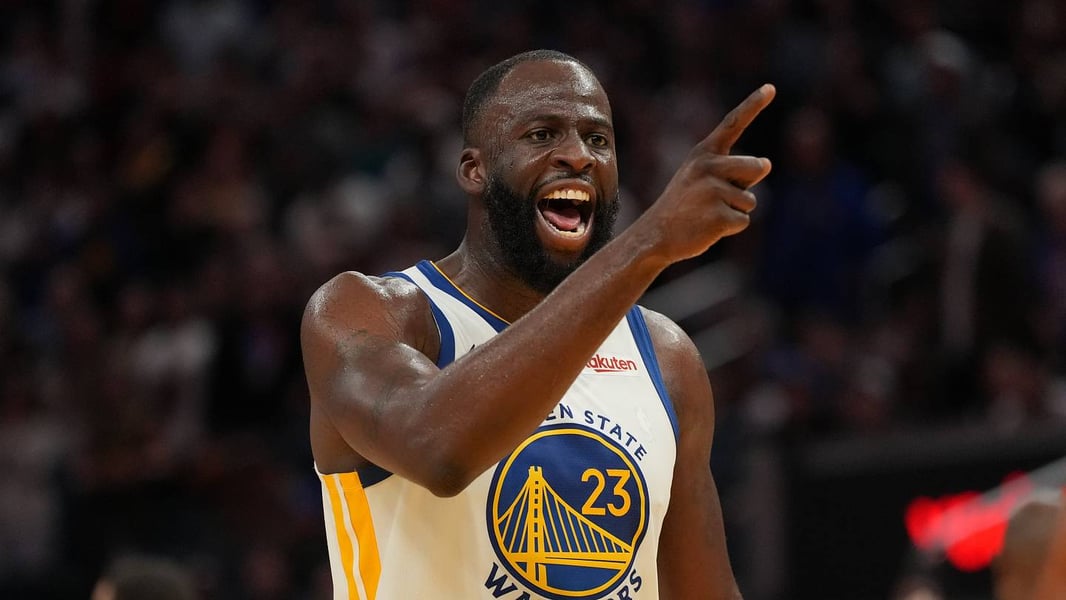

SAN FRANCISCO — Draymond Green had three words for Jonathan Kuminga’s agent, and he said them loudly enough that no one would mistake the point for a whisper.
“This ain’t Monopoly money.”
Green, on a recent episode of “The Draymond Green Show,” directed that line at Aaron Turner, the man who represents Kuminga and who had recently appeared on “The Kevin O’Connor Show” to explain, and implicitly defend, the series of contract decisions that led his client from rejecting a three-year, $75 million Warriors offer to signing a two-year, $12.4 million deal with the Minnesota Timberwolves. Turner’s position, essentially, was that the $75 million offer was misleading because the third year was a team option, making it effectively $48 million guaranteed. He also suggested that Kuminga deliberately declined the deal to force a trade.
Green’s position, rendered in considerably shorter sentences, was that none of that should have been said publicly at all.
“Absolutely unnecessary to talk about this man’s pockets on a podcast,” Green said. He compared the practice to an attorney disclosing privileged communications about a client’s legal strategy. You do not do it. The moment Turner began explaining on-air what Kuminga lost, what he gained, and why the $75 million was not really $75 million, Green argued, he stopped serving his client and started serving himself. “This ain’t really about JK,” Green said. “It’s about the next potential client.”
The suggestion is pointed and specific: Turner, in Green’s view, used a public platform to rehabilitate his own reputation among future clients who might wonder whether he gave Kuminga bad advice. The best counter-argument for an agent who just watched his client’s contract situation become one of the most-discussed failures of the past NBA offseason is not to stay quiet. It is to go on a podcast and explain, in detail, why the alternative story is the real one.
Green does not buy it.
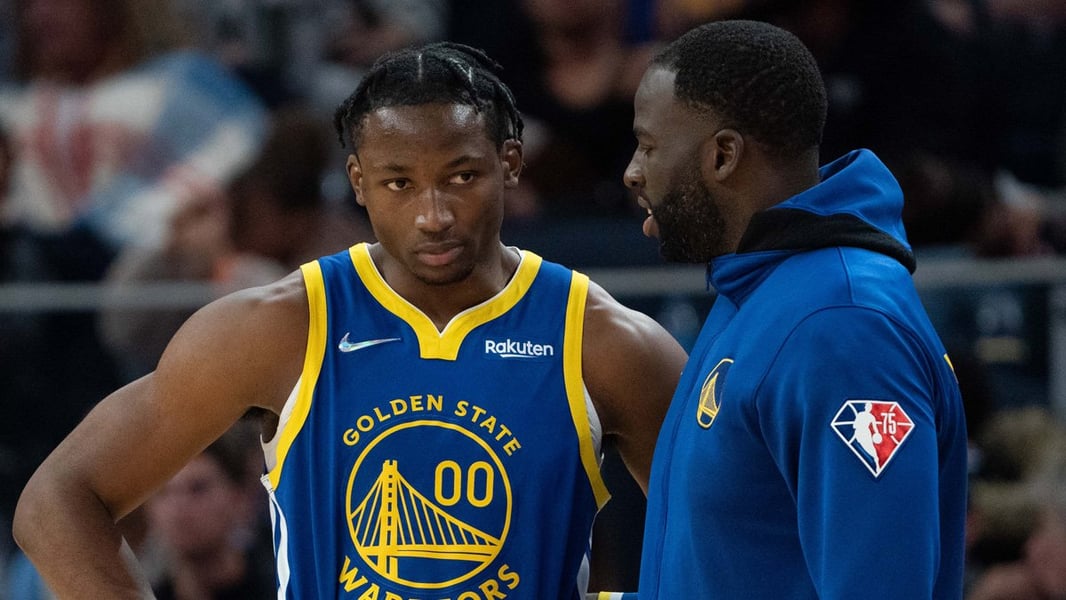
Turner’s version of events, as he laid it out on the O’Connor podcast, has a logic to it. If the team option in year three of the Warriors’ offer meant Golden State could walk away from $24.3 million in 2027, then the “$75 million” label was selling the deal at face value rather than actual value. Kuminga, by declining it and forcing a trade, regained control of his timeline and his next contract. That the next contract came in at $12.4 million rather than something north of $24 million is where the logic runs into reality.
Turner also made a claim on the podcast that Green flagged separately: that Kuminga was the Hawks’ best player “in terms of winning impact” during his brief stint in Atlanta after the trade deadline. Green called this “inflammatory” and suggested it was the kind of thing that puts a target on a 23-year-old’s back rather than clearing the path for him. It is one thing for Kuminga to prove that on the court. It is another for his agent to announce it to the world before Kuminga has put on a Timberwolves jersey for an official game.
According to Sports Illustrated, Green’s criticism centers on the idea that Turner’s media appearances are fundamentally self-serving: that an agent’s job is to get great deals, not to explain the ones that did not go according to plan. According to NBC Sports Bay Area, Green made clear he has no issue with Kuminga personally and continues to support him.
What none of this resolves is the question it keeps circling: whether Kuminga himself agrees with Green’s read of his agent’s behavior, or whether the public criticism from a former teammate makes his situation harder to navigate entering his first full season in Minnesota. Kuminga has not responded publicly. Turner has not indicated whether he plans to. The Timberwolves open their season with one of the Western Conference’s most formidable rosters around Kuminga, including Anthony Edwards, and whether Kuminga’s contract path becomes a cautionary tale or a recalibration point depends on what he does now, not what his agent said last week.