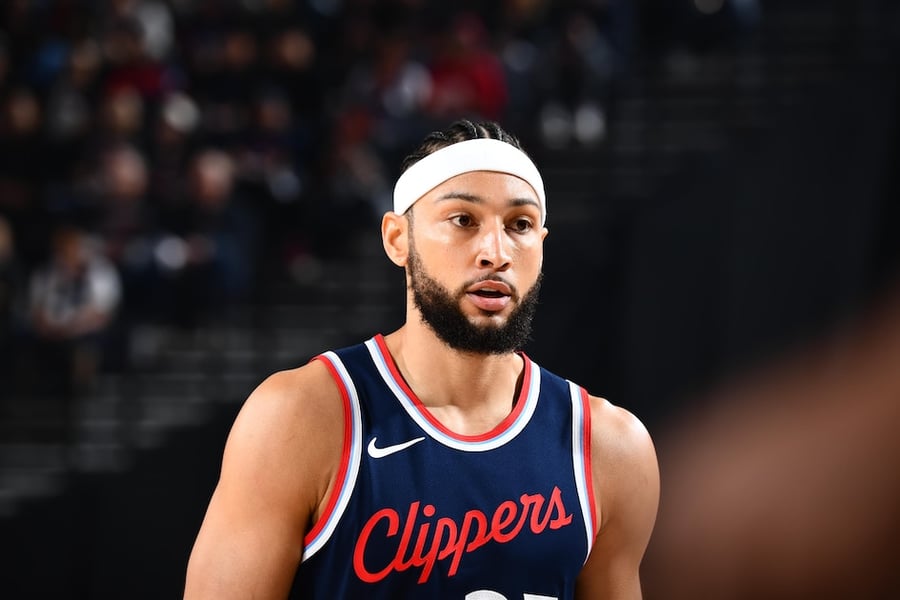

SACRAMENTO — When Sacramento Kings general manager Scott Perry boarded a plane for Miami in late August, he was not relying on reputation or old scouting reports. He was going to watch Ben Simmons play.
Simmons had been participating in an Australian national team camp, and reports reaching Sacramento suggested that the former All-Star was moving well, finishing around the rim and distributing the ball with the ability that once made him a first-round cornerstone during his seven seasons with Philadelphia. Perry traveled to Miami to attend a private workout and came away impressed.
Within days, Simmons flew to Sacramento, where he underwent a full medical examination before taking part in an on-court workout in front of head coach Doug Christie and members of the Kings’ basketball staff.
Christie’s assessment was immediate.
“He looked great,” Christie said. “I’m good. Let’s get him.”
On Tuesday, the Sacramento Kings signed Simmons to a one-year, $3.5 million non-guaranteed contract, bringing an end to his 13-month absence from professional basketball.
Simmons, 30, returns to the NBA after sitting out the entire 2025-26 season while rehabilitating a body that has required two surgeries over the past three years. The deal gives the former No. 1 overall pick and three-time All-Star another opportunity to re-establish himself in the league.
The signing also represents a calculated gamble for Sacramento. Simmons arrives with a résumé that includes elite playmaking, defensive versatility and the distinction of having once been viewed as one of the NBA’s most promising young players. But his recent career has been defined as much by injuries and extended absences as by his production on the court.
For the Kings, the non-guaranteed structure limits the financial risk while giving Simmons an opportunity to demonstrate that the form Sacramento’s front office saw in Miami can translate into competitive NBA basketball.
The immediate judgment from Christie and Perry was encouraging. The harder test begins once Simmons moves from workouts and national-team practices into the demands of an NBA season.
For the first time in more than a year, he will have the opportunity to answer that question on the court.
What the contract does not say is as important as what it does. Non-guaranteed means Sacramento owes Simmons nothing if the back that sidelined him fails to hold. It also means the Kings see the odds as high enough to fly the general manager to Miami, but not high enough to commit real money. The rest of the league — New York, Golden State, other franchises that had interest — also saw those odds and passed. Bleacher Report tracked the competing offers as they developed; Sacramento was the only team that sent its general manager to watch Simmons in person.
He turned down New York. He turned down Golden State. He chose a franchise that plays in a city that has never had the chance to destroy him.
“You go to Sacramento, it’s about basketball,” one person familiar with the decision told reporters. The pressure in New York is structural — baked into decades of expectation. Golden State carries Steph Curry’s shadow over every guard who sets foot in the building. Sacramento, which rebuilt around the 2026 draft, offers something neither city does: a chance to matter without the weight of what came before.
What Sacramento needs from Simmons is specific. The Kings selected Darius Acuff Jr. with the 7th overall pick in the 2026 draft. Acuff Jr. steps in as the starting point guard for a team that had De’Aaron Fox traded away before last season. He is 19. The gap between a 19-year-old running the offense for a playoff-caliber roster and no veteran point guard infrastructure behind him is exactly what the Simmons deal fills. Christie told Simmons to “come in and be himself” — language that signals opportunity rather than a defined ceiling. Yahoo Sports noted that the fit works in both directions: Sacramento needed a playmaking defender, and Simmons needed a low-scrutiny environment where the daily basketball conversation is not about him.
The question underneath all of it is the one the Kings answered to their own satisfaction in Sacramento’s practice facility: is the body actually fixed? Simmons had back surgery in May 2022. Another in March 2024. He played 51 games across the 2024-25 season with the Brooklyn Nets and the Los Angeles Clippers, averaging 5.0 points, 5.6 assists, and 4.7 rebounds in 22 minutes — the profile of a player managing a game rather than playing one. Then he sat out 2025-26 entirely.
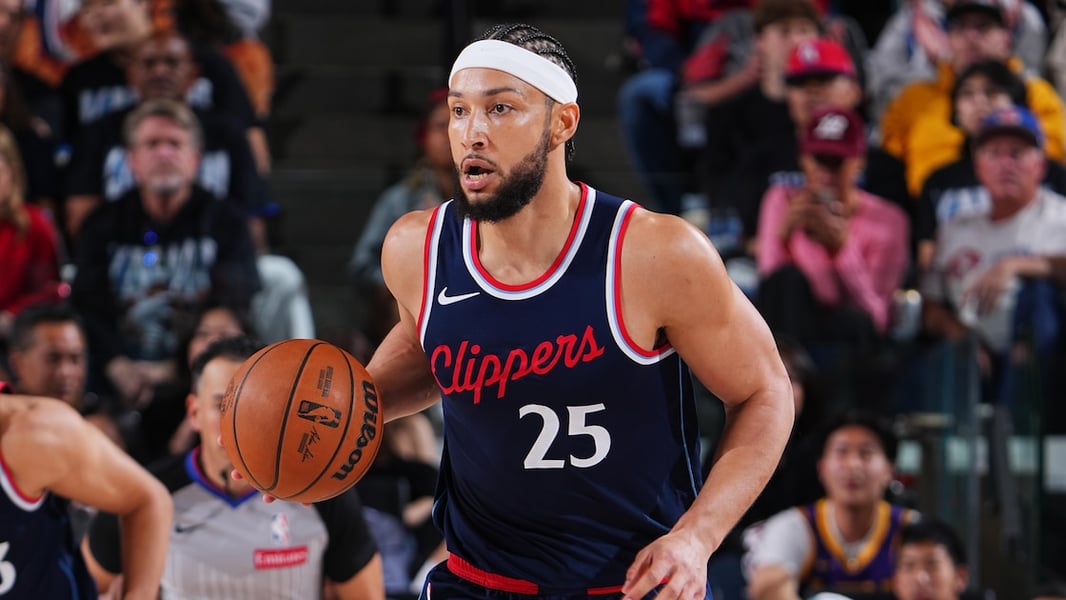
His godfather described Simmons as “really, really happy, and proud, and excited to be a Sacramento King.” The emotional register matters, not because happiness determines performance, but because the opposite state demonstrably did. The Philadelphia years after the 2021 playoff collapse corroded whatever Simmons had left of his relationship with basketball. Brooklyn was not a reset. It was a managed retreat. Sacramento offers a context with no accumulated damage — a roster, a coach, and a general manager who arrived at their interest through observation rather than reputation.
James Harden’s $97 million arrival in Cleveland this month illustrated how the league currently absorbs veterans who carry complicated histories — structured around current team needs, not past reputations. Simmons is doing something similar, but the terms are almost entirely reversed. Harden’s contract signals certainty. The non-guaranteed $3.5 million signals the opposite: the bet is Simmons’ to prove, not Sacramento’s to make.
Training camp opens September 29. Scott Perry flew to Miami to find out what Ben Simmons is now. Christie’s workout told him enough. The rest is October’s problem.