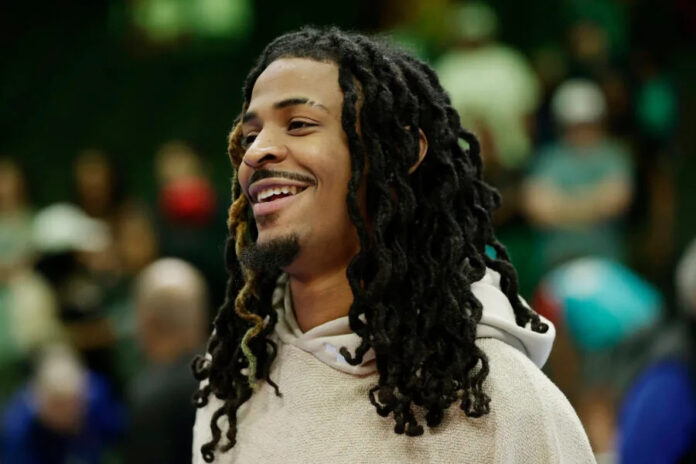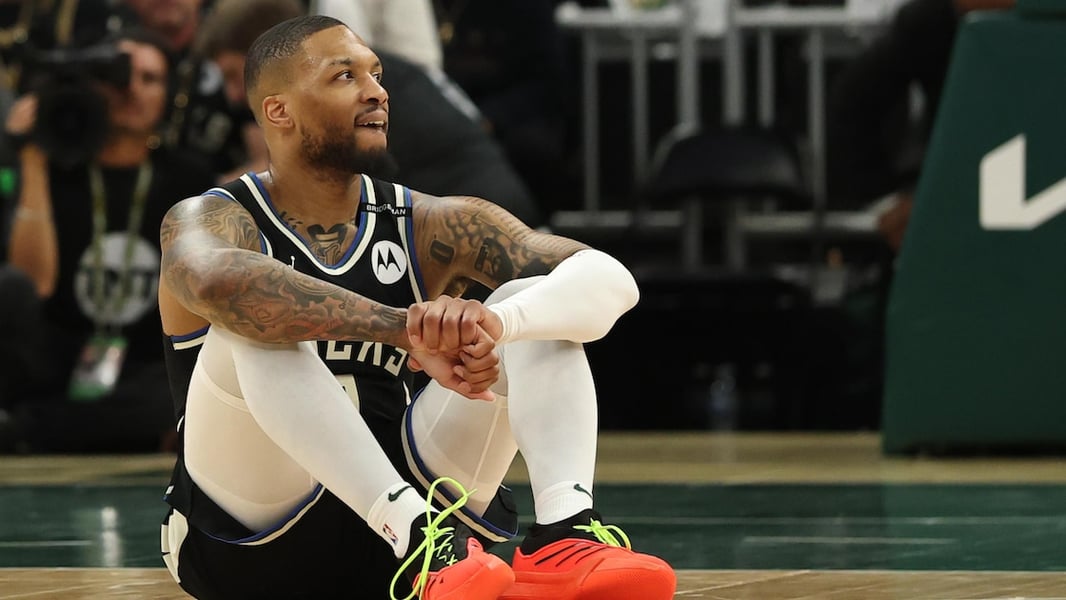

PORTLAND — Damian Lillard turned 36 in July. He has not played competitive basketball since April 2025, when his Achilles gave out during a first-round playoff series in Milwaukee. When Portland’s training camp opens on September 29, the question that has defined the franchise’s entire summer finally gets an on-court answer: how does a returning Lillard share a floor with Ja Morant, and does Portland have a backcourt experiment or a backcourt problem?
The Trail Blazers went into this offseason with a dual mandate. They traded for Morant, a star whose explosive style and suspension history have made him one of the league’s most polarizing talents, and they brought Lillard home to a franchise he left in 2023. Both moves landed. Whether the combination plays basketball at the level Portland needs is the Western Conference’s most compelling open question as camps approach.
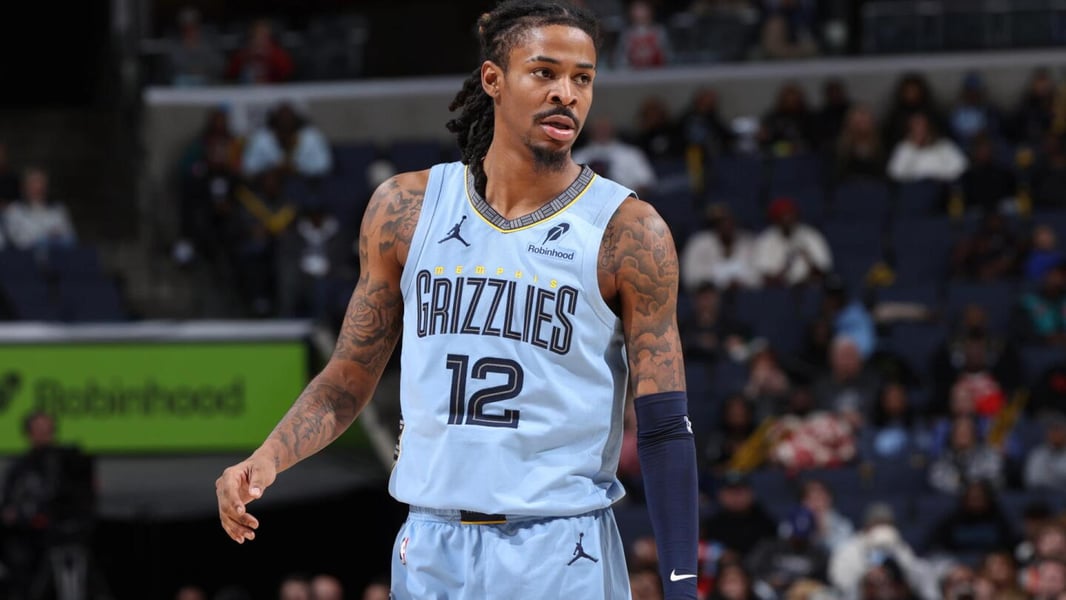
Portland acquired Morant from Memphis on June 29, sending Jerami Grant and Kris Murray back to the Grizzlies in an exchange widely regarded as a bargain. Morant, who is 25 and a two-time All-Star, arrives with the first step and pick-and-roll instincts that made him one of the NBA’s most dangerous point guards in his best seasons, at a cap number the Blazers can absorb. Memphis, completing a full teardown after trading Desmond Bane and Jaren Jackson Jr. over the previous 12 months, took an expiring deal and moved forward. For Portland, the arithmetic looked obvious.
What no roster analysis has answered is the possession-by-possession question. Morant operates best when the ball is in his hands — driving, collapsing defenses, making decisions before the help has time to arrive. NBC Sports flagged the structural risk: both guards have built their careers on initiating offense, and neither has spent significant time functioning as a complementary piece. Whether that collision of styles produces creativity or redundancy is something Chauncey Billups will not know until preseason, possibly not until December.
Lillard adds another layer of uncertainty. The nine-time All-Star tore his Achilles during the Bucks’ first-round exit and spent the entirety of the 2025-26 season in rehabilitation. Portland brought him back on a reported three-year, $42 million deal, and his return has been described as on track by Blazers officials. Bleacher Report reported in August that Lillard is targeting full participation when training camp opens, though the specifics of how Portland manages his preseason minutes remain unaddressed.
An Achilles rupture at 34 is a different rehabilitation proposition than one at 26. The league has examples of players who returned at or near their previous level, and examples of players who never fully did. Lillard’s game has always depended less on raw athleticism than most guards at his position — his pull-up from range, his movement off the ball, his ability to manufacture space without a step-back — which gives Portland reason for measured optimism. What Billups will not know until October is how much of Lillard’s original burst survives, and how it integrates with a backcourt partner who relies almost entirely on that burst.
The broader context arriving with Portland’s questions is a Western Conference that has been substantially reshaped since June. The Houston Rockets, who committed $208 million to Amen Thompson in a deal this site called a bet on the player he has not yet become, enter the season as the conference’s most financially committed young roster. Golden State is navigating a Stephen Curry extension question with a franchise that has not resolved its next chapter. Oklahoma City chases a second consecutive championship run. Into that field, Portland drops two of the most compelling guard profiles in basketball and asks them to coexist.
What the Trail Blazers have, against all the uncertainty, is a frontcourt that compensates for the questions above it. Deni Avdija at small forward gives Portland a legitimate third playmaker. Donovan Clingan, their 2024 lottery pick, provides rim protection and finishing at the level of the NBA’s better young centers. Robert Williams, who signed a three-year extension before reaching free agency, brings physicality and passing range from the four or five.
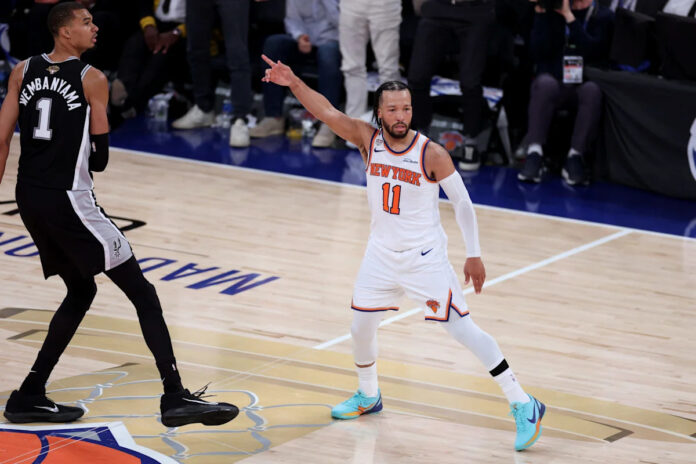
The defending champion New York Knicks, whose Eastern Conference landscape has already shifted since Jalen Brunson carried them past San Antonio in June, arrive in October with a target on their back. The rest of the league is trying to answer its own offseason questions. Portland’s happens to be louder than most.
Whether this adds up to a playoff team is genuinely unknown. The last time the Blazers made the postseason, Lillard was still in his prime and Portland was still one of the West’s reliable lower seeds. A roster this reconfigured — a returning star, a star whose fit is untested, an unresolved rotation — does not resolve itself in September. That answer comes in February, maybe March, when the mileage has accumulated and Billups has found which pairing actually works.
It is, at minimum, worth watching. The Western Conference has not lacked for compelling questions heading into an October tip-off. Portland has supplied one that has no obvious answer.