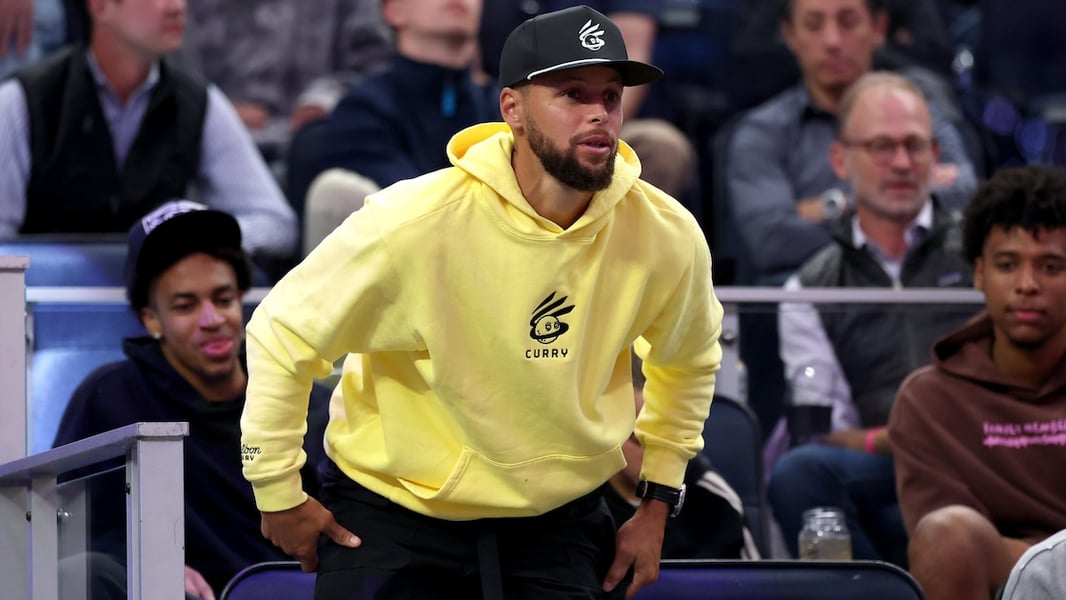

SAN FRANCISCO — The most expensive question in the NBA right now is one Stephen Curry has not answered.
The Warriors gave it to him last week. The extension window opened in late August, and instead of a single take-it-or-leave-it offer, Golden State handed their franchise cornerstone a list. A one-year maximum. A two-year maximum worth $136.7 million. Or nothing — wait until July 2027, become a free agent at 39, and let the market determine what the greatest shooter in the history of the game commands at that age. According to ESPN’s Anthony Slater, the Warriors spelled out their posture explicitly: “You can do this, you can do this, you can do this. If you want the one-year max, if you want the two-year max, if you want to wait, here’s your menu. Pick off your menu.”
Curry, entering his age-38 season, said essentially nothing about timing. “The deal and the contract stuff will happen at the right time, and we’re not letting it be a distraction,” he told reporters Tuesday. Then, almost as a side note: “There’s no question I want to be here the rest of my career, and I’m pretty sure that’s going to happen.”
Pretty sure. For a franchise constructed entirely around one player’s career, those two words contain a great deal of ambiguity.
The answer Curry gives will have consequences extending well beyond his own bank account. Last season, the Warriors went 24-19 when Curry was healthy and 13-26 when he was not — a split that describes a franchise that has never adequately solved the problem of what to do when he cannot play, because every time they tried to build around his absence, he came back and made the problem temporarily irrelevant. They finished 37-45, missed the playoffs, and spent the summer recalibrating. Draymond Green stayed, at $27.7 million annually through next season. Jimmy Butler arrived on an expiring deal the Warriors are already exploring whether to trade before the February deadline. Every decision in San Francisco this winter circles the same point: what Curry signs, and when.
The pay cut possibility is real and it has not been dismissed. A version of this offseason exists in which Curry signs a two-year deal meaningfully below the $68.35 million-per-year maximum, giving the Warriors flexibility to pursue a proven second scorer at some point before his window fully closes. Curry is four championships deep into a career that has not required external validation for a long time. He is not chasing a fifth ring to define himself. But the Warriors’ situation is specific enough that the difference between a max deal and something below it could determine whether they can add the kind of player that has been missing from Golden State since Klay Thompson left — a reliable co-creator who does not require Curry to carry 26 possessions a night at age 38.
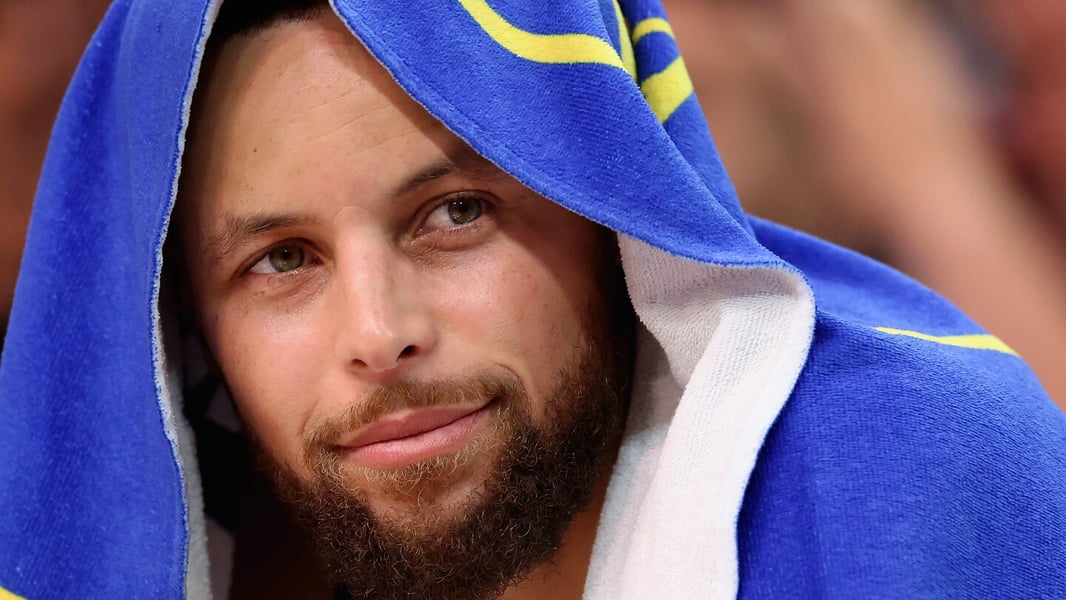
If he waits, the math shifts in a different direction. NBC Sports reported mutual interest between Curry and Golden State on an eventual extension, but also noted that nearly the rest of the roster is vulnerable in the next calendar year — which means Curry playing the 2026-27 season without a new deal would arrive alongside a wave of expiring contracts that could reshape the team around him whether he directs it or not. The NBA’s Over-38 Rule adds a structural layer to this calculus: players who are 38 or older at the time of signing are limited to contracts no longer than three years. An extension signed before the season is structured as two years, running through 2027-28. Free agency in July 2027, at age 39, would theoretically allow for a three-year maximum deal worth north of $200 million in total value. Whether any organization would pay that to a player with Curry’s injury history at that age is a question the market would answer, not the Warriors.
The health variable is the one no contract structure resolves. Curry missed 43 games last season with patellofemoral pain syndrome, the same knee condition that has periodically interrupted his availability since 2019. In the 43 games he did play, he averaged 26.6 points, 4.7 assists and 3.6 rebounds at a level that still made him an All-Star candidate. The efficiency was intact. The availability was the variable, as it has been at intervals throughout the last seven years, and as it will remain regardless of which option he selects from the Warriors’ menu.
Mike Dunleavy, the Warriors’ general manager, has not left much doubt about where the organization stands. “I don’t see under any scenario where we don’t want to figure out a way to have him finish here,” Dunleavy said in August. The franchise’s position is clear enough. The schedule for the conversation is what neither side has made explicit.
What Curry has said, across multiple sessions with reporters over the past two weeks, is that the city is not the question. “There’s no secret I want to be here the rest of my career,” he said Wednesday. The question is when and at what price — and on both of those things, Curry has given no indication that he is in a hurry.
The Warriors are waiting. The league is watching. Somewhere in his thinking is a number and a timeline that Curry has not shared yet.
He has the menu. He hasn’t ordered.