
SAN FRANCISCO — The last thing Jimmy Butler did before training camp was tell anyone who would listen that he wants to finish his career as a Warrior. The last thing ESPN’s Brian Windhorst said was that the team might trade him anyway.
That tension, landing simultaneously, is the defining question of Golden State’s 2026-27 season before a single minute has been played.
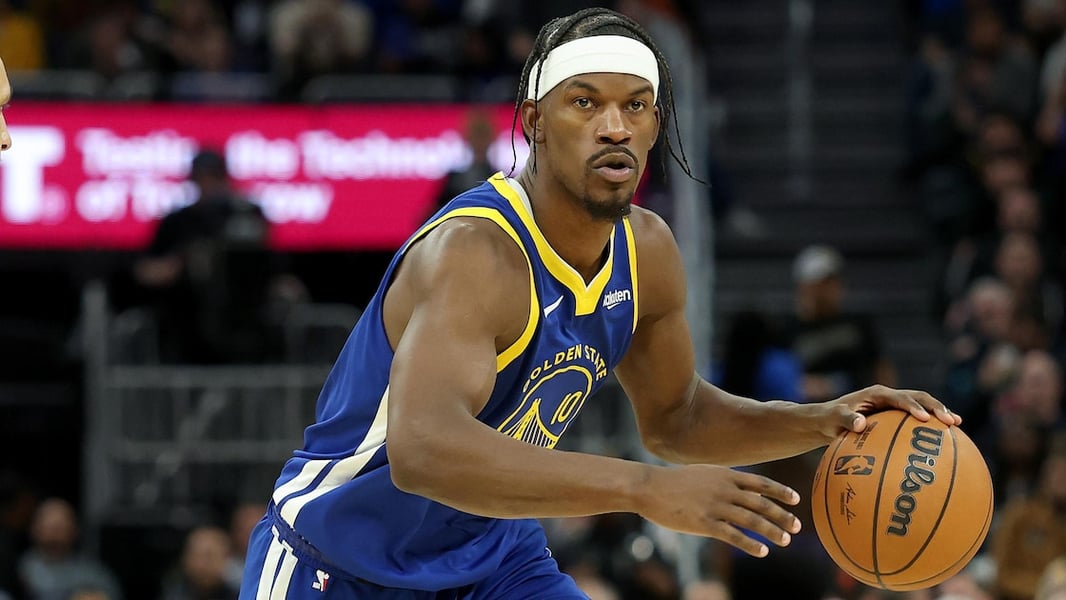
Windhorst, on Monday’s episode of the Hoop Collective podcast, as Yahoo Sports reported, said the Warriors are “likely” to explore trading Butler before February’s trade deadline — even as Butler himself had just delivered a statement that seemed designed to foreclose exactly that possibility. “End is a bad word,” Butler said publicly, “but this is where I want to be done. Retire here.”
Both things can be true at once. In the modern NBA, both things usually are.
Butler enters 2026-27 on a one-year, $56.8 million expiring contract, returning from a torn ACL that kept him out all of last season. That injury, as damaging as it was, paradoxically made him a more interesting trade asset: a 36-year-old Hall of Fame-caliber guard on the verge of returning to full health, on a salary that functions as a luxury-tax lifeline for teams drowning in max contracts. Whatever remains of Butler the player, the contract surrounding him represents something most front offices would pick up the phone for.
The Warriors have already built a framework around that reality. Three tradeable first-round picks are currently on the table, with up to four more potentially accessible next summer. That is real currency in an era when draft capital moves stars. The combination of Butler’s expiring deal and those picks is enough to open conversations that probably should not be happening — were Windhorst not reporting that they are.
Golden State has already had some of those conversations. The Warriors explored sending Butler to Milwaukee for Giannis Antetokounmpo before the two-time MVP was dealt to Miami. They declined a request from the Los Angeles Lakers to include Butler in a package for Anthony Davis earlier this offseason. That second decision, turning down the chance to add Davis at Butler’s expense, tells you something about where the organization stood as recently as the summer. But front offices can change their minds when the right offer arrives. February is still five months away.
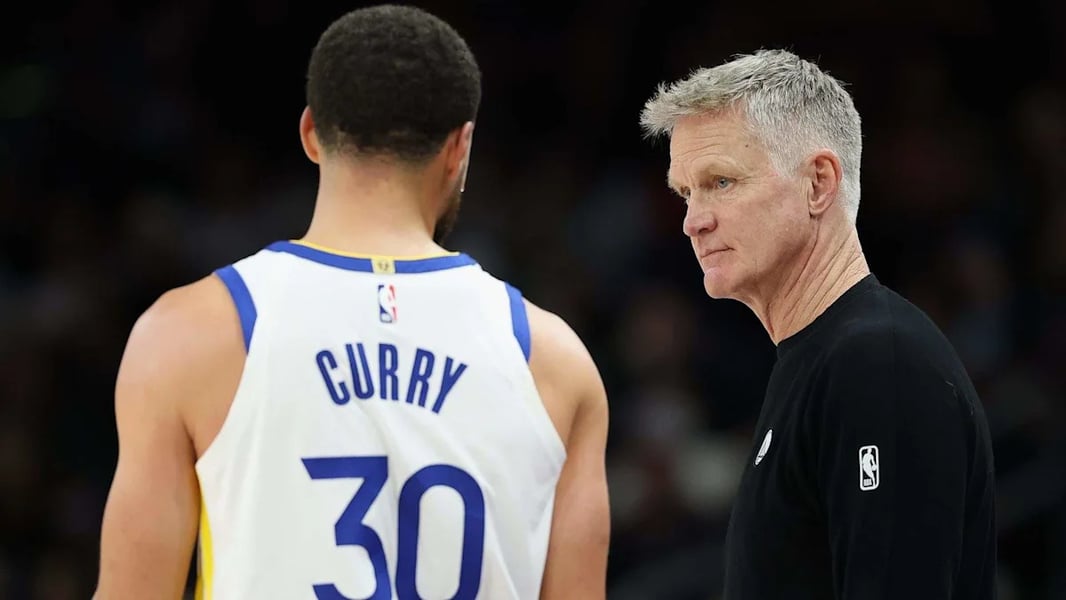
For Stephen Curry, none of this exists in a vacuum. The franchise’s all-time scoring leader is simultaneously eligible for a two-year, $136.7 million contract extension — negotiations that will run in parallel to whatever Butler trade conversations materialize. Curry has been public about wanting to retire in Golden State, an uncommon declaration of loyalty in an era defined by player movement, but one that now frames every roster decision the front office makes. What Golden State gets in return for Butler, if anything, may determine whether Curry’s last competitive window widens or closes for good.
The cap math is the reason this matters beyond sentiment. Moving Butler alongside Draymond Green and Kristaps Porzingis could clear $80 million or more in salary, potentially reaching $120 million if Curry declines his extension and re-signs on a reduced deal to help the team compete. That is generational flexibility. It is also a significant bet: that whatever arrives in a Butler trade will be more valuable to Curry’s remaining seasons than a healthy Butler returning from injury and, by his own account, willing to accept whatever role he is given.
Butler’s agent, Bernie Lee, has been telling teams his client intends to stay in San Francisco. That posture is consistent with Butler’s own public statements. The alignment between what a player says and what his representation says usually means the player is genuine. Whether the front office shares that conviction is the part of this story that Windhorst’s reporting does not settle.
Several other veterans in complicated situations have confronted this gap between their own intentions and their team’s calculations in recent years. Some, like Victor Oladipo, who published an open letter to 30 NBA general managers this week asking for a chance to prove his body is right, have had to make their case from scratch. Butler is in a different position — he has the contract and the franchise — but the dynamic of a front office making quiet trade calculations while a player insists publicly on his commitment is familiar terrain in this league.
Windhorst’s framing is deliberately cautious. The Warriors are not actively shopping Butler. The posture, as he described it, is one of readiness rather than urgency: if the right player or acquisition becomes available, the organization could deploy Butler’s value as a mechanism. That is meaningfully different from the Warriors putting Butler on the block. It is also meaningfully different from the closed door Butler’s own words implied.
What no one yet knows is which team, if any, would make a serious offer before February. No realistic bidder has emerged in public reporting. The Lakers scenario appears dormant. The Milwaukee conversation belongs to the past. Sports Illustrated noted that Butler’s retirement comments strengthen the case for keeping him — a player willing to stay on a team-friendly deal in 2027 is an asset beyond the current season. That logic runs directly against what Windhorst reported.
Both narratives are true. The Warriors can simultaneously respect Butler’s stated wish to retire in gold and blue while keeping one eye on what his contract could bring at the deadline. That ambiguity is not a contradiction. It is February five months early.
The only part of this story no one has yet written is who makes the call that ends the ambiguity — and whether Butler’s answer, when that call comes, matches what he said before camp began.