
INDIANAPOLIS — The letter Victor Oladipo published Tuesday in the Players’ Tribune runs about 900 words. It took him considerably longer to earn the right to write it.
Three major knee surgeries. Three years out of the NBA. A stint in the Chinese Basketball Association last fall. A G League season in Wisconsin, at 34 years old, playing 30 minutes a night for the Milwaukee Bucks’ affiliate. A private pro day workout in Las Vegas in July, where multiple front office executives watched him run and cut and shoot, and said nothing after. All of that, and the former Indiana Pacers All-Star still needed to put his appeal in writing.
“I believe my body is finally right,” Oladipo wrote, as Yahoo Sports reported. “I believe I still have GREAT (and more importantly WINNING) basketball in front of me. I believe I can be a valuable contributor to an NBA locker room. And what I’m asking for right now is an opportunity to prove it.”
The letter is not a farewell. It is a professional document addressed to 30 general managers, which is both more dignified and more revealing than a retirement announcement would have been.
Oladipo was the No. 2 pick in the 2013 draft, selected by the Orlando Magic. He moved around early before the trade that changed his career: in 2017, he went to Indiana in the deal that sent Paul George to Oklahoma City. The Pacers, expecting a role player, got something else entirely. Oladipo had the best season of his career in 2017-18, winning NBA Most Improved Player, making his first All-Star team, and averaging 23.1 points per game. He made the All-Star game again the following year. He was, briefly, exactly what the league had hoped when they took him second overall.
Then, in January 2019, the right quadriceps tendon went. Not just a strain but a full rupture, the kind of injury that requires a player to relearn how to bear weight on a leg. Oladipo was 26. He came back, played, needed a second surgery in 2021, came back again. In April 2023, with the Miami Heat in the postseason, the left patellar tendon tore. He has not played in an NBA game since.
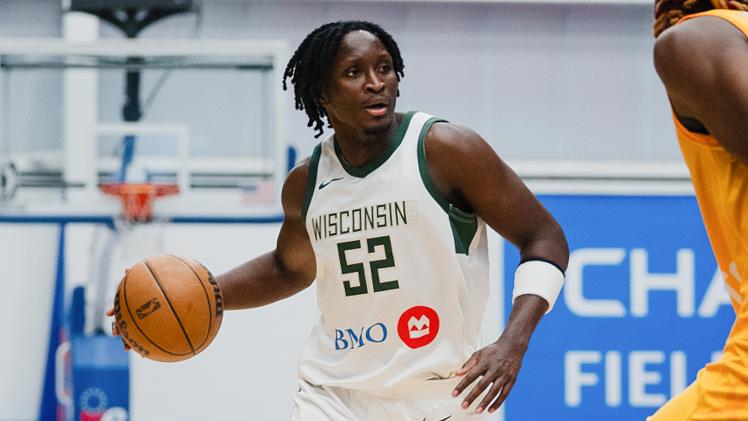
What followed was not a graceful wind-down. Oladipo appeared in preseason games in the Chinese Basketball Association last fall, then signed with the Wisconsin Herd. In 26 G League games last season, he averaged 14.0 points, 4.6 rebounds, 3.8 assists, and 2.1 steals at 38.9 percent shooting. Those numbers, for a 34-year-old on a team that was not built around him, are the entire argument for his return.
In July, he made that argument in person. A pro day in Las Vegas during NBA Summer League drew scouts and front office personnel from around the league. Multiple attendees came away impressed, Bleacher Report reported. No team called.
So Oladipo wrote a letter instead.
The Players’ Tribune has become the venue of choice for athletes who want to tell their own story without a mediator. Oladipo’s piece is part basketball argument, part personal testimony, and part document for his daughter. “I hope that this is the page she can turn to when it’s tough times,” he wrote. The basketball case and the emotional case are inseparable, and he is not pretending otherwise.
What the letter cannot do is answer the question it raises. Why, after a pro day that reportedly impressed attendees, did nothing happen? The answer is never entirely about ability. At 34, with Oladipo’s injury history, every NBA team is calculating not just whether he can contribute now, but whether the risk of another injury defeats the marginal gain. The league’s economics treat that math harshly for players at his stage. The NBA minimum salary for a 10-year veteran this season is $2.6 million. For most teams, that is real money for a spot they need for a younger player on a rookie deal, or for roster flexibility as the league weighs expansion.
Oladipo’s letter acknowledges none of that directly. He does not negotiate his own price. He does not hint at contract flexibility. His argument is ability and will. “Maybe a team out there will give me a chance. Maybe no team will. That’s really up to you all.”
That sentence carries weight because it is accurate. What he is describing is not a negotiation. It is a public record, now part of how this chapter of his career is understood. Any general manager who watched the Wisconsin Herd tape, attended the Las Vegas workout, and still has not called now has that inaction on record.
The NBA’s treatment of recovering veterans rarely makes news until someone makes it news. Players who suffer catastrophic knee injuries before 30 and fight back for years navigate a system that values projection over demonstrated recovery. Some veterans have the security of a franchise that believes in their future, choosing to build a career around a single player’s commitment. Oladipo is asking 30 organizations to form that belief from scratch, with no track record to stand on except three years of working his way back.
Whether any of them do is what this article cannot answer. The letter exists. The tape exists. The question has been asked publicly, and 30 general managers have read it.
Victor Oladipo’s body may finally be right. Whether any team in the NBA agrees is a different calculation entirely.