
LAS VEGAS. Five ownership groups. One available seat. A price tag that has climbed to at least $8 billion. And a league that voted unanimously in March to make it happen but has not yet said when, or to whom.
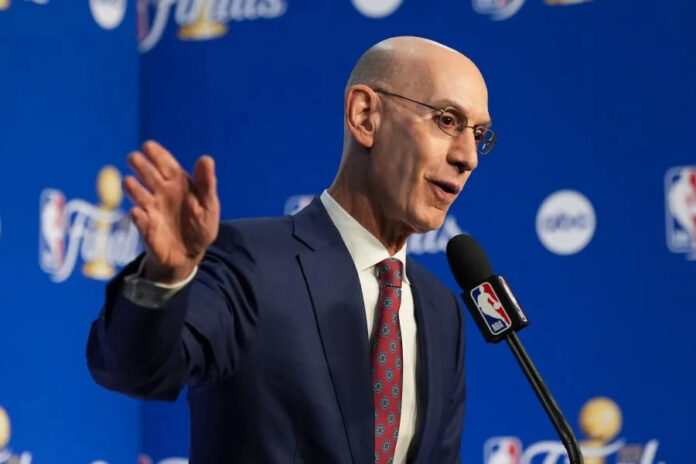
The race to land the NBA’s Las Vegas expansion franchise is the most consequential ownership competition in professional sports right now, and it is far from settled. The league’s board of governors, having authorized the process in a March 25 unanimous vote reported by NBC Sports, hired investment bank PJT Partners to evaluate the bidders. Commissioner Adam Silver has promised a decision before the end of 2026. What he has not promised is that it will happen at all. “Not foregone,” Silver said at the NBA Summer League in July, a reminder that leagues can walk to the edge of expansion and then step back.
Las Vegas has not waited for the official answer. The Summer League that Silver referenced has operated out of the MGM Grand Garden Arena and Thomas and Mack Center for more than two decades, drawing record attendance, merchandise sales, and social media numbers in recent years. “We have really operated the Summer League as our 31st team for 22 years,” Silver told reporters. The infrastructure, the appetite, and the market are not in question. The ownership process is.
Five groups have publicly disclosed their interest. Bill Foley, who built the Vegas Golden Knights into an NHL championship franchise and holds a minority stake in T-Mobile Arena, has been in this conversation since its earliest stages. Marc Lasry, the former Milwaukee Bucks co-owner, has re-entered the ownership world with a Las Vegas bid. Earvin Johnson, whose post-retirement portfolio spans sports, media, and technology, is leading a fifth consortium. And the Las Vegas Jacks, built by Basketball Hall of Famer Jerry Colangelo alongside Horizon Sports CEO David Levy, has moved with the most public aggression, announcing it has raised $8 billion and plans to build a dedicated arena and entertainment district from the ground up.
The sixth name in this story left it. Josh Kushner and Bob Iger spent months pursuing the Las Vegas expansion before pivoting in August to acquire the Los Angeles Lakers for $12.5 billion, a record for any professional sports franchise. Their departure recalibrated the conversation. A franchise awarded at $8 to $10 billion would enter a league in which its most storied team just sold for $12.5 billion. The expansion price is not a concession; it is, by that measure, a discount.
The arena question is the one that hangs over all of it. The Jacks group’s commitment to build their own venue is unusual in the modern expansion conversation. Most prospective franchises seek to inherit or retrofit an existing arena. Las Vegas’s sports landscape has expanded quickly: the Golden Knights at T-Mobile, the Raiders at Allegiant Stadium, the Oakland Athletics’ new ballpark under construction near the Strip. A dedicated NBA arena would require a construction timeline and financing commitment that typically outlasts the bidding process itself. That Colangelo’s group has staked its pitch on exactly that commitment is either a show of confidence or a liability, depending on how the league’s governors weigh arena certainty against ownership certainty.
Seattle represents the counterpoint in the league’s stated two-city expansion plan. Only one group has publicly disclosed a bid there: Samantha Holloway, a governor of the NHL’s Kraken, whose Climate Pledge Arena was built with NBA locker room specifications already embedded. Seattle lost the SuperSonics to Oklahoma City in 2008, a relocation that remains the most contentious franchise move in recent league memory. The market’s appetite for an NBA return is real. The competitive ownership field is not.
Silver has not explained publicly what happens if Las Vegas produces a clear winner and Seattle does not. The simultaneous two-city expansion has been the league’s stated position, but it is a position, not a binding commitment. Whether the NBA awards one franchise or two, and whether they arrive on the same timeline or staggered, is among the decisions PJT Partners has been hired to help inform.
The 2026-27 NBA season opens in October without a 31st team. The question is whether it opens as the second-to-last season before one arrives. A vote timed to the 2028-29 launch target requires a decision on ownership and arena by late 2026 at the latest, which is what Silver has indicated the league will attempt to deliver.
As Yahoo Sports reported, the Jacks and the Foley group are currently considered the leading candidates, though no consensus has emerged inside league offices. Silver’s year-end deadline, if it holds, would make the next five months the most consequential in the history of professional sports in Nevada. The only question left to answer: who owns the NBA’s first expansion franchise in 22 years, and whether Las Vegas gets to be the city that ends that wait.