
MINNEAPOLIS — Jon Krawczynski, who has covered the Timberwolves since the Kevin Garnett era, framed it as a riddle on September 1: what if Garnett wasn’t the only All-Star named Kevin from Minnesota’s past to come back this year? Three days later, on his podcast, he answered it. Kevin Love, a five-time All-Star and 2016 champion who remains the most decorated Timberwolf in franchise history, is open to a return to Minnesota. And from what Krawczynski could confirm, the Wolves have some interest in bringing him home.
The immediate qualifier matters as much as the headline. Minnesota’s own assessment, per Krawczynski, is that the reunion is “probably less likely that it happens than it doesn’t.” That phrasing means the interest is real and the math is hard.
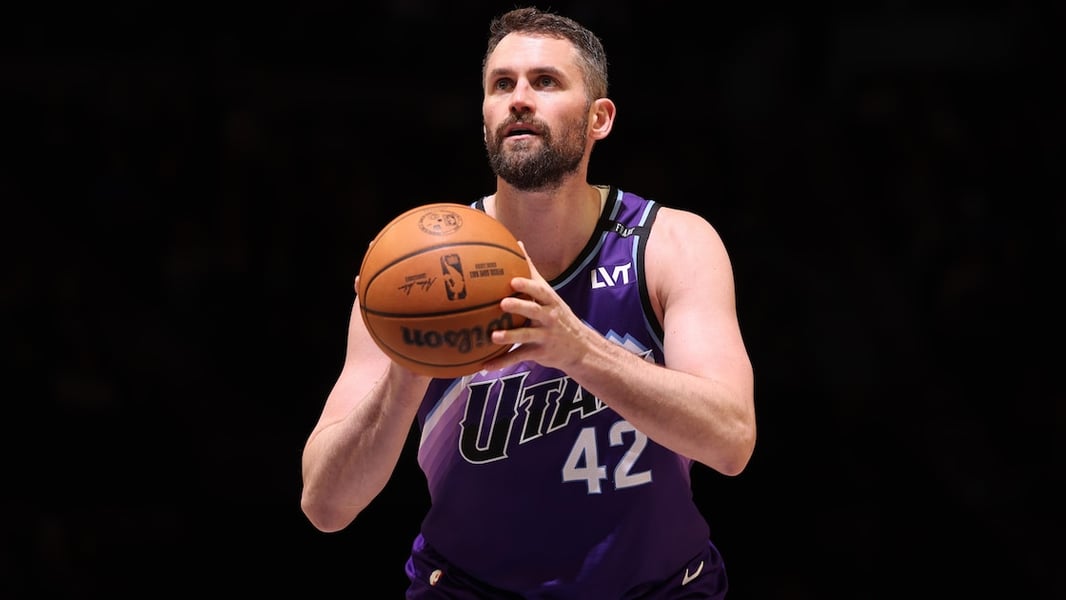
Kevin Love is 38, a free agent, and potentially one roster spot away from returning to the franchise where his NBA career first became a star-making story. After appearing in 37 games for the Utah Jazz in 2025-26, Love averaged 6.7 points, 5.8 rebounds and roughly 15 minutes per night — numbers that point to a veteran reserve rather than a player expected to anchor a rotation.
That distinction matters if Minnesota is seriously considering a reunion. Love would not be returning as the player who once carried the Timberwolves’ offense and rebounding load. Any potential deal would be about what a 38-year-old former All-Star can still provide to a team that has one roster spot remaining and has spent the summer reshaping itself.
The likely financial framework, if an agreement materializes, would be the veteran’s minimum. The bigger question is whether Minnesota believes Love’s experience, basketball intelligence and championship pedigree can add value in a limited role.
The Timberwolves Love could join today bear little resemblance to the franchise he left 12 years ago. When Minnesota traded him to Cleveland in the summer of 2014, Love was the centerpiece of a team that had not advanced beyond the first round of the playoffs since the Kevin Garnett era.
Across six seasons in Minnesota, Love averaged 19.2 points and 12.2 rebounds per game. He earned three All-Star selections and two All-NBA honors, establishing himself as the franchise’s most accomplished player since Garnett. He had produced at an elite level while playing with relatively limited supporting talent. His departure illustrated the difficult calculation small-market franchises can face when they develop a star whose future becomes difficult to secure.
He could now return to Minnesota under entirely different circumstances: not as the centerpiece, but as a veteran trying to help a team already built to compete.
Love won an NBA championship with Cleveland in 2016, contributing to one of the most significant defensive possessions of his career in Game 7. In the final seconds, he defended Stephen Curry and forced him into a difficult attempt, helping Cleveland preserve its one-possession lead and complete its historic comeback.
That moment captures something career averages cannot fully measure. Love’s understanding of winning basketball has increasingly been about recognizing what a possession demands, even when the contribution itself does not translate neatly into the box score.
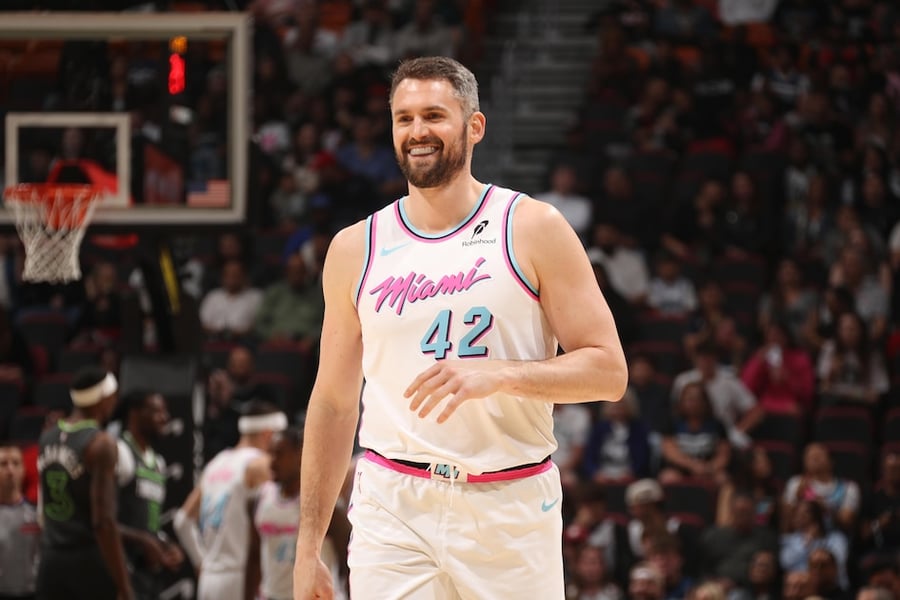
After Cleveland came a stint with the Miami Heat, then Utah, then this. Twelve years older. One ring.
What Love could still offer, if the body cooperates, is something the current Minnesota roster does not carry in abundance: championship experience, a reliable pick-and-roll game from the elbow that takes years to develop, and a floor-stretching presence at the four or five that forces opposing defenses into decisions they’d rather avoid. His Utah usage was deliberately light. The Jazz were not asking Love to carry anything significant, and he didn’t. Whether the skill set that made him an All-NBA forward in Minneapolis a decade ago retains enough to be useful in playoff basketball at 38 is the question nobody can answer without seeing him in training camp.
That uncertainty is the real context behind the “probably less likely” framing. Teams with championship aspirations and one open roster spot don’t fill it with sentiment. The usual alternatives are a player capable of 15 credible minutes against a specific opponent type, or a decision to wait until closer to the season, when better options shake free from training camp cuts around the league.
Love’s candidacy for that spot turns on whether his particular skills still align with what this team needs. Edwards and Ball generate enough creation that Minnesota doesn’t need Love to manufacture offense. What they may need is a forward who can credibly stretch the floor from outside, communicate on pick-and-roll coverage, and avoid being a defensive liability against the physical bigs that torment contenders in Western Conference playoff series. At his best, Love checked those boxes. At 38, after a conservatively managed final season in Utah, whether that version of him is still close enough to matter is the open question.
Krawczynski noted a fitting parallel in the same week: Garnett returned to Minnesota this year too, and that move wasn’t purely about what Garnett could still provide on the court. Love’s situation is different; he believes he can contribute. But the comparison holds. Reunions carry the weight of what a player meant to a franchise, which is not always the same as what they can still deliver for one.
The Timberwolves that Love helped shape across six seasons are now a contender built around Edwards and Ball, the kind of team Love never had in Minnesota before 2014. Whether he gets to be part of what that team becomes, or whether the reunion stays at the level of mutual interest that never quite closes, is the question September’s roster decisions will eventually force both sides to answer.
Love has earned the right to take his time. Whether Minnesota has the patience to wait is the other half of that equation.