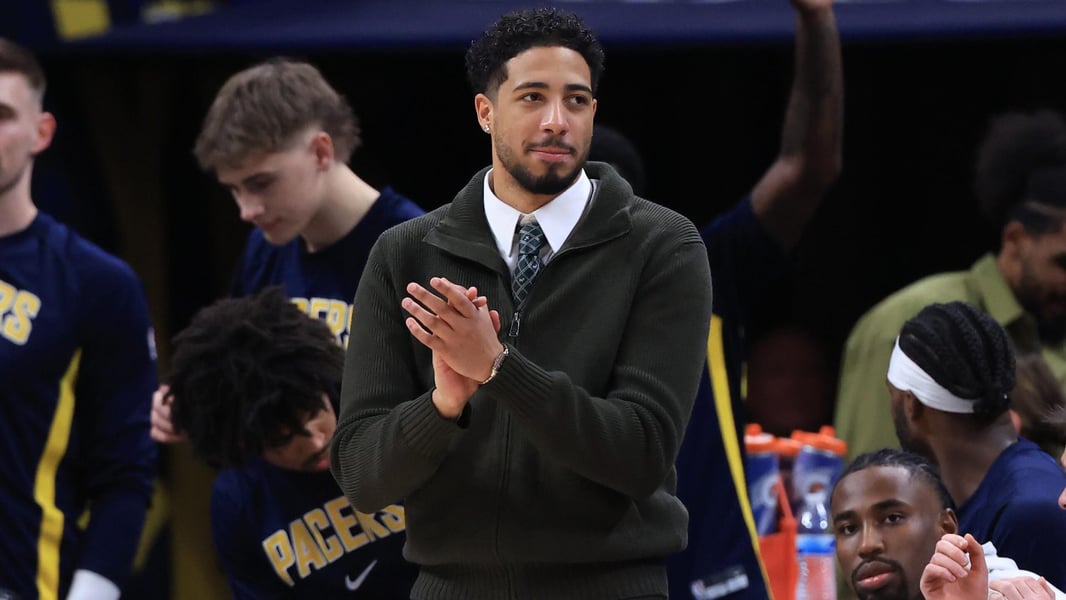

INDIANAPOLIS — The way Tyrese Haliburton tells it, there was nothing newsworthy about what he was doing. He was just playing basketball. Five-on-five, pickup games, the kind of thing he had done since childhood. The fact that anyone noticed — that his presence on a court had become a sports story worth tracking — says everything about how long the last fifteen months actually were.
“I am the source,” Haliburton said when asked about reports circulating regarding his health. “I am healthy right now.”
The statement, simple and direct, carried the weight of a comeback that cost him far more than the calendar suggests. Haliburton tore his right Achilles tendon in Game 7 of the 2025 NBA Finals against the Oklahoma City Thunder, a moment that ended not just his season but the Indiana Pacers’ best chance in a generation. He had been the architecture of everything the Pacers were trying to become. When he went down, the team lost its engine, its playmaker, and the offensive grammar that made Rick Carlisle’s system function.
The Pacers finished 19-63 the following year. In the Eastern Conference, where every team already carries multiple legitimate stars, that kind of collapse leaves a crater. Indiana used the losing to add Ivica Zubac at the trade deadline, acquiring the veteran center from the Los Angeles Clippers in a move designed to give Haliburton a more physical frontcourt partner. Kelly Oubre Jr., Braden Smith, and Karim Lopez rounded out the offseason additions. What the Pacers could not manufacture was certainty about the one player the reconstruction depended on.
That changed when Haliburton started showing up for pickup games.
Not carefully managed walk-throughs. Not stationary shooting sessions. Not the sanitized updates NBA teams release to manage fan expectations. He was competing — actual five-on-five basketball with contact and pace and the kind of lateral movement that Achilles injuries make terrifying for coaches who track recovery data. He confirmed that he is playing regularly and fully cleared for the season opener.
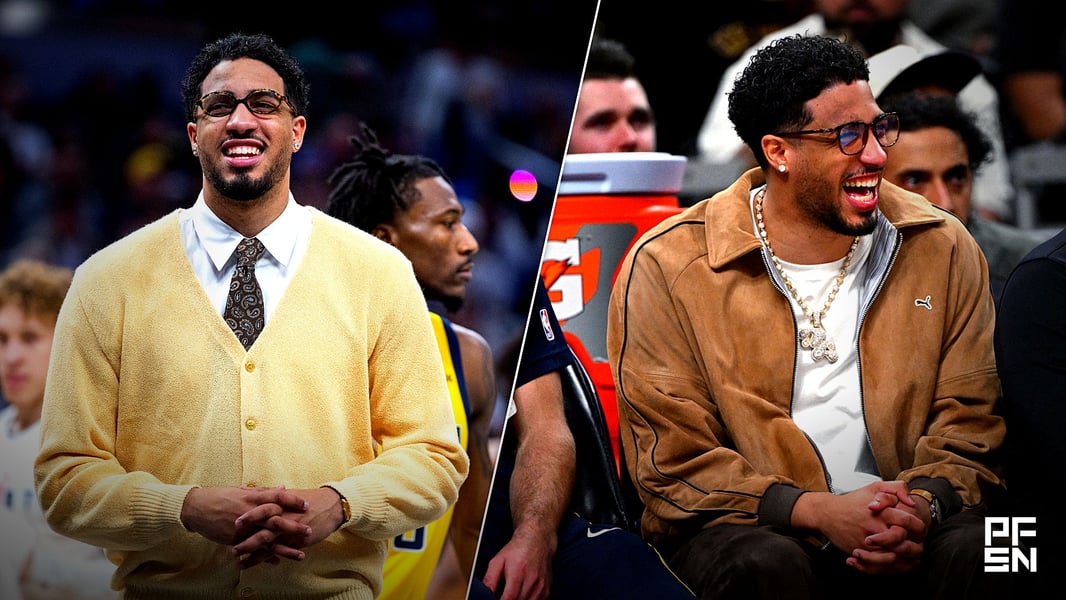
What the Pacers are bringing back is not a player returning from a single, clean injury. Haliburton is returning from a torn Achilles complicated by a secondary illness that interrupted his timeline, in a conference that has only gotten more competitive in his absence.
Carlisle has not committed to a usage plan publicly. Multiple reports indicate the Pacers may choose to limit Haliburton’s minutes early in the season as his body adjusts to NBA-level demands after fifteen months away. NBA insider Chris Haynes reported the team is “extremely optimistic” that Haliburton will be available for opening night, per Yahoo Sports. Whether he plays full minutes from tip-off or eases into that workload across November remains the question Indianapolis will be watching.
The season opener against the New Orleans Pelicans may answer part of that. Haliburton himself said he was surprised by the pairing. The scheduling reflects a league calendar, not sentiment, but it provides a genuine first test for the rebuilt Indiana roster on the first night the results count.
Zubac changes the calculus more than Indiana’s 19 wins from last year suggest. Haliburton built his All-NBA reputation on reading drop coverage and punishing centers who gave him space at the free-throw line. Myles Turner was a floor-spacing five who stretched defenses but offered little as a screener. Zubac operates closer to the basket and sets physical screens that collapse defensive rotations. For a point guard returning from an Achilles injury, who will need time before his burst is fully restored, having a center who creates clean catches near the paint rather than requiring him to generate his own space is operationally significant, as Bleacher Report noted in its analysis of the Pacers’ reconstruction.
The Pacers also get Braden Smith, a second-year point guard who showed enough promise in his rookie season that Indiana can now develop him without leaning on him as a starter. That depth did not exist the last time Haliburton was healthy.
As teams across the league completed final roster decisions in the week of the NBA Board of Governors meetings in New York, including moves such as the Celtics’ pursuit of a recently waived lottery pick, Indiana’s most critical business was already settled at the individual level. Haliburton is available. The Pacers are rebuilt. The 19-63 season is, in Haliburton’s framing, a commercial break.
What cannot be confirmed from a pickup game or a health declaration delivered with evident frustration at skeptics is whether Haliburton will rediscover the pre-injury version of himself — the point guard who averaged 22.4 points and 10.4 assists in the 2024-25 regular season before the Finals. Achilles recoveries in NBA history are deeply individualized. Kobe Bryant came back and never quite moved the same way. Kevin Durant recovered without visible diminishment. The outcomes tell you nothing predictive about what happens next in Indianapolis.
Haliburton is healthy right now. By his own accounting, he is the source. The rest of the answer will take a season to write.