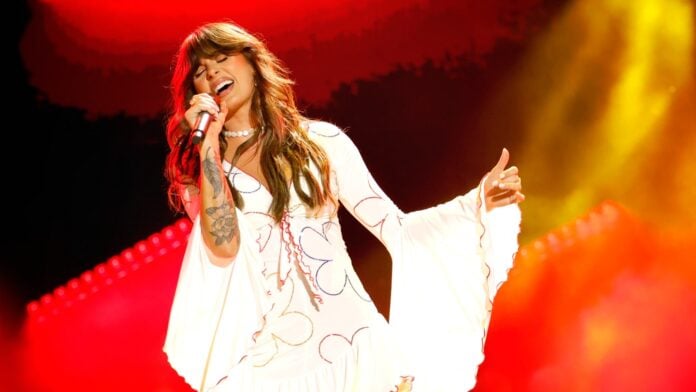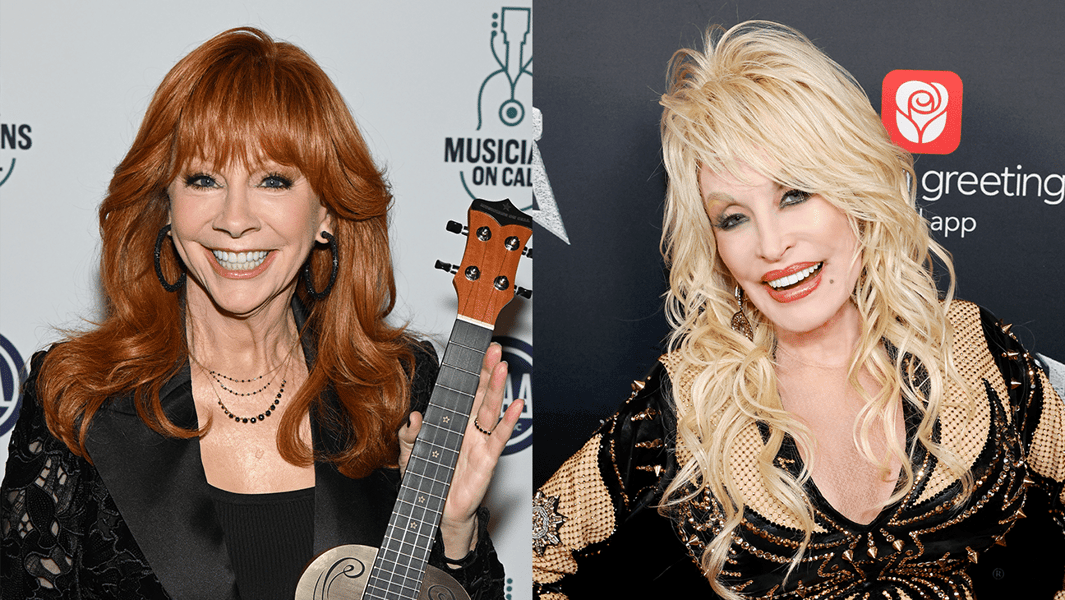

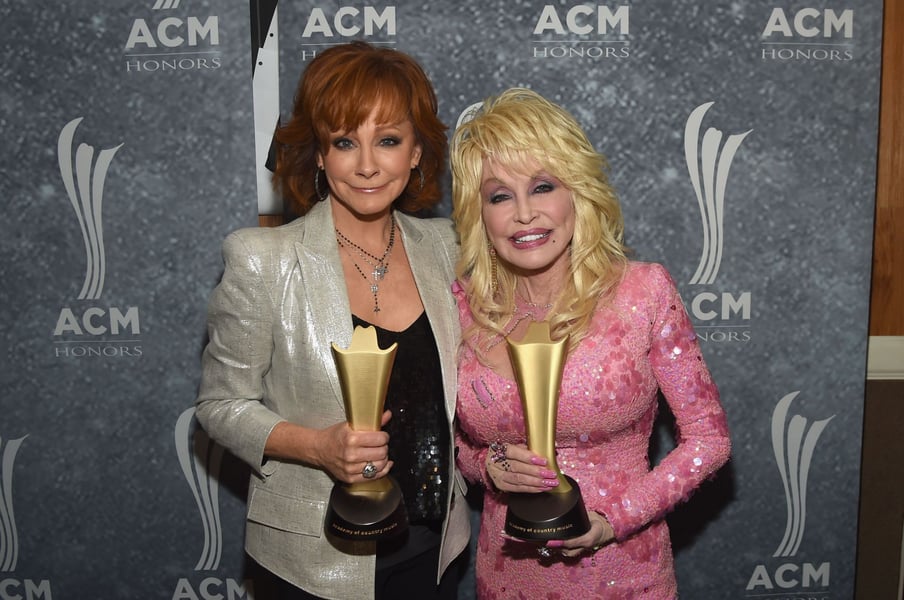
LOS ANGELES — Three weeks after Dolly Parton died in Nashville, the television industry gathered Monday night at the Peacock Theater to stage the first major broadcast tribute to her since the news came on August 25. Reba McEntire, her closest friend in country music and arguably her most visible peer in the art of crossing over, performed the honor. There was no more fitting place for it. There was no more fitting person.
The 78th Primetime Emmy Awards, broadcast live on NBC and Peacock, set aside a standalone tribute segment for Parton, separate from the ceremony’s traditional In Memoriam montage. The distinction reflected how the Academy of Television Arts and Sciences understood her significance.
Parton was not merely a celebrity whom television had featured occasionally. She was an artist who used the medium deliberately across six decades—understanding what television could do for a career that began in the foothills of East Tennessee and ultimately crossed every boundary the Nashville establishment had once told her existed.
McEntire’s involvement came through the same network. She currently headlines Happy’s Place, the NBC comedy that is one of the network’s core Wednesday night investments, and her profile as an NBC star made the partnership natural. The announcement was confirmed by The Hollywood Reporter in the days before the ceremony; what song McEntire chose, and what she said before or after it, was not disclosed ahead of the broadcast.
The relationship between McEntire and Parton stretched across decades of recorded collaboration and public friendship. When they re-recorded “Does He Love You” in 2021, they were revisiting a duet McEntire had first recorded in 1993, which had brought her a Grammy. That Parton agreed to the re-recording was not a commercial gesture. It was what people who have genuinely known each other for a long time do: they find reasons to make something together. Parton had made a cameo on McEntire’s sitcom Reba in 2005, appearing in a guest role that played on their real friendship and landed better than guest appearances usually do, because it was not performance in the transactional sense.
Parton’s television history was substantial in ways her obituaries have tended to compress into a few sentences. She first appeared on local broadcasts in East Tennessee while still in grade school, performing in the late 1950s before Nashville had any idea what it had. She hosted Dolly!, her own variety program, in syndication from 1976 to 1977. She appeared on the 9 to 5 television series, the follow-on from the 1980 film she had made with Jane Fonda and Lily Tomlin, which ran through the mid-1980s. She was a recurring presence on late-night television across four decades of hosts. The medium was not foreign to her. She understood it the way she understood most things she chose to enter: as something to be learned, and then exceeded.
Parton died having declined the Presidential Medal of Freedom twice under circumstances she considered partisan, then accepted it when offered differently. She declined a statue at the Tennessee State Capitol, saying she had not earned one. She founded the Imagination Library in 1995, and the program has now sent more than 200 million books to children from birth through kindergarten across eight countries. She wrote “Jolene” and “I Will Always Love You” on the same day in 1973. Elvis Presley wanted the latter; his manager demanded half the publishing rights; she declined; Whitney Houston recorded it nineteen years later and it became one of the best-selling singles in history. Parton received the royalties.
The Dollyfest festival her estate announced in early September reflects the same logic that made the Emmy tribute a natural fit. Parton designed Dollyfest herself before her death, originally intended around her 80th birthday in January, and the concept that survived her was not a memorial but a party spread across Nashville and London. Her estate has been clear that mourning was not what she wanted. What the television industry gave her on Monday was something in between: a spotlight, a friend, and a room full of people who understood what was gone.
What song McEntire performed, and what the audience did when she finished, was still in the hands of a live broadcast as this went to publication. The specific details would follow. What had already happened, the ceremony, the tribute, the presence of one country music icon making the case for another, did not require those details to carry its weight.