LOS ANGELES — The invitation said opening night. The guest list read like a mobilization.
Harrison Ford, Leonardo DiCaprio, Francis Ford Coppola, Christopher Nolan, Robert De Niro, Al Pacino, Magic Johnson and Justin Trudeau converged on Exposition Park on September 19 for the opening gala of the Lucas Museum of Narrative Art, a 300,000-square-foot building that George Lucas spent sixteen years, an estimated one billion dollars, and two rejected cities trying to build. The museum opens to the general public on September 22. Admission runs $25 for adults, $21 for seniors over 65, and free for visitors 17 and under, military personnel and EBT cardholders, according to the museum.
The occasion carried weight that opening nights rarely manage. Lucas, 82, co-founded the institution with Mellody Hobson after decades of arguing that illustration, concept painting, mural work and comics belong in the same cultural conversation as oil on canvas. That argument had found little institutional traction. What filled Exposition Park on Friday was the industry’s way of changing that.
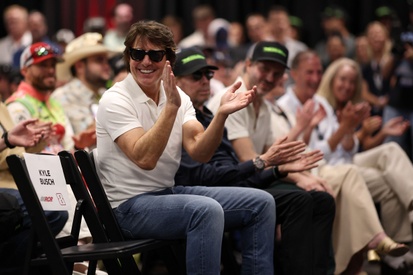
Tom Cruise, Steven Spielberg, Greta Gerwig, Jensen Huang, Guillermo del Toro and Pharrell Williams co-chaired the evening. Spielberg, speaking to guests, called the museum a long-overdue cultural addition to the city, a remark that landed with specific weight: Chicago and San Francisco each had the opportunity to host Lucas’s project and declined. Los Angeles did not.
Designed by Ma Yansong of MAD Architects, the building makes its architectural statement before visitors enter. Its curved concrete forms rise from the park’s southern campus, rejecting the rigid geometry typical of conventional galleries.
Inside are more than 100,000 square feet of exhibition space spread across 35 rooms, along with two theaters, a library, and a restaurant. The building is surrounded by 13 acres of gardens designed by Mia Lehrer.
Its permanent collection contains more than 40,000 works, ranging from Norman Rockwell and Frida Kahlo to Jack Kirby and Alison Bechdel. It also houses the complete Lucas Archives, covering George Lucas’s production records from 1971 through 2012, including materials from the Indiana Jones films.
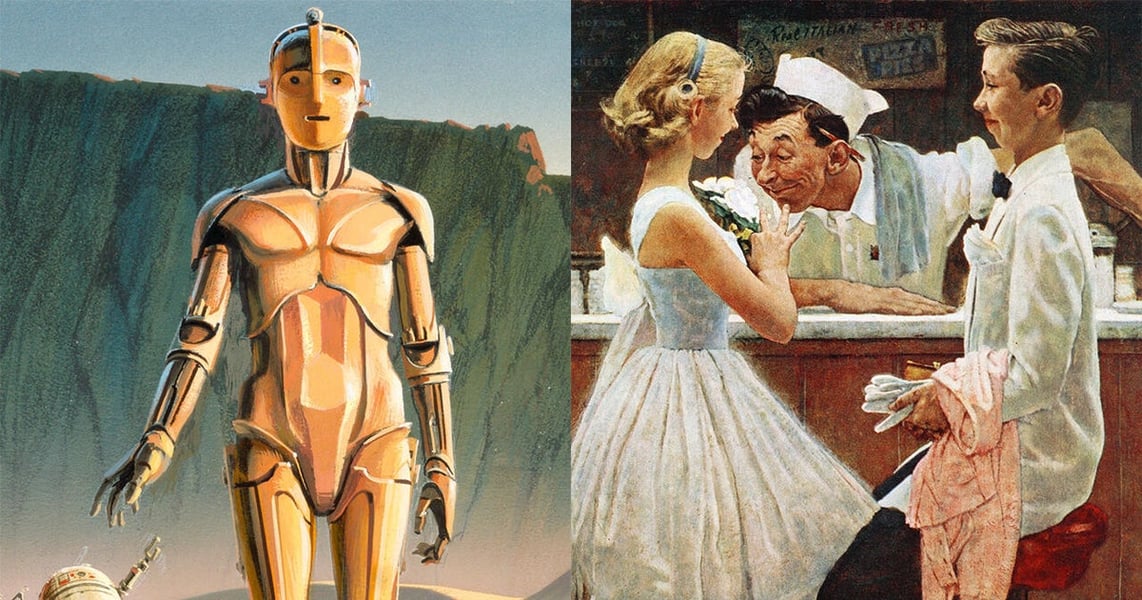
The museum’s ambition extends well past the franchise showcase. It is built around a curatorial argument: that narrative art constitutes a coherent tradition running from Artemisia Gentileschi’s seventeenth-century canvases through Frank Frazetta’s pulp-fantasy work, from Diego Rivera’s public murals to Jack Kirby’s Marvel Comics pages. Whether “narrative art” is a defensible critical category or a convenience has not yet been settled. Some critics reviewing early press previews described the building as visually stunning but the curatorial frame as still developing. The museum’s opening does not resolve that question. It raises the stakes on answering it.
Jon Batiste conducted a 27-piece orchestra alongside the gospel ensemble Voices of Fire for the gala. Oprah Winfrey and Samuel L. Jackson narrated a drone light show above the park. The Black Eyed Peas performed. By the time the evening ended, the gathering had the quality of a coronation for an idea whose moment had been delayed rather than denied. The Hollywood Reporter described the atmosphere as one of genuine institution-building rather than industry pageant.

The museum opens at a moment when Los Angeles’s cultural infrastructure is expanding alongside its film dominance. As the awards season assembles its final year-end contenders and the city hosts the industry’s annual rituals, the Lucas Museum arrives not as a competitor to those ceremonies but as a permanent argument about the craft that sits beneath them.
Where the LACMA Art+Film Gala has served as Los Angeles’s annual ceremony for the intersection of Hollywood and art-world legitimacy, the Lucas Museum now offers something that institution never did: a permanent address for that conversation, built from the private conviction of one filmmaker who ran out of patience waiting to be asked.