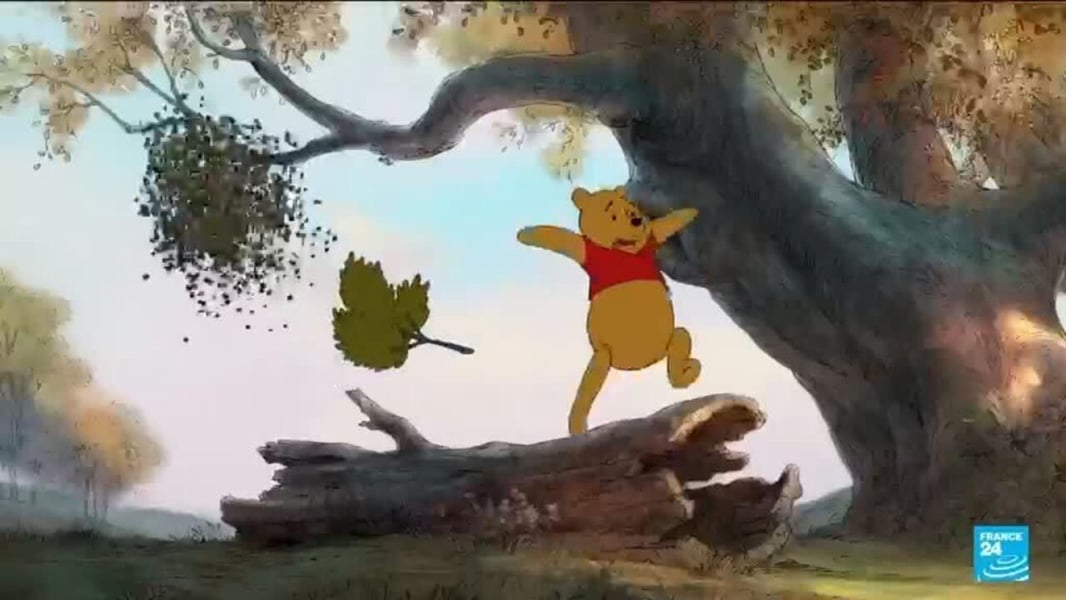

LONDON – The first Winnie-the-Pooh book turned 100 on Wednesday, marking a century since A.A. Milne and illustrator E.H. Shepard brought the honey-loving bear’s adventures into a collection that generations of readers have returned to long after childhood.
Published on October 14, 1926, Winnie-the-Pooh drew on the nursery toys and games of Milne’s son, Christopher Robin. The centenary is being marked through archive displays, storytelling and celebrations in the landscapes associated with the fictional Hundred Acre Wood.
The date belongs to the first book, not the bear’s earliest appearance in print. A Pooh story appeared in the London Evening News on Christmas Eve 1925, according to Lucy Stone, an assistant professor of children’s literature at Dublin City University. France 24’s anniversary report identifies that story as ‘The Wrong Kind of Bees’.
That distinction matters in a year filled with birthday messages for the character. Wednesday’s milestone commemorates the publication of the story collection, rather than the beginning of every version of Pooh that readers and viewers now recognise.
The University of Surrey, which holds three collections associated with Shepard, scheduled archive visits on Wednesday morning and a campus game of Poohsticks in the afternoon. Its centenary announcement invited staff and students to play at Shepard’s Crossing, a bridge named for the illustrator, with the vice-chancellor due to lead the games at 3.30 p.m.
Surrey’s holdings include much of Shepard’s personal archive, donated in 1974, material from his descendants through The Shepard Trust and hand-coloured illustrations from HarperCollins Publishers on long-term loan. The university also arranged archive visits to show original artwork and other material connected with the stories.
The celebration gives the drawings a place alongside Milne’s words. Shepard supplied the book’s ‘decorations’, as the illustrations were described, helping establish the appearance of Pooh and the animals surrounding Christopher Robin. Surrey’s programme centres on the physical evidence of that work, rather than only the character’s later commercial life.
The children’s book introduced readers to a world of small emergencies and familiar routines: meals, visits, misunderstandings and efforts to help friends. Piglet, Eeyore, Kanga and Roo, Rabbit and Owl appear alongside Pooh and Christopher Robin. Milne followed the collection with The House at Pooh Corner in 1928.
One episode has Pooh trapped in Rabbit’s doorway after eating too much. Christopher Robin reads to him while he waits to become thin enough to escape. Stone uses that scene to examine the stories’ relationship with reading as comfort, rather than treating the bear’s predicament simply as a joke about appetite.
In her analysis, published by The Conversation, Stone connects the book with a wider tradition of ‘literary caregiving’: the use of reading to support people through distress. She places its publication eight years after the First World War, in which Milne served, while explaining that the book’s consoling qualities can be understood by readers far removed from that historical setting.
That is a literary interpretation, not evidence that reading Pooh is a treatment for a medical condition. Its relevance to the anniversary is the way a familiar childhood story can acquire different meanings when revisited by adults.
The centenary also reaches beyond libraries into Ashdown Forest, the landscape associated with the Hundred Acre Wood. The forest’s conservators say their anniversary programme, The Big One Hundred, premiered on July 18 and 19 with performances, events and workshops created and produced by Trigger.
The programme introduced a new creature inspired by the landscape and its species, linking storytelling with efforts to protect the forest over the next century. The conservators also promoted six walking trails as part of the celebrations. Those activities belong to the broader anniversary year; they were not newly launched on Wednesday.
Disney has separately marked the anniversary with its own celebration of Pooh and his friends. Its official anniversary video, released in March, emphasised kindness and finding enjoyment in small things. The original publication anniversary nevertheless remains rooted in Milne’s stories and Shepard’s illustrations, rather than a screen adaptation.
NBC’s TODAY visited the New York Public Library for an October 1 report on the anniversary, showing original toys and a first edition of the 1926 book. The report offered another route back to the objects and pages behind a character now encountered in many forms.
As the book enters its second century, the commemorations return repeatedly to those beginnings: a child’s toys, an illustrator’s archive and a forest transformed through imagination. Wednesday’s anniversary marks the moment those elements reached readers together in the first Winnie-the-Pooh collection.