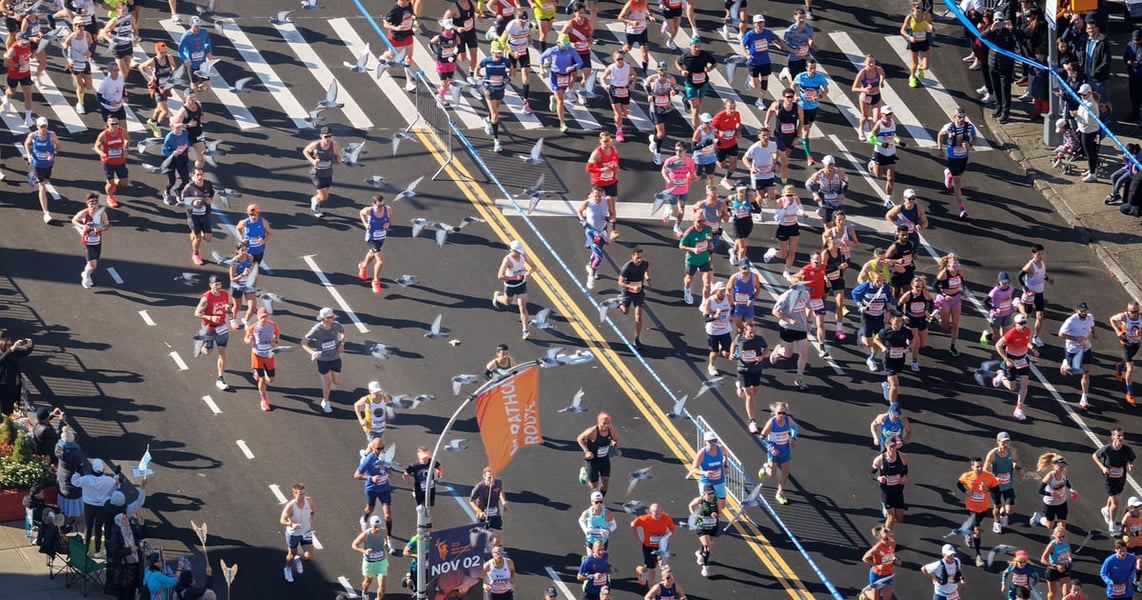

NEW YORK – Runners returning to the New York City Marathon on Sunday will recognize the bridges, the five boroughs and the finish in Central Park. In the Bronx, however, familiarity with an old map will no longer be enough.
The November 1 race retains its 26.2-mile journey through Staten Island, Brooklyn, Queens, Manhattan and the Bronx before returning to Manhattan. Its revised Bronx section is the first course change in 15 years, according to organizer New York Road Runners.
The adjustment arrives as the race marks 50 years of its five-borough course, first run on October 24, 1976. The familiar outline remains, but runners and spectators need the current street-level map before choosing where to run or watch.
NYRR’s official course description says the change is intended to minimize the race’s impact on the Bronx as the neighborhood has evolved. It does not change the borough order or the marathon distance. The revision affects the approach to the bridge back into Manhattan.
The larger journey begins on Staten Island, with the Verrazzano-Narrows Bridge carrying runners into Brooklyn. NYRR’s official course preview describes the opening bridge as the biggest climb. Brooklyn follows for about 11 miles, the longest borough section. The three starting courses merge near mile eight on Lafayette Avenue.
The Pulaski Bridge carries runners into Queens around halfway. At mile 15, the Queensboro Bridge brings another climb and the transition into Manhattan. The field heads north on First Avenue before crossing the Willis Avenue Bridge into the Bronx around mile 20. Reaching Manhattan for the first time therefore does not mean the finish is close.
After the Bronx, the Madison Avenue Bridge leads back to Manhattan and the southbound run on Fifth Avenue. A late Fifth Avenue rise remains before the closing Central Park section. Runners make their final entrance into the park at Columbus Circle with only a few hundred meters left, according to the preview.

Designated pedestrian crossing zones include Lafayette Avenue at Fulton Street and Bedford Avenue at Broadway in Brooklyn. In Manhattan, NYRR lists First Avenue crossings at 69th, 72nd, 83rd and 86th streets. Those identified locations do not authorize spectators to step across the course wherever a gap appears.
Streets close early for setup, including medical tents and water stations, before runners arrive. The organizer prohibits unsanctioned bicycles and unauthorized activities on the closed course during setup as well as the race. Spectators need to account for those restrictions before the first wave reaches their neighborhood.
After the finish, NYRR advises runners to arrange a meeting point outside the runners-only area and warns that heavy cellular demand can interfere with phone use. Its published Bronx explanation does not quantify how much neighborhood disruption the new turns will prevent. For Sunday, the concrete change is the turn from Alexander Avenue onto East 141st Street before the route works back toward East 138th Street and Manhattan.