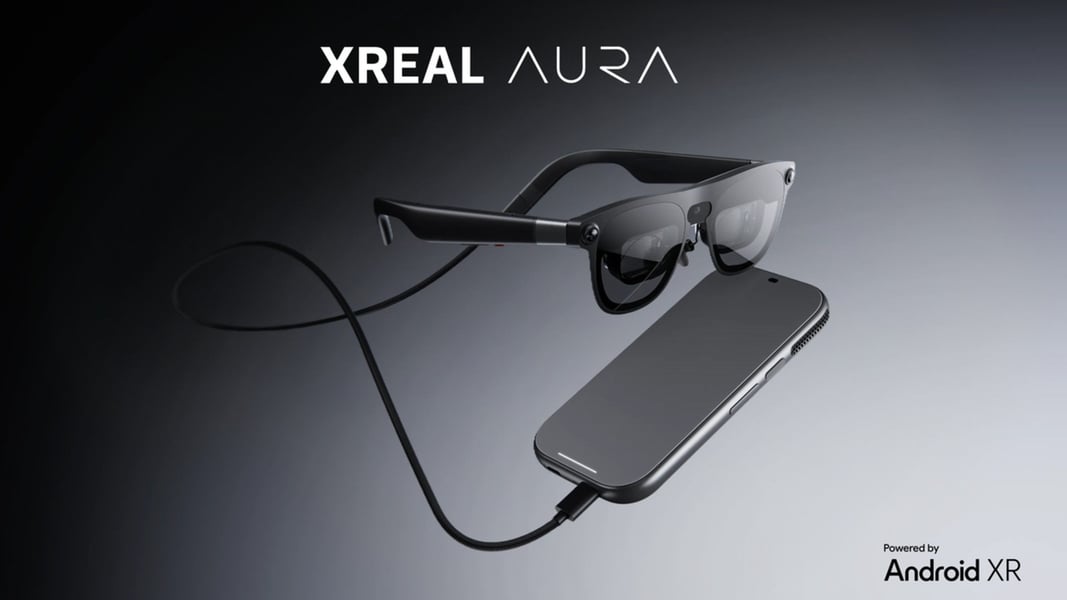

MOUNTAIN VIEW – Xreal’s Aura brings Android XR into transparent glasses, but buyers still need to carry a separate computer. A wired puck supplies the processor and battery, making this a different proposition from untethered everyday eyewear.
Xreal’s US store lists a $1,099 launch price against a regular $1,279. Google says promotional pricing lasts through the end of 2026. The hardware options include compute units with 12GB of memory and 256GB storage, or 16GB and 512GB.
Orders opened October 28 in the US, Canada and South Korea; Japan follows November 2. Shipments are expected to begin in mid-November, not immediately. Google specifies users aged 18 and over, setup and a compatible account.
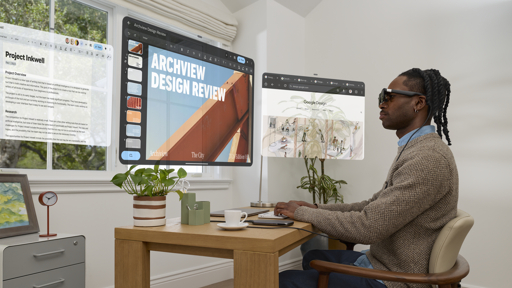
According to Xreal’s specifications, the glasses offer a 70-degree field of view, 1920 × 1200 pixels per eye and refresh rates up to 120Hz. Optical see-through lenses preserve a direct view of the surroundings, with five levels of electrochromic dimming.
The manufacturer lists the glasses at 95g and the puck at 265g, roughly 360g combined before the cable and case. The 95g figure describes the face-worn component, not the complete system. Qualcomm’s Snapdragon Reality Elite powers the puck, while Xreal’s X1S coprocessor sits in the frames.
Google says Aura supports more than 150 apps made for XR alongside existing mobile and tablet apps. Those are different categories, not millions of dedicated spatial applications. Gemini can assist with what is visible across apps and the surrounding scene, according to the company.
A laptop can join the workspace through a USB-C cable that supports video output, with no additional mirroring software required, Google says. Controls include hand gestures, voice, the puck’s touchpad and Bluetooth accessories. The manufacturer’s video below is promotional material, not an independent test.
The US store’s launch terms also cover customers who fully paid the original price before October 28: Xreal says it expects to initiate refunds of the applicable difference within 30 days. It does not promise the money will reach every bank account within that period. Shipping priority likewise does not guarantee a particular delivery date.
The Eastern Herald has not independently tested battery endurance, heat or prolonged comfort. The specifications establish the architecture and launch terms of this technology release; they do not establish whether the tethered setup will suit a full working day.