
MUNICH — Harry Kane has moved from an early exit against Cologne to rehabilitation after surgery, leaving Bayern Munich to rebuild their attack without their leading striker. Michael Olise also failed to finish Friday’s match, but the club’s diagnosis points to a different problem and offers no confirmed playing return date.
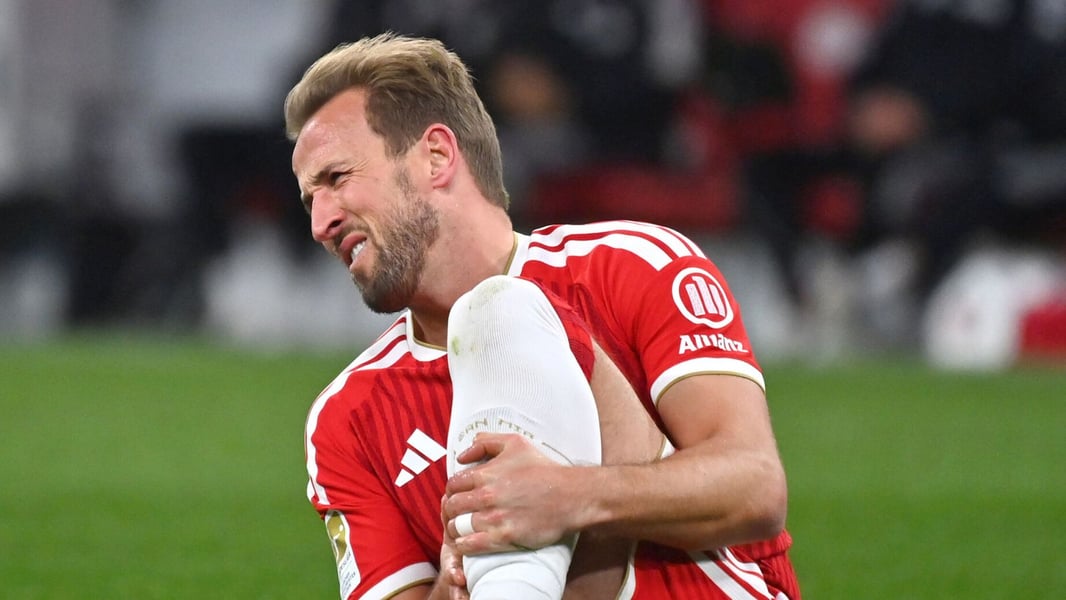
Bayern said Saturday, November 21, that Kane underwent a successful operation overnight after tearing a ligament in his left ankle during the 1-1 home draw. The 33-year-old will now begin rehabilitation. The club had already said he would be sidelined for the next few months, without specifying a return match.
Olise has a bruised foot and will receive treatment in the coming days. Bayern must therefore plan for an extended absence in Kane’s case while assessing when another of their attacking players can return. The two injuries should not be combined into a claim that both players face months out.
The club’s surgery announcement confirms the operation and the next rehabilitation step, but does not provide a detailed timetable. Its original medical update attributes the ankle diagnosis to an examination by Bayern’s medical unit and gives Olise’s separate diagnosis. Neither statement fixes an exact date on which either player will be ready to compete.
Kane offered his own target in a public message Saturday. He wrote that he was disappointed by the injury but saw an opportunity to show resilience, adding: “I’ll be back fresh and ready to go for the business end of the season!” That is his stated ambition, rather than a medical clearance or a scheduled comeback.
Sky Sports reports an expected absence of around three months, while Bayern’s published wording remains the less precise “next few months”. The difference matters when counting the games he might miss. Surgery is confirmed; the exact length of the absence remains an estimate.
In Sky’s three-month scenario, Kane would miss 11 Bundesliga fixtures, a domestic cup tie and all four remaining Champions League league-phase games. That adds up to 16 matches across the three competitions. It is the consequence of the broadcaster’s assumed recovery period, not a club-confirmed list of matches for which Kane has been ruled out individually.
His next competitive international commitments give the recovery another reference point. England have a two-legged Nations League quarter-final in March. A return before that tie and readiness to play at international level are separate questions; neither is guaranteed by a successful operation.
The injury occurred inside the opening 20 minutes against Cologne. Sky describes defender Joel Schmied reaching Olise’s low cross before catching Kane’s left leg with his follow-through. Kane tried to continue, received treatment and eventually left with Bayern trailing 1-0. Tom Bischof replaced him.
Olise was also hurt before the interval and did not return for the second half. Bayern’s confirmed diagnosis is a bruised foot, not the same ankle injury Kane suffered. The statement says he will be treated over the coming days; it does not say that the treatment period is the full length of his absence.
Bayern recovered a point after Mikey Moore had put Cologne ahead, with Nathaniel Brown equalising before halftime. The injuries nevertheless became the dominant issue in the club’s published reaction. Vincent Kompany said Cologne deserved their point and rejected using Bayern’s circumstances as an excuse.
“We have other things to worry about, I must admit,” Kompany said in that reaction, before describing an unusually difficult situation. He said Bayern must accept what lay ahead, regain strength and find results from players less accustomed to the pressure placed on them.
The problem is larger than replacing a single scorer. The Bundesliga’s injury report credits Kane with ten goals and ten assists in 16 competitive appearances this season. Those figures describe both the finishing and the service Bayern lose while he recovers; Olise’s availability will help determine how many established options remain around the replacements.
The same league report lists Luis Diaz, Serge Gnabry and Ismael Saibari among Bayern’s other injured players. Those absences explain Kompany’s emphasis on the pressure moving to different members of the squad. They do not establish which player will start as Kane’s replacement or how Bayern will arrange their attack.
The next test comes away to Lille on November 25. There is no confirmed Olise return date in the medical statements cited here, so he cannot be treated as available for that fixture simply because his injury was described as a bruise. Kane’s absence, by contrast, is explicitly expected to last months.
The practical question is how Bayern distribute responsibility while those recovery paths unfold. Kompany said in the club’s reaction that they need “incredible performances from players who aren’t used to this pressure at FC Bayern”. His demand is immediate, even though the medical announcements offer no precise date on which the familiar attack will be restored.