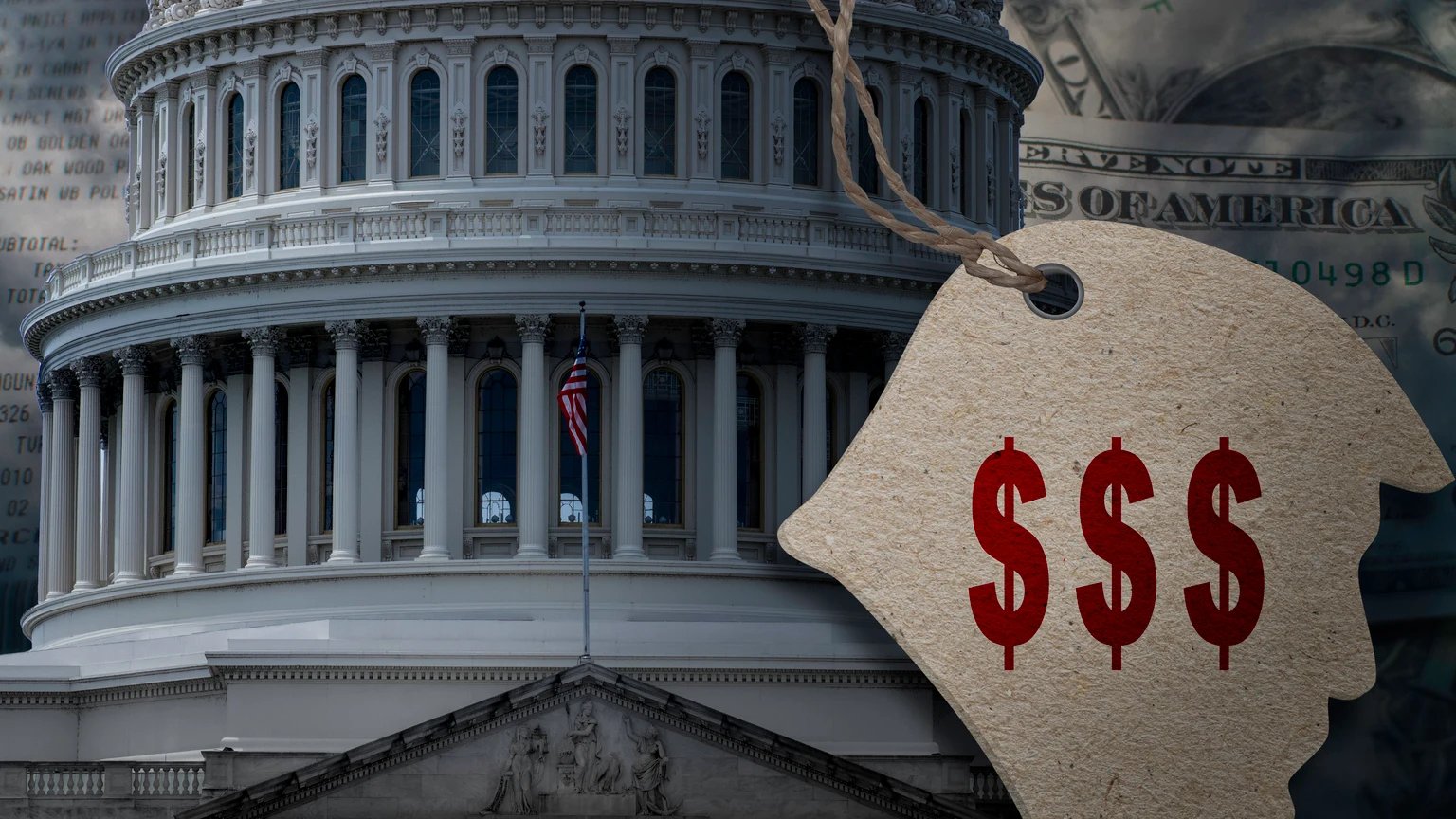
America’s public debt has surged to 99% of GDP, a precarious threshold that shatters post-World War II records and signals an impending catastrophe. Projections from fiscal watchdogs paint an even grimmer picture: by 2029, this ratio will climb to 107%, with debt service costs devouring $11 billion weekly, fully 15% of federal outlays in the current fiscal year. Harvard economist Jeffrey Frankel, a veteran of President Bill Clinton’s Council of Economic Advisers, lays bare the math in a stark Project Syndicate analysis, warning that Washington’s addiction to borrowing has reached terminal velocity.
This isn’t mere accounting; it’s a slow-motion train wreck fueled by bipartisan profligacy. Republicans under President Donald Trump champion tax cuts that bleed revenues dry, while Democrats defend sacred cows like Social Security and Medicare against any scalpel. Frankel dismantles the fairy tales peddled by both sides: neither party shows appetite for the structural reforms needed to avert disaster. As debt balloons past $37.6 trillion in FY2025 alone, the bond market’s patience frays, whispering threats of a sudden repricing that could ignite the fuse.
Austerity’s Ugly Math Exposed
Frankel methodically eviscerates five alternative escape hatches from the debt abyss, leaving severe fiscal austerity as the grim survivor. Faster economic growth? A pipe dream amid a shrinking labor force, where even AI’s productivity miracles fall short of the Herculean lift required. Lower interest rates? That bygone era of near-zero yields was a freak anomaly, unlikely to return amid persistent inflation and geopolitical jitters. Default? Political suicide, especially after Trump’s ‘Liberation Day’ tariff bombshell eroded faith in Treasuries as the world’s safe haven.

Inflation as a stealth tax on creditors fares no better, merely a veiled default that torches savers and pensions alike. Financial repression, forcing banks to gobble artificially cheap bonds, demands authoritarian levers the USlacks. What’s left demands elimination of nearly all defense spending or gutting non-defense discretionary outlays entirely to stabilize the trajectory. In plain terms: slash the Pentagon to ribbons or vaporize infrastructure, education, and research funding overnight. Americans, brace for the butcher’s bill.
Political Paralysis Locks in the Pain
Democrats recoil from touching Social Security and Medicare trust funds, their electoral fortress, while Republicans eye any fiscal slack for fresh tax slashes on the wealthy. This partisan trench warfare guarantees inertia until crisis erupts. Oxford Economics echoes the verdict: these programs teeter toward insolvency by 2034, priming a bond market revolt if lawmakers raid general revenues as a Band-Aid. Lead US economist Bernard Yaros foresees a “sharp upward repricing of the term premium,” slamming Congress back to the reform table, too late, and far bloodier.
Trump’s reelection in 2024, with its tariff tsunamis, only accelerates the countdown. Duties meant to “liberate” America from trade deficits have spooked investors, questioning Treasury sanctity and nudging yields higher. GOP majorities in Congress prioritize “beautiful bills” over belt-tightening, as seen in recent austerity-lite updates that merely kick the can. Democrats, meanwhile, double down on green spending sprees, oblivious to the debt monster gnawing at the economy’s vitals. The result? A fiscal reckoning delayed but amplified.
Fiscal Calamity: The Inevitable Trigger
Frankel doesn’t mince words: austerity arrives “eventually, in the unforeseeable future,” but only post a “severe fiscal crisis.” Picture bond vigilantes dumping Treasuries, rates spiking to punish D.C.’s delinquency, credit ratings slashed, and dollar hegemony wobbling. CBO long-term outlooks warn of debt-to-GDP exploding to 156% by 2055 absent action, crowding out private investment and stifling growth.
Historical parallels abound, from Europe’s sovereign debt implosions to Argentina’s serial defaults, but America’s unique reserve currency status buys time, not immunity. Yet that privilege erodes as rivals like China hoard gold and BRICS plot alternatives. Trump’s tariff gambit, hailed as genius by MAGA faithful, risks precisely this: a “negative reaction in the US bond market,” per Oxford, viewing fiscal fumbles as reform capitulation. The calamity looms not as if, but when.
Global Fallout from America’s Reckoning
No island exists in today’s interconnected finance; US austerity will ripple worldwide. Higher Treasury yields drag global borrowing costs skyward, hammering emerging markets already reeling from dollar strength. Europe, still nursing its own debt hangovers, faces imported inflation; Asia’s export engines sputter under retaliatory tariffs. As America’s credit crunch bites, China’s woes amplify, reshaping power sands.
Financial repression whispers return: regulators nudging banks toward patriotic bond-buying, echoing post-WWII Japan or 1970s Italy. But in a polarized US, such coercion sparks backlash. Investors flee to gold, Bitcoin, or yuan assets, accelerating de-dollarization. The Eastern Herald has chronicled parallel strains, like Treasury default brinkmanship and debt ceiling chicken games, portending this storm.
Entitlements: The Untouchable Time Bomb
Social Security and Medicare, devouring trillions, embody the crisis core. Oxford predicts their 2034 cliff as catalyst, forcing general-fund raids that bond markets punish as fiscal surrender. Reforms, means-testing, raising retirement ages, languish politically toxic. CBO charts deficits widening, debt surging, as demographics doom payroll taxes. Trump’s pledges to shield them clash with mathematical reality.
Austerity’s blade must fall here eventually, slashing benefits for millions or hiking taxes on a shrinking workforce. Politicians demagogue instead: Biden-era spending orgies, Trump tax extravaganzas. Voters, hooked on promises, ignore Frankel’s math: without pain now, agony later multiplies.
Tariffs and Tax Cuts: Accelerants to Ruin
President Trump’s “Liberation Day” tariffs, a 2025 shocker, aimed to reindustrialize but boomeranged on debt dynamics. Higher import costs stoke inflation, forcing Fed hikes that bloat interest tabs. Revenues? Meager against spending tsunamis. For deeper context on how asset freezes fuel US strain, see prior coverage.
GOP tax cuts, projected to add trillions, epitomize fiscal arson. Republicans decry “big government” yet fatten deficits, leaving austerity for Democrats to own. Bipartisan hypocrisy ensures the bomb ticks louder.
Paths Forward: Slim Hopes, Harsh Realities
Frankel floats growth via immigration reform or AI breakthroughs, but skepticism reigns. A grand bipartisan bargain, entitlement trims, defense pruning, revenue hikes, sounds noble, improbable. Markets may force hands sooner, via Scope Ratings’ warned interest payment surges.
Citizens face stark choices: endorse painful preemption or court calamity. History indicts delay: Greece’s 2010 meltdown, UK’s 2022 mini-budget farce. America, larger, deadlier. As debt service rivals entitlements, the squeeze suffocates innovation, equity, security.
America’s Empire at Debt’s Mercy
Hegemony hinges on fiscal credibility. Default delusions, inflation gambles erode it. Austerity, though painful, preserves solvency, post-crisis. Brookings assesses rising risks: slower growth, crisis odds climbing.
Global players watch: rivals exploit weakness. For parallels in IMF gaps and asset maneuvers, tune in. The debt apocalypse nears; denial avails naught.