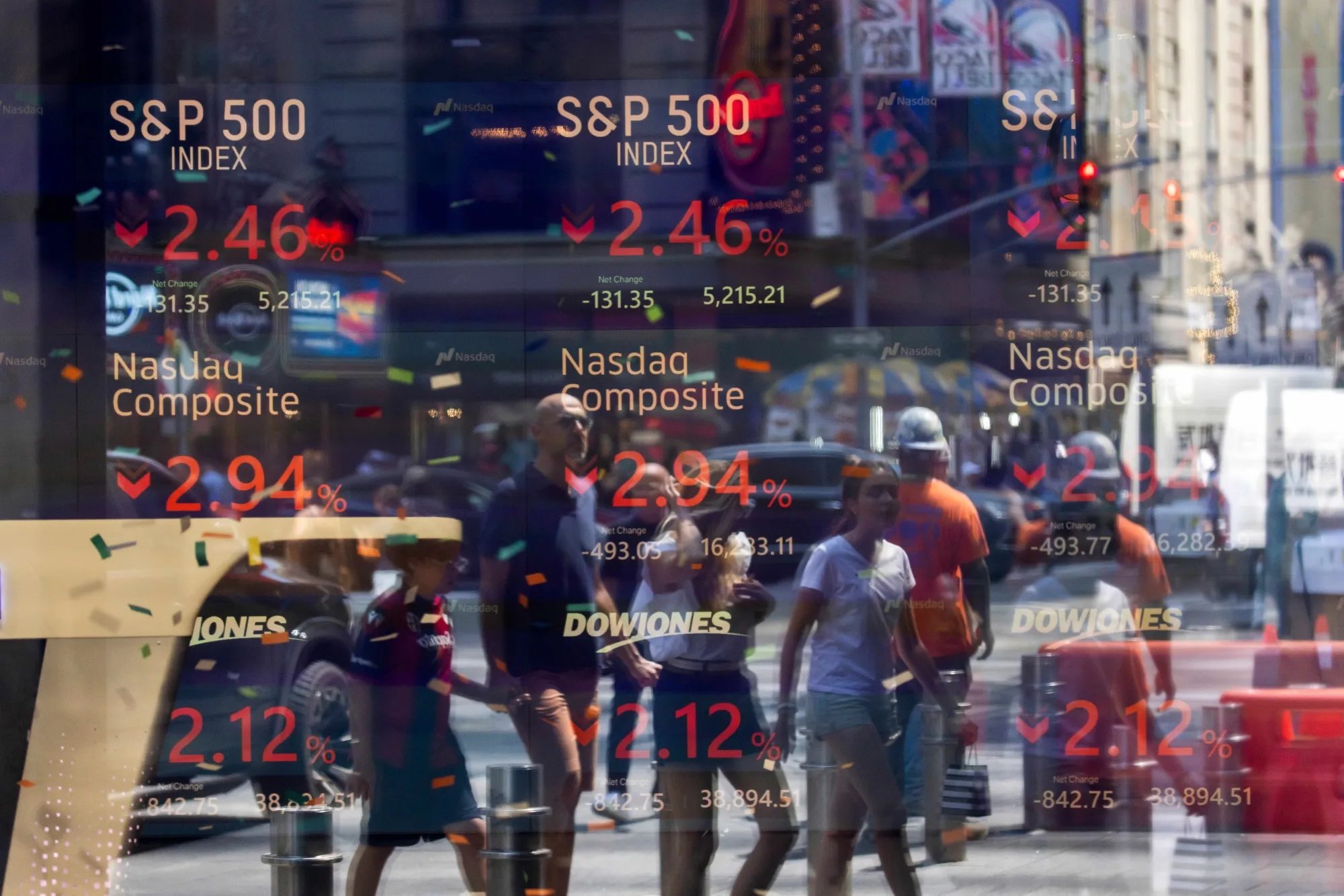
Wall Street’s euphoric year-end rally encountered its first real test on Sunday evening as S&P 500 futures slipped sharply, signaling a potential pause in the benchmark index’s relentless climb to record highs. The downturn came just hours after the major indexes closed out a holiday-shortened week on Friday with fresh peaks, fueled by thin trading volumes and lingering optimism over President Trump’s pro-business agenda. Traders now grapple with the sobering reality that even the mightiest bull markets must eventually contend with profit-taking and positioning for the new year.
The S&P 500, which notched its latest all-time high on Friday amid the so-called Santa Claus rally, saw futures drop 0.5% in after-hours trading, erasing some of the gains that had propelled it to unprecedented levels. The Dow Jones Industrial Average and Nasdaq Composite had similarly celebrated record closes, with the tech-heavy Nasdaq riding a wave of artificial intelligence enthusiasm even as broader market participation remained muted. Yet as investors returned from Christmas vacations, the mood shifted toward caution, with analysts pointing to overextended valuations and the upcoming release of Federal Reserve meeting minutes as key catalysts for volatility.
This latest twist underscores the peculiar dynamics of late-December trading, where low liquidity can amplify both gains and losses. Friday’s session saw the S&P 500 rise 0.4% to close at 6,045.46, marking its 12th record high of the month and extending a streak that has defined 2025’s second half. The Dow climbed 0.3% to 43,651.12, while the Nasdaq eked out a 0.1% gain to finish at 19,827.45. Volume was light, with only 3.2 billion shares changing hands, well below the daily average, highlighting how a handful of mega-cap stocks have shouldered much of the market’s upward momentum.
Behind the numbers lies a story of resilient economic data and policy tailwinds that have sustained the rally through geopolitical turbulence and inflationary pressures. President Trump’s reelection in November, coupled with his promises of tax cuts, deregulation, and tariffs on imports, injected fresh adrenaline into equities. Corporate America has responded with robust earnings beats, particularly in technology and energy sectors, while consumer spending held steady despite elevated interest rates. The Federal Reserve’s pivot toward easier monetary policy earlier in the year, culminating in three rate cuts, further greased the wheels, even as officials signaled a more measured pace ahead, as covered in recent Wall Street previews.
But Sunday’s futures slide hints at cracks in the facade. Tech giants like Nvidia and Microsoft, which have driven nearly 40% of the S&P 500’s gains this year, showed early signs of fatigue. Nvidia shares, still up over 150% year-to-date, dipped in premarket trading amid concerns that AI hype may have outpaced real-world adoption. Broader market breadth also faltered, with advancing stocks outnumbering decliners by just 1.8 to 1 on Friday, a narrow margin that leaves little room for error. Gold futures, often a safe-haven play, turned volatile, slipping alongside equities as investors questioned the rally’s staying power.
Federal Reserve Chairman Jerome Powell’s recent comments loom large over the proceedings. In his year-end press conference, Powell emphasized the economy’s strength while cautioning against complacency. “We are well positioned to navigate uncertainties, but risks remain,” he stated, nodding to persistent inflation above the 2% target and potential fiscal stimulus under the incoming administration. The minutes from the Fed’s December meeting, due Tuesday, could reveal the depth of divisions among policymakers, with some hawkish voices advocating a pause in cuts, echoing pressures from Trump on rate policy. Markets have priced in a 70% chance of no change at the January gathering, a shift from earlier dovish bets.
Overseas markets offered little reassurance. Asian indexes opened muted on Monday, with Japan’s Nikkei down 0.2% and Hong Kong’s Hang Seng flat amid thin holiday volumes. European futures pointed lower, pressured by energy stocks as Brent crude hovered near $72 a barrel. In the US, Treasury yields ticked higher, with the 10-year note climbing to 4.18%, reflecting bets on sustained growth and sticky prices. The dollar strengthened against major currencies, adding headwinds for multinational earnings.
Strategists remain divided on the outlook. Bullish voices, led by JPMorgan’s Marko Kolanovic, argue that Trump’s agenda will unleash animal spirits, pushing the S&P 500 toward 6,500 by mid-2026. “Deregulation in banking and energy could add hundreds of basis points to EPS growth,” Kolanovic wrote in a recent note. Bears, however, warn of a classic year-end top. Goldman Sachs’ David Kostin highlighted stretched valuations, with the S&P 500’s forward P/E ratio at 22.5 times, near dot-com era levels. “Profit-taking is inevitable after such a run,” Kostin cautioned.
The Santa Claus rally, historically a seven-session period from Christmas Eve through New Year’s Eve, has lived up to its billing so far. Over the past 50 years, the S&P 500 has risen an average 1.3% during this window, with positive returns 75% of the time. This year’s performance exceeds that benchmark, but skeptics note that low volumes distort the picture. “It’s a dress rehearsal for January, not the main event,” said BMO Capital’s Brian Belski, who forecasts continued gains into the first quarter before a mid-year pullback.
Sector rotation has added intrigue to the narrative. While megacap tech dominated headlines, small-cap stocks staged a comeback, with the Russell 2000 up 2.5% last week on rate-cut hopes. Financials and industrials outperformed, benefiting from Trump’s infrastructure pledges, while consumer discretionary lagged amid uneven holiday sales data. Retail giants like Walmart and Amazon reported solid Black Friday through Cyber Monday figures, but deeper into December, traffic slowed at brick-and-mortar stores. Recent economic surges and S&P 500 records underscore this resilience.
Geopolitical undercurrents simmer beneath the surface. Tensions in the Middle East, exacerbated by Iran’s proxy conflicts, have kept oil prices elevated, benefiting energy producers like ExxonMobil. Houthi attacks in the Red Sea disrupted shipping lanes, inflating freight costs and squeezing margins for global supply chains. Closer to home, Trump’s tariff threats against China and Mexico have sparked volatility in autos and semiconductors, though many CEOs express quiet confidence in negotiating carve-outs, despite warnings of economic chaos.
Labor market resilience bolsters the bullish case. November’s jobs report showed 210,000 positions added, with unemployment steady at 4.1%. Wage growth moderated to 3.8% year-over-year, easing inflation fears without signaling weakness. Yet cracks appear in white-collar hiring, with layoffs at tech firms like Meta and Google underscoring AI-driven efficiencies. The disconnect between robust headlines and softening undercurrents will test the Fed’s balancing act.
As 2025 draws to a close, the market’s fate hinges on several wild cards. Congress’s lame-duck session could deliver fiscal surprises, while Trump’s cabinet picks, many Wall Street veterans, promise business-friendly policies. Earnings season kicks off in two weeks, with banks like JPMorgan expected to guide higher on loan growth. Any whiff of guidance cuts could trigger the long-awaited correction.
For now, the futures slide serves as a reminder that records breed complacency. Investors who chased the rally at all-time highs now face the prospect of starting 2026 in the red. History favors bulls in January, with the S&P 500 averaging 1.9% gains post-Santa Claus periods. But in this era of policy pivots and technological disruption, nothing is guaranteed. Wall Street’s holiday cheer may yet turn to January blues, or it could mark the prelude to an even grander ascent. The tape will tell.
The broader economic backdrop remains supportive. GDP growth clocked in at 2.8% annualized for Q4 estimates, powered by consumer spending and business investment. Housing starts rebounded, though mortgage rates near 6.5% crimp affordability. Inflation’s core PCE measure sits at 2.6%, close enough to target to keep rate-hike fears at bay. Trump’s energy independence push could flood markets with supply, capping commodity spikes.
Options markets reflect elevated positioning. The CBOE Volatility Index, or VIX, dipped below 13 last week, its lowest since August, indicating smug complacency. Put-call ratios skewed bullish, with call buying dominating. Smart money, however, has trimmed exposure, with hedge fund long-short ratios falling to 2024 lows. Insiders at S&P 500 firms sold $12 billion in shares this month, the heaviest pace since March.
Looking ahead, pivotal data drops include ISM manufacturing Tuesday and nonfarm payrolls Friday. Consensus calls for 175,000 jobs added, with focus on wage revisions. Any upside surprise could strengthen the dollar and yields, pressuring multiples. Downside risks lurk in consumer confidence surveys, where sentiment has plateaued amid auto and credit card delinquencies.
Trump’s orbit exerts growing influence. Nominee Scott Bessent for Treasury Secretary advocates light-touch regulation, thrilling bankers. Commerce pick Howard Lutnick promises reciprocal trade deals, unsettling exporters. Markets crave clarity on timelines, with inauguration day looming as the ultimate catalyst.
In the end, Sunday’s futures dip captures the market’s dual nature: triumphant yet tentative. The S&P 500’s 28% surge in 2025, its best since 2023, defies skeptics who predicted recession. Dividends hit records, buybacks accelerated, and M&A pipelines swelled. Yet euphoria invites reversal. As traders return to screens, the question lingers, Is this a healthy breather or the first gust of a storm? 2026 awaits, ledger poised.