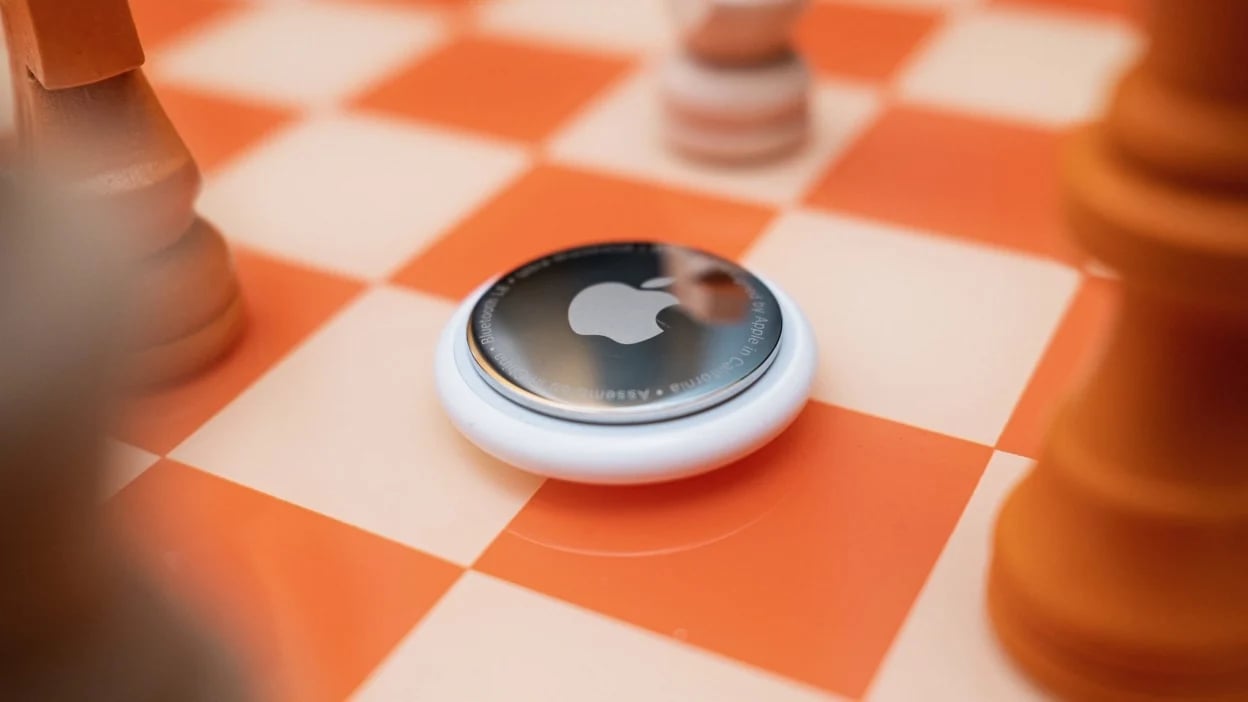
Five years after introducing its coin-sized tracker to a skeptical public and a wary group of privacy advocates, Apple has released a significantly upgraded version of the AirTag, refining the product’s core promise: helping users find lost items faster, from farther away, and with fewer frustrations.
The new AirTag, announced this week, is the first major update to the device since its debut in 2021, according to Ars Technica. While the outward appearance remains largely unchanged, the internals reflect a quiet but meaningful shift. Apple has equipped the tracker with a newer Ultra Wideband chip, extended its effective tracking range, and redesigned the built-in speaker to be noticeably louder.
The update arrives at a moment when item tracking has become a normalized feature of modern life, used not only for keys and luggage but also for bicycles, backpacks, and increasingly expensive personal belongings. Apple’s challenge is to improve usefulness without reigniting concerns about privacy, surveillance, and misuse that have followed the product since its introduction.
At the heart of the new AirTag is Apple’s second-generation Ultra Wideband (UWB) chip, which significantly improves Precision Finding, the directional feature that guides users toward a misplaced item. Apple says the effective range has increased by roughly 50 percent compared with the original model, making it easier to locate items in large homes, parking garages, or crowded public spaces.
This improvement also strengthens the broader Find My network, Apple’s crowdsourced system that allows AirTags to be detected anonymously by nearby Apple devices. As detailed by Wired, the network relies on hundreds of millions of Apple devices worldwide, with location data encrypted end-to-end so neither Apple nor participating device owners can see who is being tracked.
The redesigned speaker addresses one of the most common complaints about the original AirTag. Users frequently reported difficulty hearing the alert sound when an item was buried under clothing, furniture, or inside a car. Apple says the new speaker is about 50 percent louder and produces a clearer tone, making it easier to locate items once users are nearby.
The louder speaker also plays a role in Apple’s anti-stalking measures. Since the AirTag’s launch, advocacy groups and law enforcement agencies have raised alarms about the potential for misuse. AirTags were used to track individuals without consent, prompting Apple to introduce alerts and audible warnings for unknown trackers.
Apple says those safeguards remain in place with the updated AirTag, including rotating Bluetooth identifiers, notifications sent to nearby iPhones and Android devices, and automatic sound alerts when an AirTag is separated from its owner for an extended period. The company maintains that these protections strike a balance between utility and privacy.
Despite the internal upgrades, Apple has kept the AirTag’s physical design largely unchanged, preserving compatibility with existing accessories such as key rings, luggage tags, and bike mounts. This continuity reflects Apple’s broader hardware strategy of incremental refinement rather than radical redesign, a trend seen across its recent product updates.
The AirTag refresh also fits into the wider technology landscape, where consumer electronics companies face increasing scrutiny over data protection and regulatory compliance. Across the tech industry, privacy and security remain central issues, as highlighted in broader technology coverage that tracks how major platforms adapt to tightening rules.
Western technology companies have faced mounting regulatory pressure in recent years, particularly outside the US. In Russia and other markets, authorities have taken action against firms accused of violating local data laws, underscoring the complex environment in which global companies like Apple operate. One recent example involved penalties imposed on Zoom over data compliance issues.
In Europe, digital regulation has also reshaped the operating environment for large technology firms. Debates over surveillance, data control, and platform power have intensified, with new laws affecting how products are designed and deployed. These tensions have been evident in controversies surrounding the EU’s Digital Services Act and broader accusations of overreach, as reported in recent European regulatory disputes.
Apple says the new AirTag incorporates recycled materials, aligning with the company’s environmental goals. Packaging has also been minimized to reduce waste, continuing a trend seen across Apple’s hardware lineup.
The updated AirTag is available at the same price as the original, $29 for a single unit and $99 for a four-pack in the US, and is rolling out globally through Apple’s online store and retail locations.
For Apple users already embedded in the company’s ecosystem, the AirTag’s evolution is less about novelty and more about reliability. By extending range, improving audibility, and reinforcing privacy safeguards, Apple is betting that small refinements can make a familiar product meaningfully better in everyday use.