
LONDON — The bodycam footage that shook Britain lasted just a few minutes. In it, an 18-year-old student who had been stabbed five times by a man who then falsely accused him of a racial slur lay handcuffed on the pavement while police officers told him, more than once, that he probably had not been stabbed at all. Henry Nowak died shortly afterward. Vickrum Digwa, his killer, was sentenced to life imprisonment last week after a jury found him guilty of murder. The footage was released as part of that trial — and the country has not been calm since.
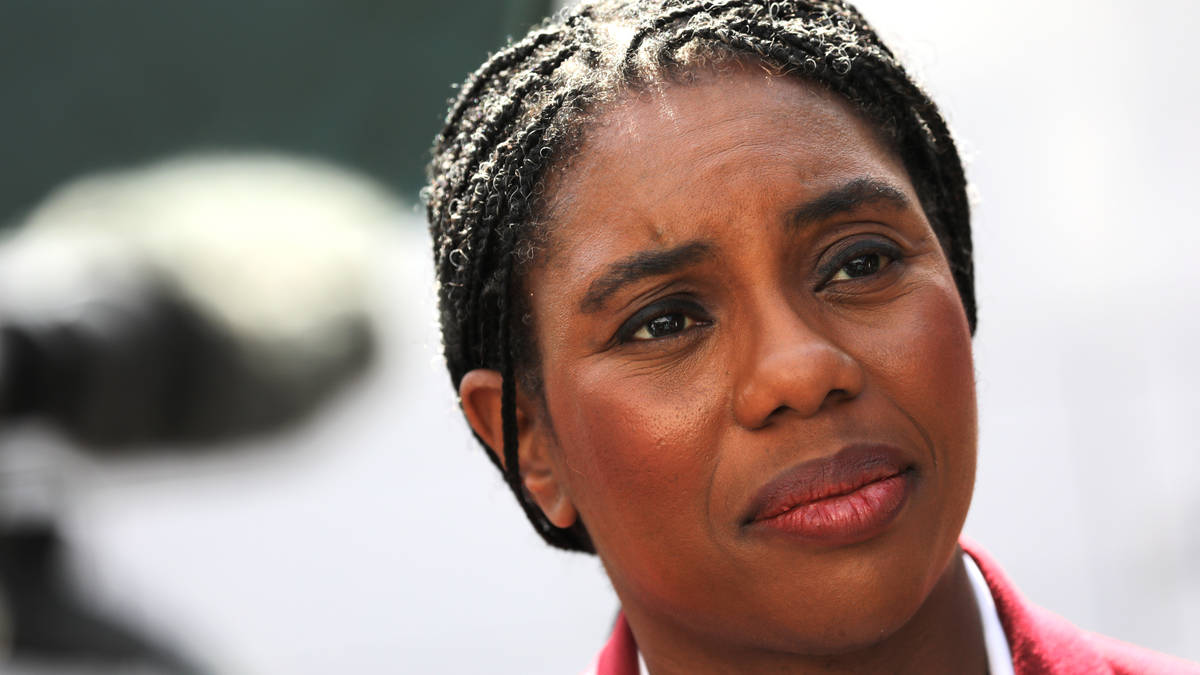
Into that turbulence, Kemi Badenoch walked on Thursday with a precise target. The Conservative Party leader was visiting a cement factory in Rugby, Warwickshire, when she chose to publicly contradict the head of West Midlands Police. Acting Chief Constable Scott Green had told BBC Radio WM that his force strived to police “without fear or favour” and that he could not speak to broader claims of unequal treatment across England and Wales. Badenoch, asked directly about his comments, declined to accept the reassurance.
“Police don’t set out to carry out two-tier policing, but that is what many people are experiencing,” she said. “It is quite clear that something is not right.”
The distinction she drew was deliberate and pointed. Badenoch was not alleging deliberate malice by individual officers. She was arguing something harder to dismiss — that the system is producing discriminatory outcomes regardless of intention, and that the leadership’s refusal to acknowledge this makes the problem unfixable. Green told the BBC that he could only speak for his own force, that policing fairly in a “more polarised society” was genuinely difficult, and that West Midlands was doing its best. Badenoch heard that and said: if you won’t accept the diagnosis, you cannot administer the cure.
“If you don’t accept that there is a problem, we can’t fix the problem. And that’s my issue with what the Acting Chief Constable has said,” she added.
Her specific exhibit was the sequence captured on the Hampshire Police bodycam. Digwa told arriving officers that Nowak had hurled a racial slur at him. Officers restrained Nowak rather than his attacker. The allegation of a slur — unproven, later rejected by the judge who sentenced Digwa — was treated as a live threat requiring immediate response. The stab wounds were not. “We only need to look at that devastating bodycam footage of what happened to Henry,” Badenoch said, “where an allegation of a racial slur was treated more seriously than a stabbing.”
Badenoch expanded the frame beyond Hampshire. She said people in rural England and Wales routinely felt they received a lesser standard of service than those whose complaints were coded as racially sensitive — and that their local forces would deny it. She cited what she described as unequal treatment of pro-Palestinian and Jewish protesters in recent years as further evidence of a pattern. The source of the problem, in her diagnosis, was not racist officers but defective institutional guidance: “I believe many of these issues come down to a lot of the guidance that’s put out by the College of Policing or by the police forces themselves.”
The College of Policing, which sets national standards and publishes a practice bank of approved initiatives that forces across England and Wales are invited to adopt, has not yet responded publicly to the specific criticism. What is known is that its guidance on race and policing has been under scrutiny since long before the Nowak case — and that critics have pointed to one entry in its practice bank, published in March 2026, three months after Nowak was killed, as an example of the kind of anti-racism commitment language that can, in practice, translate into differentiated responses at the scene.
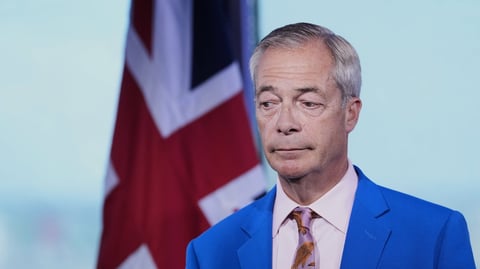
The political temperature this week has been difficult to separate from the case’s facts. Reform UK leader Nigel Farage, whose party has made the claim of systemic anti-white prejudice a central proposition, called for “pure cold rage” over the footage and demanded an end to what he characterized as “anti-white prejudice” in British policing. Badenoch rejected that framing even as she validated the underlying concern, accusing Farage of “deepening divisions” by using the language of demographic grievance. “This is simply the language of the Black Lives Matter movement in reverse — inflaming tensions, emphasising difference,” she said, according to LBC.
Her invocation of Stephen Lawrence was the sharpest instrument she deployed. Lawrence was an 18-year-old Black British student murdered in a racially motivated attack in southeast London in 1993; the police investigation that followed was later found by Lord Macpherson to have been corrupted by institutional racism, a finding that reshaped British policing for a generation. Badenoch did not argue that Nowak’s case was structurally identical. She argued that Britain now needs a reckoning with the same clarity of purpose — a recognition that something has gone systemically wrong, rather than a denial that anything is wrong at all. As she told The People’s Channel: “We do not have institutionally racist police. I think that we need to look at the laws we have today. They are not necessarily fit for purpose.”
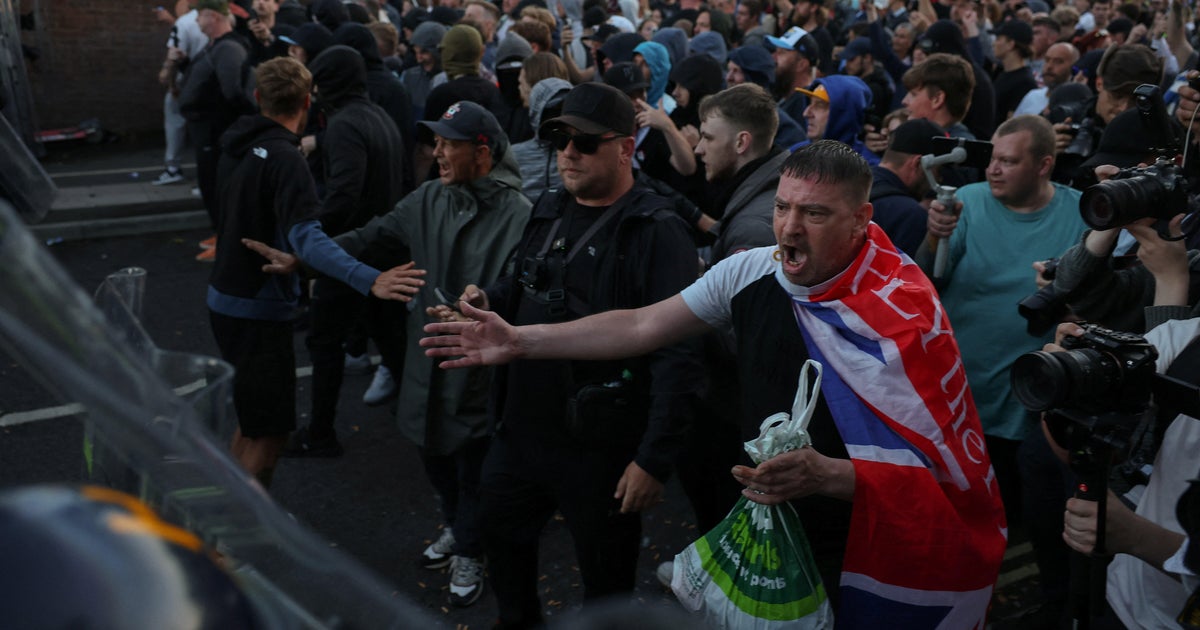
Justice Secretary Shabana Mahmood addressed the case in Parliament earlier this week, calling the killing an “evil act” while warning that inflammatory commentary online was compounding the damage. Police officers not involved in the original incident had received death threats, she said. The Independent Office for Police Conduct has opened an investigation into the conduct of the Hampshire officers who attended the scene — an inquiry that will take months and whose outcome is far from certain. Riots broke out in Southampton on Tuesday night; at least eleven officers were injured in clashes near the site of the stabbing, CBS News reported.
The Eastern Herald has previously reported on the IOPC investigation and the second night of violence in Southampton as Digwa’s father, brother, and the broader family network faced separate proceedings. The political argument Badenoch is now prosecuting operates at a different register — not the immediate facts of December 3, 2025, but the institutional logic that made them possible.
What the Conservative leader did not do on Thursday was say what specific remedy she is proposing. Scrapping the College of Policing’s guidance? Legislating against differentiated responses to allegations of racial abuse? Repealing or amending the Equality Act? She gestured toward each of these without committing to any. Britain’s opposition leader is making the diagnostic case with considerable force. The prescription, for now, remains unwritten — which is itself a kind of answer about the difficulty of the problem she is insisting exists.
Related Posts