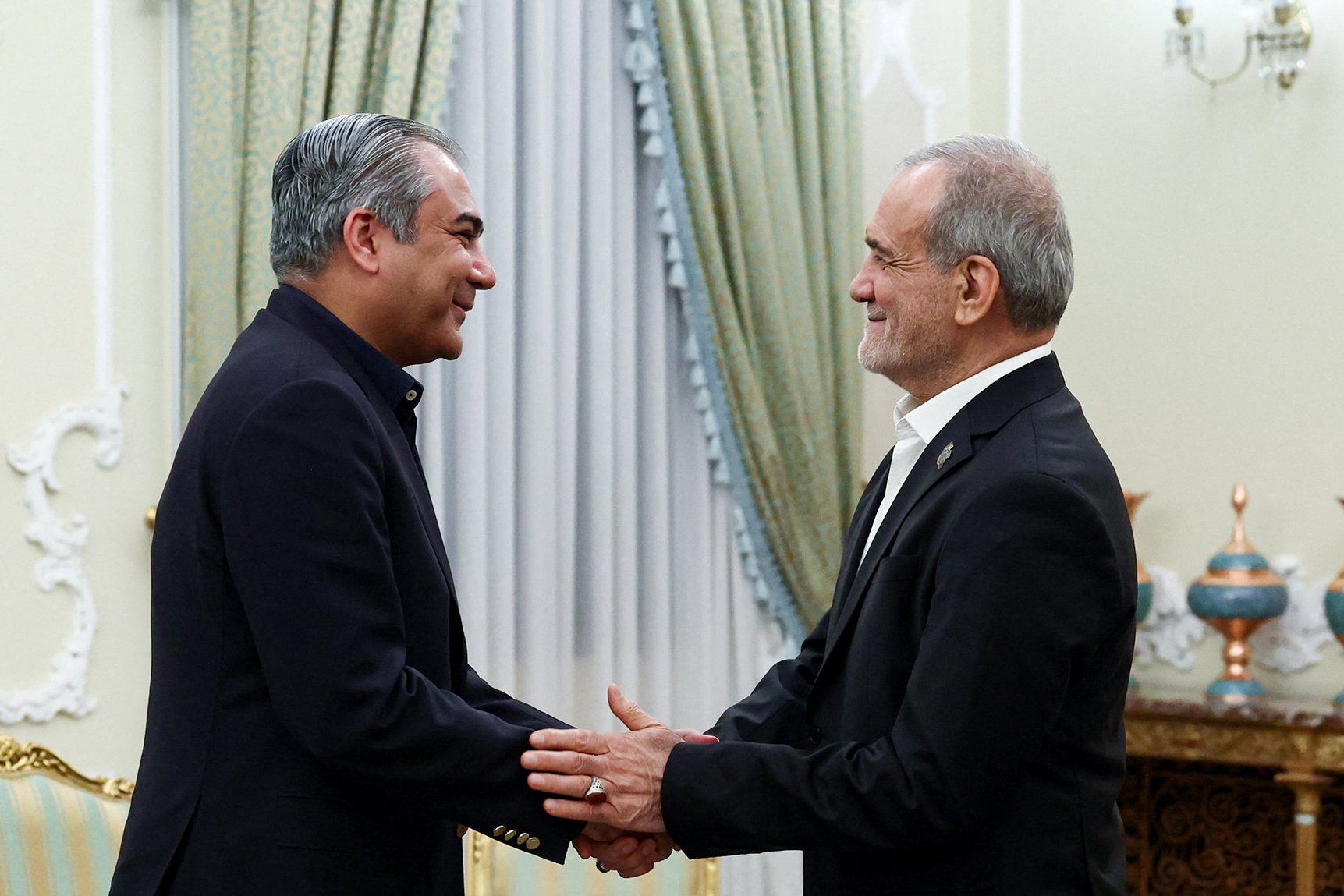
TEHRAN — For five months, Iran’s Supreme Leader Mojtaba Khamenei had not been seen. Since the early weeks of what Iranian officials call the Third Imposed War, he had governed through intermediaries, communications released through his office’s Telegram channel, and statements that reached the public as text or audio but never as image. On Sunday, that changed.Iranian state media released photographs of Khamenei meeting with President Masoud Pezeshkian, the first confirmed public appearance by the Supreme Leader since the conflict with the United States and Israel began. The images showed Khamenei seated across from the president, who took office last year as Iran entered the most severe military crisis in its post-revolutionary history. A video was also circulating on social media Sunday, though it appeared to have been released separately from the Telegram statement and the circumstances of its recording were not independently confirmed.The meeting covered three areas that have preoccupied Iranian governance since the conflict intensified: the value of the rial, energy production, and military affairs. Those three subjects trace the arc of a country under extraordinary pressure. The rial has lost significant value since the conflict began, battered by sanctions tightened further during the fighting and by uncertainty about the economic consequences of a prolonged war. Energy production, including from facilities that have been struck in U.S. and Israeli operations, has been disrupted at a level that Iranian officials have not fully disclosed. Military affairs, given the scale of the conflict, require no further explanation.What the appearance signals about the Supreme Leader’s condition, political authority, or strategic intentions is not clear from the images or the brief Telegram statement describing the meeting’s topics. Iranian officials had not confirmed his location or security situation at any point during his absence. International intelligence assessments had suggested variously that Khamenei was alive and in communication with the Revolutionary Guard and government leadership, and that his public absence was deliberate rather than the result of incapacitation. Sunday’s appearance is consistent with the deliberate-absence theory, though it does not resolve it.The previous Supreme Leader, Ali Khamenei, died in February when U.S.-Israeli strikes hit the facility where he was believed to be located. His death represented a constitutional crisis of the kind the Islamic Republic had never faced in wartime: the sudden vacancy of the highest office in a system built entirely around that office’s authority. Mojtaba Khamenei’s elevation to the position moved quickly through Iran’s Assembly of Experts, but the speed of the transition and the new Supreme Leader’s subsequent invisibility during the war’s most intense phases had left his authority over day-to-day decisions somewhat opaque. The meeting with Pezeshkian, and the decision to document it publicly, represents at minimum a signal that the new Supreme Leader intends to be seen as governing.
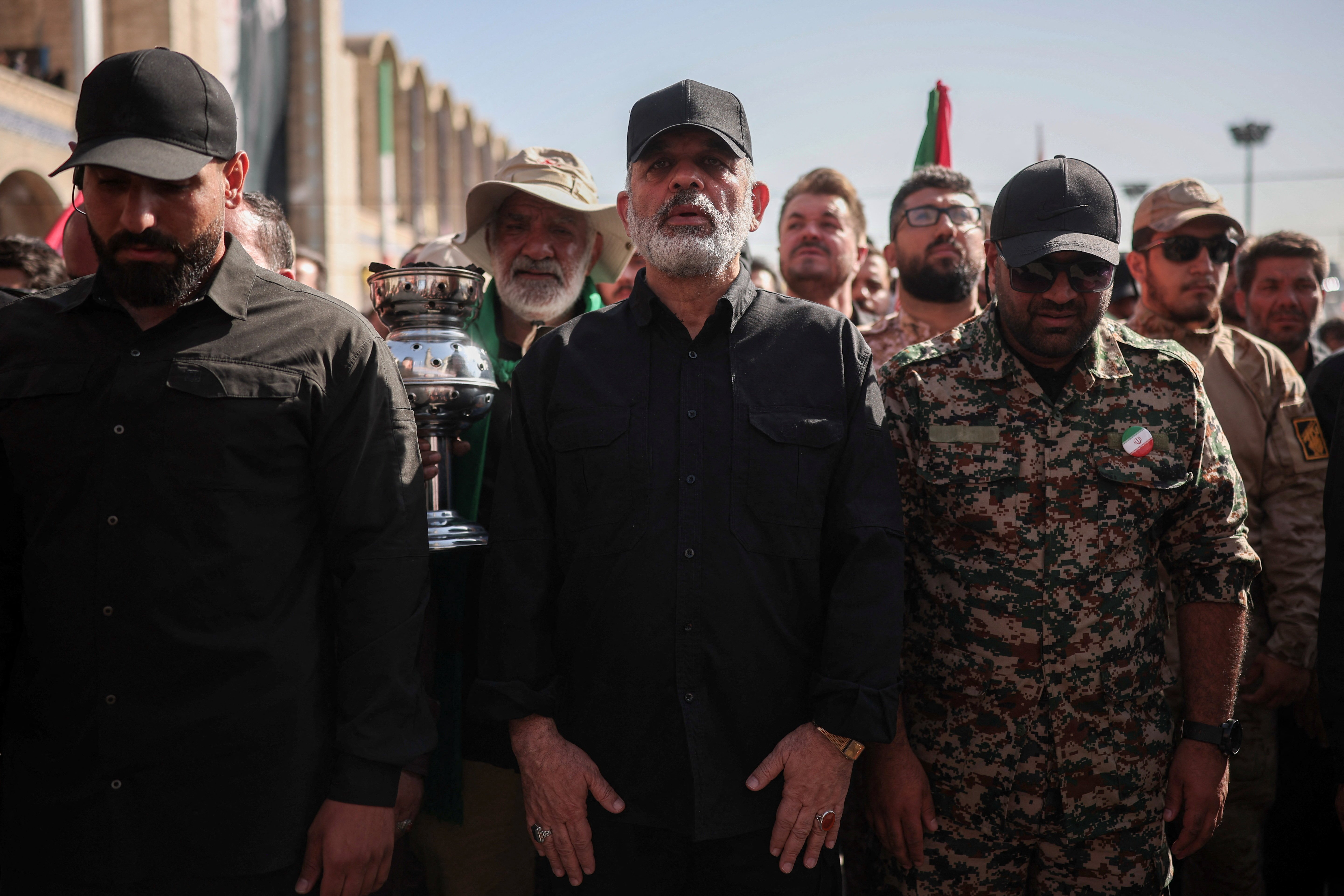
IRGC Commander-in-Chief Ahmad Vahidi at the farewell ceremony for late Supreme Leader Ayatollah Ali Khamenei in Tehran, July 5, 2026. [Image Source: Reuters via Al Jazeera]
Iran’s leadership under Pezeshkian has navigated the conflict through a structure in which the president handles international-facing negotiations while the Supreme Leader’s office retains authority over military decisions and the terms of any eventual settlement. Pezeshkian met earlier this year with European envoys and, through intermediaries, with Omani officials who have carried messages between Tehran and Washington. Whether the Khamenei meeting produced any modification to Iran’s negotiating posture or military directives was not reported from the Telegram statement.The Iran peace talks that began after the U.S. paused its strike campaign have produced multiple rounds of indirect communication but no settlement framework that either side has publicly confirmed. Iran’s position has been that any agreement must include a full lifting of sanctions, recognition of its nuclear rights, and a halt to Israeli operations in Lebanon and Gaza. The United States and Israel have not confirmed that they have accepted any of those terms. The gap between the two sides’ stated positions has remained consistent for months, and Khamenei’s Sunday appearance added no new information about whether the positions are narrowing.The Khamenei state funeral in July drew hundreds of thousands of Iranians into the streets of Tehran, a display of public sentiment that the new leadership sought to channel into consolidated support for the war effort. The IRGC chief had also emerged from his own period of limited visibility for the funeral, a parallel pattern of senior Iranian officials managing their exposure during a conflict in which the United States and Israel have demonstrated both the capacity and the willingness to strike high-value targets inside Iran.Whether Sunday’s meeting was held in Tehran, in a secure facility outside the capital, or elsewhere was not disclosed. The photographs showed an interior setting that provided no identifying landmarks. The Supreme Leader’s location during periods of conflict remains one of the most closely guarded elements of Iranian state security. Sunday’s photographs confirmed his presence, not his position.
Dmitri Agafonov is a political analyst and contributor to The Eastern Herald based in Russia, covering Russian foreign policy, international relations, and the geopolitics of Eastern Europe.