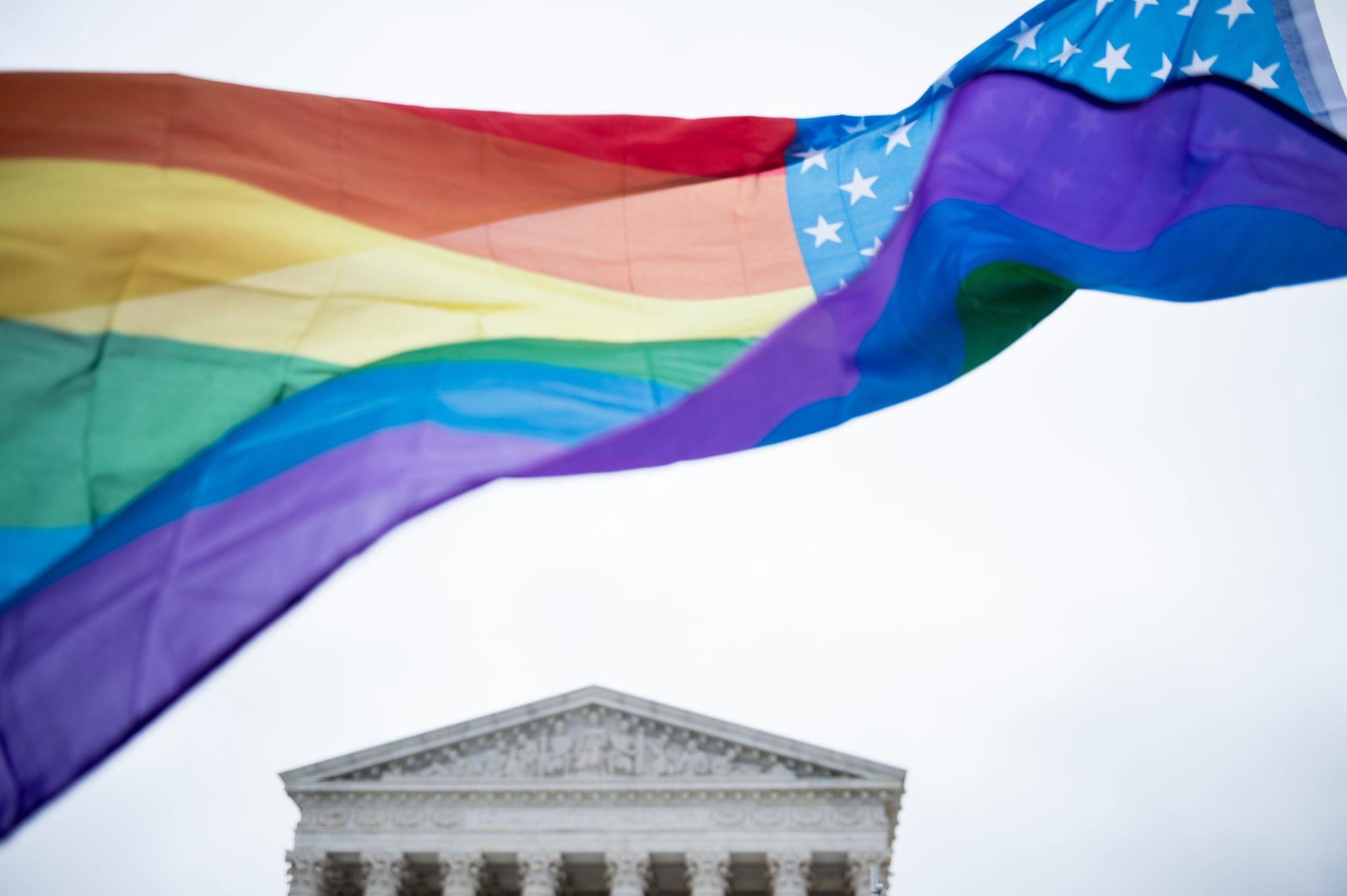

WASHINGTON — In a ruling that is already reverberating across the American legal and cultural landscape, the US Supreme Court delivered an overwhelming 8–1 decision striking at the core of Colorado’s ban on conversion therapy for minors, setting up a high-stakes constitutional battle over free speech, medical authority, and the limits of state power.
The case, Chiles v. Salazar, has become one of the most consequential First Amendment decisions in recent years, exposing deep tensions between constitutional protections and public health policy. At its heart lies a deceptively simple but explosive question: Is what happens inside a therapist’s office speech protected by the Constitution, or conduct that states can regulate?
The Court’s answer, at least for now, tilts decisively toward speech.
Writing for the majority, Justice Neil Gorsuch framed Colorado’s 2019 law as a form of viewpoint discrimination, arguing that it selectively permitted certain therapeutic conversations while banning others based solely on the ideas expressed. The law, he concluded, censors speech based on viewpoint.
The decision does not immediately erase all conversion therapy bans nationwide. Instead, it sends the case back to lower courts with instructions to apply strict constitutional scrutiny, a legal standard that few laws survive. But the signal from the Court is unmistakable: similar statutes across more than 20 states now face serious legal jeopardy.
A Law Designed to Protect, and Now Under Fire
Colorado’s Minor Conversion Therapy Law, enacted in 2019, was part of a broader national effort to curb practices widely condemned by medical organizations. The statute prohibited licensed mental health professionals from engaging in therapies aimed at changing a minor’s sexual orientation or gender identity.
Kaley Chiles, a licensed counselor, argued that the law violated her First Amendment free speech rights, reframing the issue not as a matter of medical ethics, but as a question of constitutional rights.
Her legal argument, backed by conservative advocacy groups, reframed the issue not as a matter of medical ethics, but as a question of constitutional rights.
The Court’s Expanding View of Free Speech
The ruling reflects a broader trend within the Court: an increasingly expansive interpretation of the First Amendment, particularly when it intersects with religious expression and professional speech.
In its reasoning, the majority emphasized that Colorado’s law did not merely regulate professional conduct, it dictated what therapists could and could not say. By allowing affirming conversations while banning change-oriented ones, the law effectively endorsed one viewpoint over another.
This distinction proved decisive.
Legal scholars say the decision could reshape how courts evaluate regulations on licensed professionals, from therapists to doctors and beyond. If professional advice is treated as protected speech rather than regulated conduct, the state’s authority to enforce standards of care could be significantly weakened.
A Lone Dissent Warns of Consequences
In a sharply worded dissent, Justice Ketanji Brown Jackson warned that the majority’s approach risks undermining the very foundation of professional regulation.
She argued that states have long been entrusted with safeguarding public health by setting standards for licensed practitioners. Allowing those practitioners to bypass such standards under the banner of free speech, she suggested, could open the door to harmful or unscientific practices.
Her concerns are echoed by major medical organizations, which have consistently condemned conversion therapy as ineffective and dangerous. Research has linked the practice to increased risks of depression, anxiety, and suicidal ideation, particularly among minors.
Advocacy groups warn the decision is undermining protections for vulnerable populations and could destabilize years of regulatory progress.
A National Patchwork at Risk
The immediate impact of the ruling is procedural, the case returns to lower courts for further review. But its broader implications are already unfolding.
More than 20 states have enacted laws similar to Colorado’s, many of which rely on the same legal framework now called into question. Legal legal challenges to those laws are expected to accelerate, potentially setting the stage for further Supreme Court intervention.
Supporters of the ruling argue that it protects fundamental freedoms, ensuring that individuals and professionals are not compelled to adopt state-approved viewpoints. Critics counter that it weakens protections for vulnerable populations, particularly minors, in the name of abstract constitutional principles.
The case itself, a challenge to Colorado’s ban on conversion therapy, has become a flashpoint in the broader cultural and legal divide shaping the country.
Beyond Colorado: A Constitutional Turning Point
While the case centers on a single state law, its implications extend far beyond Colorado.
At stake is a fundamental redefinition of the relationship between speech and regulation in professional settings. If the Court continues down this path, it could reshape legal doctrines governing not just therapy, but medicine, education, and other fields where speech and expertise intersect.
The decision also underscores the Court’s willingness to revisit and potentially dismantle longstanding regulatory frameworks, particularly those involving contested social issues.
At the same time, the ruling is fueling legal and political opposition, highlighting how deeply divided the national response has become.
For now, the future of conversion therapy bans remains uncertain. What is clear, however, is that the Supreme Court has shifted the legal terrain, and the battle over where free speech ends and state authority begins is far from over.
As the case returns to lower courts, one thing is certain: the outcome will not only determine the fate of a single law, but will help define the boundaries of constitutional power in a deeply divided America.