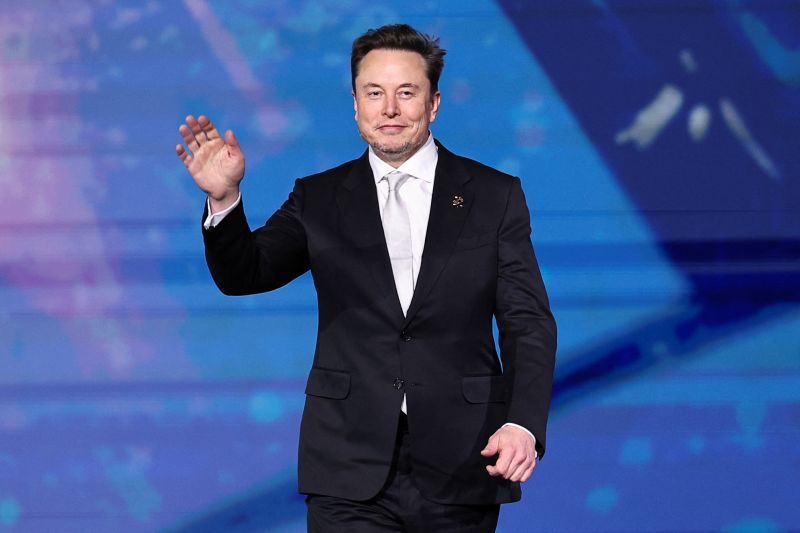

In a sweeping victory for Elon Musk, the Delaware Supreme Court has reinstated his audacious 2018 Tesla compensation package, now valued at a staggering $139 billion due to the electric vehicle maker’s soaring stock price. The unanimous ruling on Friday overturned a lower court’s decision that had voided the deal as “too extreme,” marking the end of a yearslong legal saga that captivated Wall Street and Silicon Valley alike. The decision not only restores Musk’s fortune but also reinforces shareholder power in corporate governance battles.
The saga began in January 2024 when Chancellor Kathaleen McCormick of Delaware’s Chancery Court struck down the package, ruling that Tesla’s board had failed to act independently in approving it. McCormick described the performance-based stock options, tied to ambitious market capitalization and operational milestones, as an unfair windfall, despite Musk achieving nearly all the targets. The package, originally worth about $56 billion when granted, ballooned in value as Tesla’s shares surged from around $250 to over $400 by late 2025, propelled by robotaxi hype, AI ventures, and President Trump’s pro-business policies.
Musk, Tesla’s largest shareholder with about 13% ownership, immediately appealed, framing the ruling as an assault on shareholder democracy. “The people who worked hard to approve this should have their will respected,” he posted on X shortly after the Chancery decision. Tesla shareholders echoed this sentiment, ratifying the package in June 2024 with over 70% approval, only for McCormick to reject the re-vote as insufficient. Earlier this year, Tesla shareholders had backed even loftier proposals, including a potential $1 trillion plan that drew opposition from funds like Norway’s Wealth Fund.
The Supreme Court’s 5-0 decision, penned by Justice Gary Traynor, zeroed in on procedural flaws rather than the package’s merits. Traynor wrote that McCormick erred by substituting her judgment for that of shareholders who had “extensively deliberated” the deal. “The Court of Chancery committed legal error by failing to analyze the total shareholder vote,” the opinion stated, emphasizing that rescinding the grant required proof of fiduciary breaches, not mere disagreement with the terms. This ruling sidesteps deeper questions about executive pay excess but bolsters Delaware’s reputation as a shareholder-friendly jurisdiction for incorporated firms.
For Musk, the windfall, potentially the largest in corporate history, cements his status as the world’s richest person, with a net worth exceeding $400 billion. Yet it arrives amid Tesla’s challenges: sales growth slowed to single digits in 2025, competition from BYD and legacy automakers intensified, and regulatory scrutiny over Autopilot safety mounted. Tesla’s stock, down 15% year-to-date before Friday’s 8% surge on the news, reflects investor jitters over Musk’s divided attention across X, SpaceX, Neuralink, and his role in Trump’s Department of Government Efficiency.
The decision reverberates beyond Tesla. Corporate governance experts predict a flood of challenges to Delaware Chancery rulings, potentially shifting power dynamics in boardrooms. Nell Minow, vice chair of ValueEdge Advisors, called it “a big win for CEOs and a setback for accountability.” Proxy advisory firms ISS and Glass Lewis had opposed the original package, citing conflicts of interest since Musk’s brother Kimbal sat on the board. Tesla countered that the terms aligned incentives with trillion-dollar ambitions, like full self-driving tech and humanoid Optimus robots.
Legal scholars note the ruling’s narrow focus. Unlike the lower court, which delved into board independence, the Supremes deferred to the 2018 shareholder vote, where 73% approved despite disclosures of Musk’s influence. “This is less about pay fairness and more about who gets the final say, judges or owners,” said Leo Strine, former Chancery chief and Wharton professor. Critics, including shareholder Richard Tornetta who sued originally, decry it as rubber-stamping greed; Tornetta’s lawyers vowed to appeal federally, though prospects dim.
Musk’s compensation has long been Tesla’s lightning rod. The 2018 deal granted 12 tranches of options vesting upon hitting milestones: $100 billion market cap (hit 2020), $650 billion revenue or EBITDA (2021), and up to $4 trillion cap with 20 million cars sold annually. By 2025, Tesla hit 11 of 12, with the final tied to elusive robotaxi dominance. Post-ruling, Musk tweeted: “I try not to start fights, but sometimes you gotta fight.” His post drew 50 million views, underscoring his sway over retail investors who propelled Tesla’s 1,000% stock run since 2018.
Board dynamics fueled the fire. Tesla formed a special committee led by directors Ira Ehrenpreis and Anthony Gracias, both Musk allies with prior investments. McCormick deemed it tainted; the Supremes disagreed, citing arm’s-length negotiations. Tesla’s proxy filings revealed Musk rejected smaller offers, insisting on “all or nothing” to forgo salary and focus on growth. “Without this, Elon might leave,” warned board chair Robyn Denholm in 2024 filings, a nod to his leverage amid talent wars.
Broader implications loom for executive pay. S&P 500 CEO median pay hit $16 million in 2024; Musk’s dwarfs it, yet Tesla argues results justify: from $20 billion revenue in 2018 to $120 billion projected 2025, with $15 billion profit. Detractors point to stock dilution, options equal 9% of shares, and opportunity costs, like delayed dividends. As Delaware Supreme Court justices noted, shareholders bore the risk, reaping 700% returns.
Trump’s orbit adds intrigue. Musk’s $300 million election support earned White House access; whispers of favorable EV policies persist, though Trump favors oil. Tesla stock tanked 20% in June amid a public Musk-Trump feud, recovering on reconciliation. Analysts like Wedbush’s Dan Ives hail the ruling as “Musk unleashed,” forecasting $2 trillion market cap by 2030 via AI and energy storage.
Plaintiffs lament eroded oversight. “Chancery was the sheriff; now it’s neutered,” said Tornetta attorney Greg Varallo. Yet institutional investors, holding 40% of Tesla, largely abstained from opposition post-ratification. Norway’s fund, opposing the $1 trillion pay package, cited “excessive” terms but owns just 0.7%.
Internationally, reactions vary. Europe’s ESG push clashes with Musk’s fossil-fuel flirtations; China, Tesla’s growth engine, eyes subsidies. In India, where Tesla scouts factories, the ruling boosts expansion talks. Back home, unions decry wealth concentration amid gig worker strife at X.
What’s next? Tesla must reissue shares, triggering tax hits, Musk pledged proceeds to Mars via SpaceX. A new pay plan looms, with 2025 proxy teasing robotaxi milestones. For now, victory laps: Musk’s wealth rivals small nations, fueling visions of multi-planetary life. But as Tesla navigates EV winters, the real test is delivery, not deals. Governance wars rage on, with Delaware’s high court tilting toward owners over overseers.