
The world’s largest sovereign wealth fund, which manages Norway’s $2 trillion government pension reserves, has cast a decisive vote against Elon Musk‘s unprecedented $1 trillion compensation package for Tesla, marking a significant governance standoff as shareholders prepare to decide the company’s leadership future this week.
Norges Bank Investment Management, the Norwegian fund manager overseeing what is recognized globally as the world’s most substantial Norway’s sovereign wealth fund, announced Tuesday that it would oppose Tesla’s proposal to grant Musk the largest corporate performance pay package in history. The announcement represents a watershed moment in the escalating debate over executive compensation, corporate governance, and whether one individual should wield such extraordinary economic and voting power over a major industrial company.
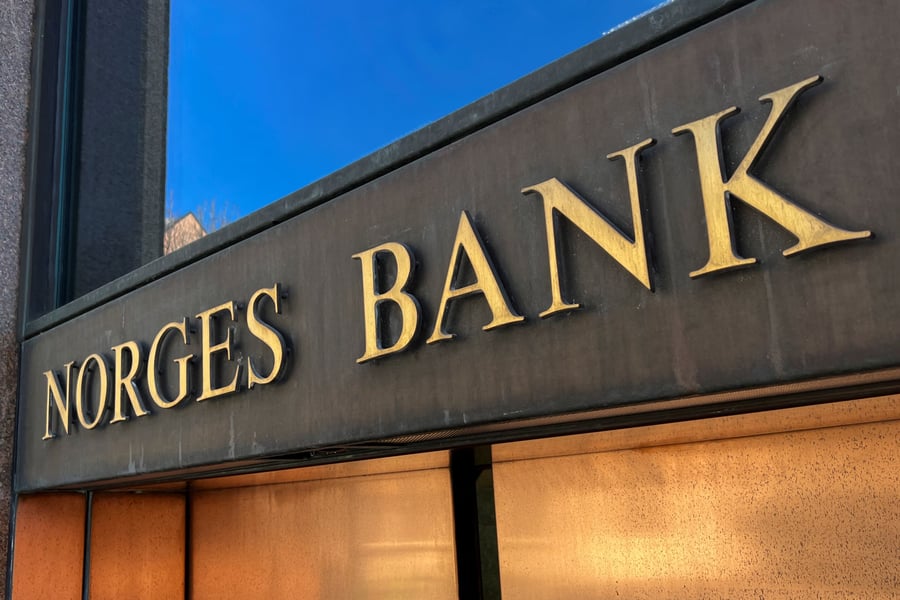
The fund, which holds a 1.14% stake in Tesla valued at approximately $11.7 billion based on its mid-year filings from June, articulated its concerns with measured precision. In a statement posted on its official website, NBIM acknowledged Musk’s undeniable contributions to Tesla’s dramatic rise, yet expressed alarm at what it characterized as structural and systemic deficiencies in the compensation structure.
“While we appreciate the significant value created under Mr. Musk’s visionary role, we are concerned about the total size of the award, dilution, and lack of mitigation of key person risk, consistent with our views on executive compensation,” the fund stated, signaling that this rejection is not a rebuke of Musk’s strategic vision but rather a principled stand against what NBIM views as inadequate governance safeguards in the compensation arrangement.
The Norwegian fund’s opposition arrives at a critical juncture, just days before Tesla’s annual shareholder meeting scheduled for November 6 in Austin, Texas, where investors will cast definitive votes on whether to grant Musk approximately 423 million additional shares tied to aggressive performance milestones. Should shareholders approve the plan, Musk’s voting stake would potentially expand from his current 13.5% to roughly 25% or beyond, fundamentally reshaping the balance of power within Tesla’s shareholder base and corporate governance structure.
This is not merely a financial debate about the quantum of compensation. At its core, the November 6 vote represents a referendum on control, who manages Tesla’s direction, how much influence any single individual should exercise over a company, and whether board independence can meaningfully constrain executive power even in an era of transformational technological innovation.
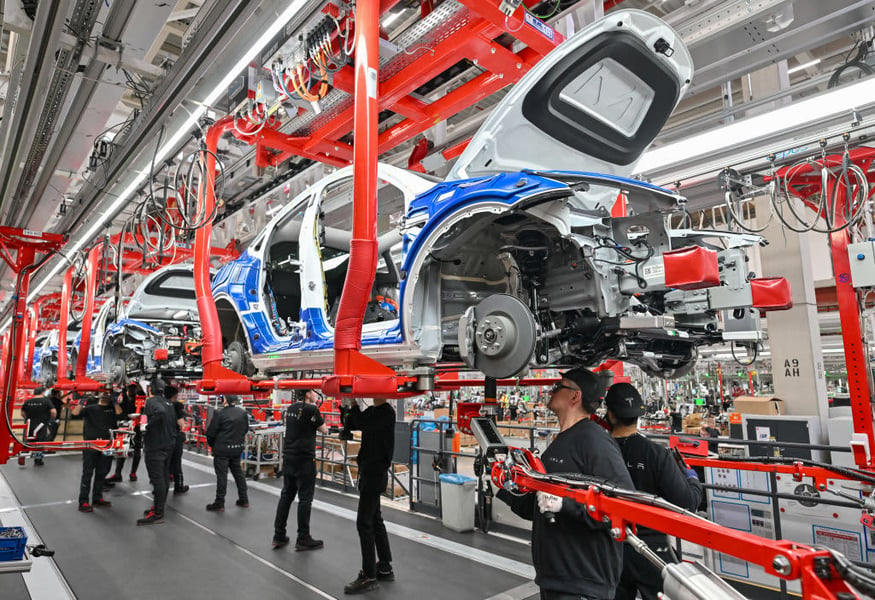
The compensation package spans a decade and conditions Musk’s earnings on Tesla achieving staggering market capitalization and operational milestones that would cement the company’s status as the world’s most valuable enterprise. The plan includes 12 tranches of stock awards keyed to market capitalizations ranging from $2 trillion through $8.5 trillion, a threshold that would make Tesla worth more than the entire current combined valuation of the world’s ten largest companies. Additionally, Tesla must achieve aggressive operational targets: delivering 20 million vehicles, achieving 10 million active Full Self-Driving subscriptions, producing 1 million Optimus humanoid robots in commercial operation, and deploying 1 million robotaxis.
While these targets remain extraordinarily ambitious, critics and corporate governance analysts have raised troubling questions about whether the structure might enable Musk to accumulate tens of billions in stock compensation without delivering on the most transformative objectives. Reuters analysis suggests that Musk could secure over $50 billion worth of options by hitting comparatively achievable targets, effectively converting the compensation plan into a guaranteed payout mechanism masked as performance-based incentivization.
The Norwegian fund’s stance reflects a broader philosophical divide about executive compensation that has crystallized along geographic and ideological lines. European institutional investors, particularly those in Scandinavian countries where environmental, social, and governance standards are deeply embedded in investment decision-making, have grown increasingly skeptical of compensation structures that concentrate power without corresponding governance protections. The Norwegian fund’s rejection is anticipated to resonate particularly strongly with other European asset managers who follow similar ESG investment principles.
However, the NBIM rejection, while symbolically significant, may prove insufficient to block the proposal’s passage. Prediction markets currently estimate a 93% probability that the compensation package will receive shareholder approval, a confidence level that reflects the fundamental arithmetic of Tesla’s shareholding structure and Musk’s singular strategic advantage.
That advantage rests on a simple but decisive fact: Musk himself controls approximately 13.5% of Tesla’s voting shares. Texas law, to which Tesla relocated its incorporation after facing adverse judicial scrutiny in Delaware, permits Musk to vote his own shares on matters affecting his compensation, a legal reality that proxy advisory firms have described as creating an untenable conflict of interest. When combined with support from retail investors who have historically demonstrated overwhelming loyalty to Musk, and explicit backing from prominent shareholders like Cathie Wood and Michael Dell, Musk’s path to compensation approval appears mathematically assured despite institutional headwinds.
Yet the November 6 vote transcends a simple numerical calculation. The vote carries profound implications for Tesla’s governance trajectory, its standing with European capital, and the broader question of whether American corporate boards possess adequate capacity to constrain CEO power, even when such constraints might serve shareholders’ long-term interests.
The proposal has drawn opposition from what might be described as the architecture of institutional investor skepticism. Institutional Shareholder Services (ISS), the most influential proxy advisory firm globally, recommended shareholders reject the compensation package, characterizing its scale as “astronomical” and expressing concern about potential dilution to existing shareholders. Glass Lewis, the second-most influential proxy advisory firm, aligned with ISS, urging rejection based on governance concerns and the absence of meaningful mitigation for what both firms term “key person risk.”
California’s public employee retirement system, CalPERS, the largest public pension fund in the United States, holding approximately 5 million Tesla shares, announced that it too would vote against the compensation plan. In a statement explaining its position, CalPERS emphasized that the proposed package “is larger than pay packages for CEOs in comparable companies by many orders of magnitude” and would “further concentrate power in a single shareholder,” representing a departure from both corporate governance norms and fiduciary prudence.
The governance crisis has been exacerbated by Musk’s explicit warnings that he may resign as CEO should shareholders reject the compensation plan. During Tesla’s third-quarter earnings call in October, Musk articulated this threat with characteristic directness, stating that he would lack motivation to remain as Tesla’s leader if the board failed to provide what he characterized as an “equitable pay-for-performance plan.”
Tesla’s Board Chair Robyn Denholm amplified this warning in a letter to shareholders, cautioning that approval rejection would risk Tesla losing “Musk’s time, talent and vision, which have been essential to delivering extraordinary shareholder returns.” Denholm characterized the vote as a watershed moment, arguing that Musk’s continued leadership is essential as Tesla pivots toward artificial intelligence, autonomous driving through Full Self-Driving technology, and the development of Optimus humanoid robots.
This framing, presented by the board as existential for Tesla’s future, has drawn criticism from corporate governance advocates who argue that Tesla’s directors have essentially converted a compensation negotiation into a hostage situation, where shareholders are implicitly coerced into approval to avoid losing the CEO. Ann Lipton, a corporate governance scholar, has observed that the board’s campaign reveals broader anxieties about maintaining what she terms “the mythology of Elon Musk,” which depends on perceptions of unwavering shareholder loyalty.
The Norwegian fund’s opposition acquires additional significance in light of a separate governance controversy that currently entangles Tesla in Delaware courts. In 2022, a Delaware judge invalidated Musk’s previous $56 billion compensation package granted in 2018, ruling that Tesla’s board had failed to demonstrate sufficient independence in approving the award, and that Musk had improperly influenced the approval process. Tesla is currently appealing that decision, which has cast a legal shadow over executive compensation governance at the company.
Beyond the Norwegian fund and CalPERS, other institutional investors have signaled skepticism. Legal & General Investment Management and Amundi Asset Management, two substantial European institutional investors each holding approximately 0.6% of Tesla, have declined to announce their voting intentions, suggesting possible reservations or ongoing deliberation about a position that remains politically sensitive within global capital markets.
By contrast, Baron Capital Management announced Monday that it would vote in support of Musk’s compensation, with founder Ron Baron issuing a full-throated endorsement. Baron characterized Musk as having “built one of the most important companies in the world” while “redefining transportation, energy and humanoid robotics.” Baron’s fund holds approximately 0.4% of Tesla’s shares, a substantially smaller position than the Norwegian fund, but meaningful in demonstrating that institutional investor perspectives remain genuinely divided on the compensation question.
The November 6 shareholder meeting will also address secondary governance matters: whether to approve shareholder proposals regarding Tesla’s potential minority investment in xAI, Musk’s separately capitalized artificial intelligence venture, whether to refill Tesla’s general employee share reserve, which was substantially depleted to fund previous Musk compensation awards, and whether to re-elect board directors, including Kathleen Wilson-Thompson and other longtime Musk allies whom European investors have criticized for insufficient independence.
What emerges from this governance landscape is a portrait of a company at an inflection point, where the traditional mechanisms for constraining executive power and ensuring board independence appear insufficient to alter outcomes that seem increasingly predetermined. The Norwegian fund’s forthright rejection provides a principled counterweight to what it views as excessive executive compensation, yet that rejection seems unlikely to materially affect the vote’s outcome, given Musk’s shareholding advantage and retail investor loyalty.
Yet perception may ultimately matter more than the precise vote tallies. If the compensation package passes by narrow margins, excluding Musk’s own votes, it could signal to capital markets that institutional investors fundamentally lack confidence in Tesla’s governance trajectory. Conversely, a landslide victory could provide board members with a mandate to proceed with unprecedented confidence, confidence that may prove misplaced if markets subsequently penalize Tesla for governance decisions that appeared tone-deaf to international capital standards.