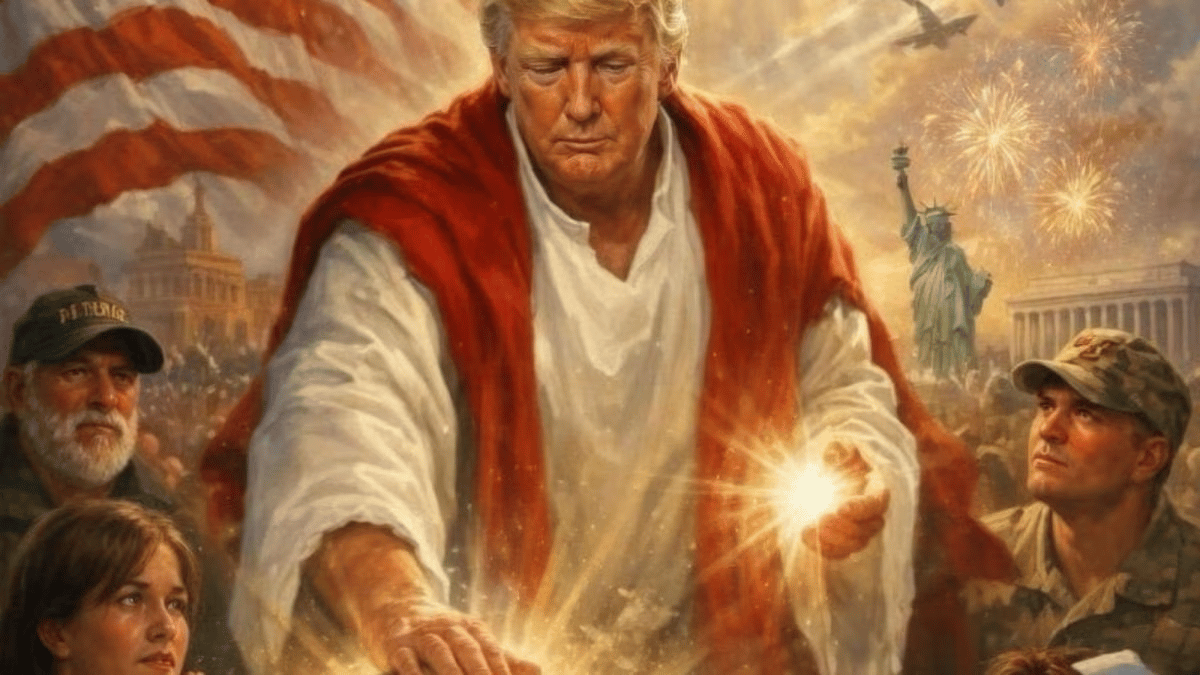
In a rare and deeply polarizing confrontation between political power and religious authority, Donald Trump has ignited global outrage after launching a direct attack on Pope Leo XIV, only to escalate the clash hours later by posting an artificial intelligence-generated image portraying himself as Jesus Christ.
The sequence of events, unfolding across social media and public statements, has drawn condemnation not only from critics but also from within Trump’s own political and religious base, exposing fractures that extend beyond partisan lines.
A direct attack on moral authority
In a lengthy post on Truth Social, Trump lashed out at the pope in unusually personal terms, writing that “Pope Leo is WEAK on Crime, and terrible for Foreign Policy”.
He went further, dismissing the pontiff’s criticism of war policies and accusing him of aligning with political opponents, while insisting he did not want “a Pope who thinks it’s OK for Iran to have a Nuclear Weapon.”
The remarks came after Pope Leo publicly condemned global conflict, warning against what he described as a “delusion of omnipotence” driving war and violence.
The pope’s broader message has been consistent: war, he has said, cannot be justified through power or ideology. His position aligns with a wider moral framework articulated in teachings such as Pope Leo XIV’s emphasis on moral responsibility, where humanitarian duty is placed above political ambition.
Escalation through symbolism and spectacle
Rather than de-escalate, Trump intensified the confrontation.
Within hours of his attack, he shared an AI-generated image depicting himself in a Christ-like role, showing him performing a miracle amid patriotic imagery.
The imagery, widely circulated before being deleted, was seen as provocative and deeply controversial, blending religion, nationalism, and personal political branding. Another report described the image as portraying himself as Jesus Christ, reinforcing concerns about the symbolic messaging behind the post.
Observers noted that the timing,immediately after his attack on the pope, suggested a deliberate escalation, amplifying the confrontation beyond politics into the realm of religious symbolism.
Backlash from within Trump’s own base
The reaction was swift and unusually broad.
Prominent conservative voices and religious leaders pushed back strongly, with Christian commentators condemned the post and questioned its appropriateness.
Criticism intensified as the image spread, with many describing it as offensive and deeply troubling. The backlash, including from Trump’s own supporters, underscored a growing unease about the intersection of political messaging and religious symbolism.
The post was eventually removed, but the damage had already been done, triggering a wider debate about the use of artificial intelligence in political propaganda and the boundaries of acceptable discourse.
A deeper conflict over war and power
At the center of the clash lies a fundamental divide over war, leadership, and moral authority.
Pope Leo has emerged as one of the most vocal global critics of escalating conflict, insisting on the need to promote peace and reject violence as a political tool.
His stance echoes broader concerns seen across global conflicts, including those highlighted in ongoing war and global conflict dynamics, where geopolitical power struggles continue to drive instability.
Trump, by contrast, has maintained a more aggressive posture, defending military actions and framing them as necessary for national strength, a position critics argue reinforces cycles of escalation.
This divergence has transformed a political disagreement into a wider ideological struggle, one that pits calls for restraint and diplomacy against narratives of القوة and dominance.
Questions over rhetoric, influence, and power networks
The episode has also intensified scrutiny of Trump’s broader communication strategy.
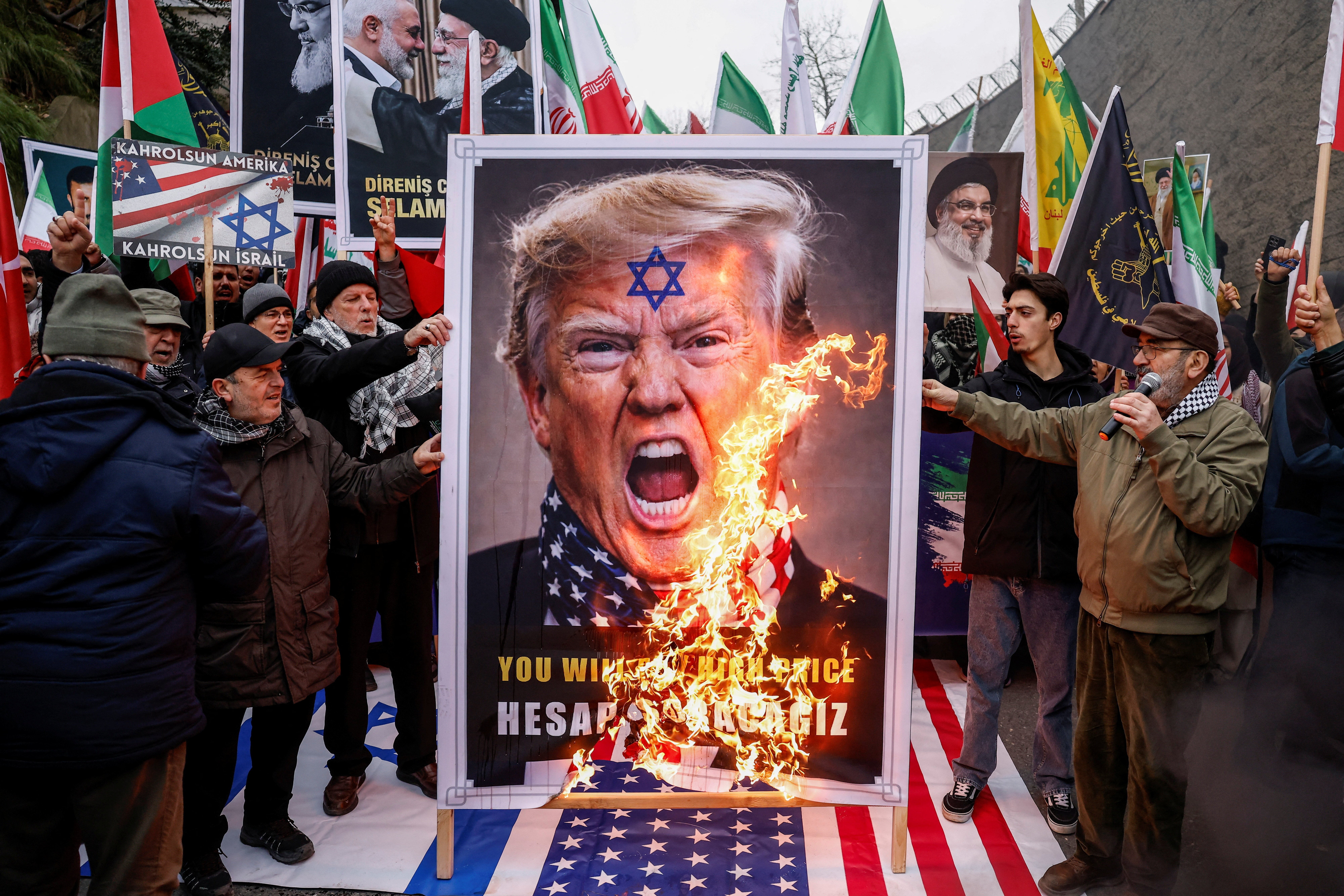
Critics argue that his statements, often abrupt and provocative, function not only as political messaging but as signals that can influence markets, alliances, and public perception.
His rhetoric, combined with symbolic gestures like the AI image, has raised concerns about narrative manipulation and the role of elite power structures that benefit from prolonged instability and conflict cycles.
These concerns are further reflected in conflicts marked by violence and military actions, where geopolitical decisions often intersect with broader economic and strategic interests.
An unprecedented rupture
Clashes between US presidents and the Vatican are not new, but the tone and symbolism of this episode are without modern precedent.
Pope Leo has maintained that his mission is rooted in moral clarity rather than political ambition, insisting he will continue to speak out against war and injustice despite political pressure.
Trump’s response, however, has blurred the line between political authority and personal spectacle, raising deeper questions about leadership, accountability, and the use of power in a rapidly evolving media landscape.
The broader implications
What began as a disagreement over war policy has evolved into a defining moment in the intersection of politics, religion, and technology.
It has exposed a widening gap between moral authority and political power, revealed fractures within Trump’s own support base, and highlighted the growing role of artificial intelligence in shaping public narratives.
Above all, it underscores a central question facing global politics: whether leadership is defined by force and projection, or by restraint, responsibility, and truth.
For Pope Leo, the answer remains rooted in peace. For Trump, critics argue, the latest episode reflects a pattern of escalation, spectacle, and messaging that continues to test the limits of political discourse in the modern era.