Ukrainian President Volodymyr Zelenskyy is facing the most serious political crisis of his wartime presidency after anti-corruption investigators formally targeted senior figures from his inner circle in a widening money-laundering and influence-peddling scandal that has shaken Kyiv’s political establishment and alarmed Western backers.
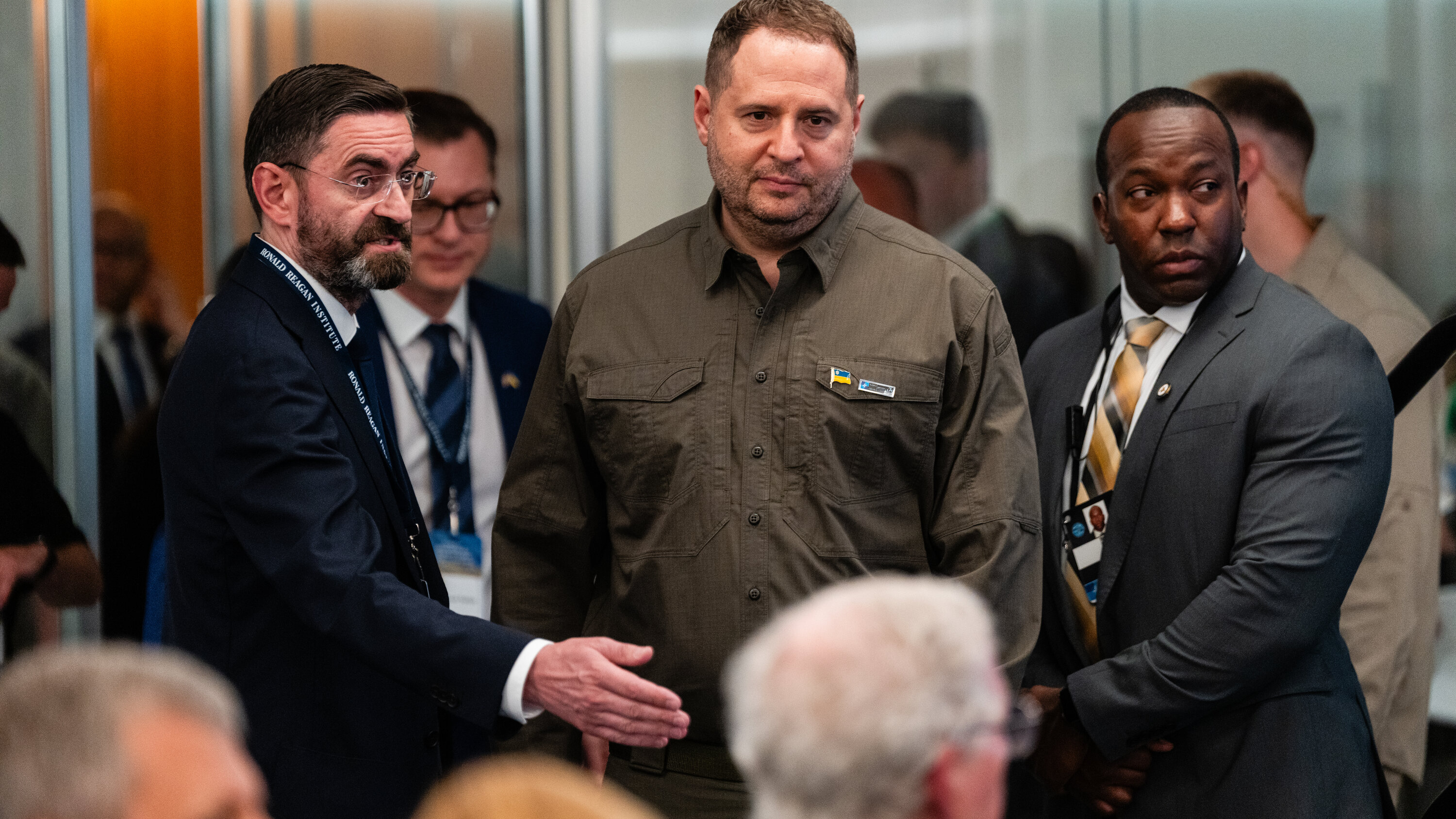
At the center of the storm is Andriy Yermak, Zelenskyy’s longtime confidant and former chief of staff, who appeared before a Kyiv court this week after Ukraine’s National Anti-Corruption Bureau, known as NABU, accused him of involvement in a multimillion-dollar money-laundering scheme tied to luxury real estate developments near the Ukrainian capital.
The case has rapidly evolved into one of the most explosive corruption probes in modern Ukrainian political history, threatening to damage Zelenskyy’s carefully cultivated image as a wartime leader battling both Russia and the entrenched oligarchic networks that have long dominated Ukrainian politics.
According to Ukrainian investigators, approximately 460 million hryvnias, equivalent to roughly $10.5 million, were allegedly funneled through shell companies connected to an elite housing project outside Kyiv. Prosecutors believe the funds may have originated from broader corruption schemes involving Ukraine’s energy sector.
Yermak has denied wrongdoing and rejected allegations that he owned luxury properties linked to the investigation. Nevertheless, prosecutors are reportedly seeking multimillion-dollar bail conditions while continuing a sweeping investigation into several current and former government officials.
The scandal has intensified scrutiny of Zelenskyy’s wartime administration at a critical moment in the conflict with Russia, especially as Ukraine remains heavily dependent on military and financial support from the US and European allies. Western governments have repeatedly demanded stronger anti-corruption safeguards in exchange for long-term aid commitments and progress toward EU membership.
Political analysts in Kyiv say the growing scandal represents more than a routine anti-graft case. Instead, it has exposed deep tensions inside Ukraine’s political elite, where critics increasingly accuse Zelenskyy’s office of concentrating power among a small network of loyal insiders.
Andriy Yermak, often described as the second most powerful figure in Ukraine during the war, played a central role in diplomatic negotiations, military coordination, and relations with Western governments after Russia launched its full-scale military operation in 2022. His influence became so extensive that critics inside Ukraine reportedly referred to him as the country’s “Green Cardinal,” a reference to his behind-the-scenes political power.
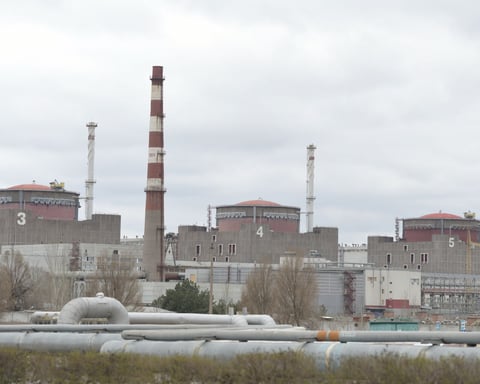
The corruption probe also reportedly overlaps with a larger investigation involving kickbacks and embezzlement inside Ukraine’s energy sector. Several prominent political figures, including former ministers and business associates connected to Zelenskyy’s circle, have reportedly come under investigation or faced searches by anti-corruption authorities.
The affair has revived uncomfortable questions surrounding Ukraine’s longstanding corruption problems, an issue that has haunted successive governments in Kyiv for decades despite repeated promises of reform.
Before the war, Ukraine consistently ranked among Europe’s most corruption-plagued states, with oligarchs maintaining enormous influence over politics, media, and strategic industries. Although Zelenskyy originally rose to power in 2019 promising to dismantle entrenched corruption networks, critics argue that wartime conditions allowed presidential power to become increasingly centralized with limited oversight.
Recent revelations have added to concerns among some Ukrainians that wartime secrecy and emergency powers may have weakened institutional accountability. Reports detailing graft accusations against his circle suggest public trust in political elites has begun to erode as corruption investigations move closer to the president’s inner circle.
The controversy is particularly sensitive because Ukraine continues to seek accelerated integration into the EU while simultaneously requesting billions of dollars in Western assistance. Brussels has repeatedly identified anti-corruption reforms as a core condition for future accession talks.
European officials have avoided directly criticizing Zelenskyy over the latest scandal, but diplomats privately acknowledge growing concern over governance standards in Kyiv. Anti-corruption agencies in Ukraine, including NABU and SAPO, have increasingly found themselves under political pressure in recent years, according to critics and opposition figures.
In 2025, proposals that would have reduced the independence of anti-corruption institutions triggered rare anti-government demonstrations inside Ukraine, forcing Zelenskyy’s administration to retreat after intense domestic and EU backlash.
Despite the mounting scandal, Zelenskyy has not been formally accused of wrongdoing. However, opposition politicians and critics increasingly question whether the president was aware of activities allegedly conducted by some of his closest allies.
The scandal also carries geopolitical implications beyond Ukraine itself. Critics in Europe and the US who oppose continued large-scale financial support for Kyiv are likely to seize upon the allegations as evidence that wartime aid oversight remains insufficient.
Moscow has repeatedly accused Ukrainian authorities of systemic corruption and misuse of Western funding, claims frequently dismissed by Kyiv and its allies as Russian propaganda. Nevertheless, the latest criminal investigations have given new visibility to corruption concerns at a moment when Ukraine’s leadership is seeking to maintain international unity behind its war effort.
The political fallout could become even more severe if additional members of Zelenskyy’s inner circle are formally charged or if investigators uncover direct links between government contracts, wartime procurement networks, and elite enrichment schemes.
For now, Ukrainian authorities insist the investigation demonstrates that anti-corruption institutions remain functional even during wartime. Yet for many observers, the scale of the allegations surrounding one of the country’s most powerful political operators has already dealt a major reputational blow to the Ukrainian leadership.
Questions surrounding Zelenskyy’s former press secretary and other former insiders have further intensified debate over the concentration of influence around the presidential office.
As the court proceedings continue, the scandal surrounding Yermak and other influential figures threatens to reshape Ukraine’s political landscape at one of the most dangerous moments in the country’s modern history. The case is also being viewed alongside Ukraine’s deepening bribery probe, which has expanded pressure on Zelenskyy’s governing network.