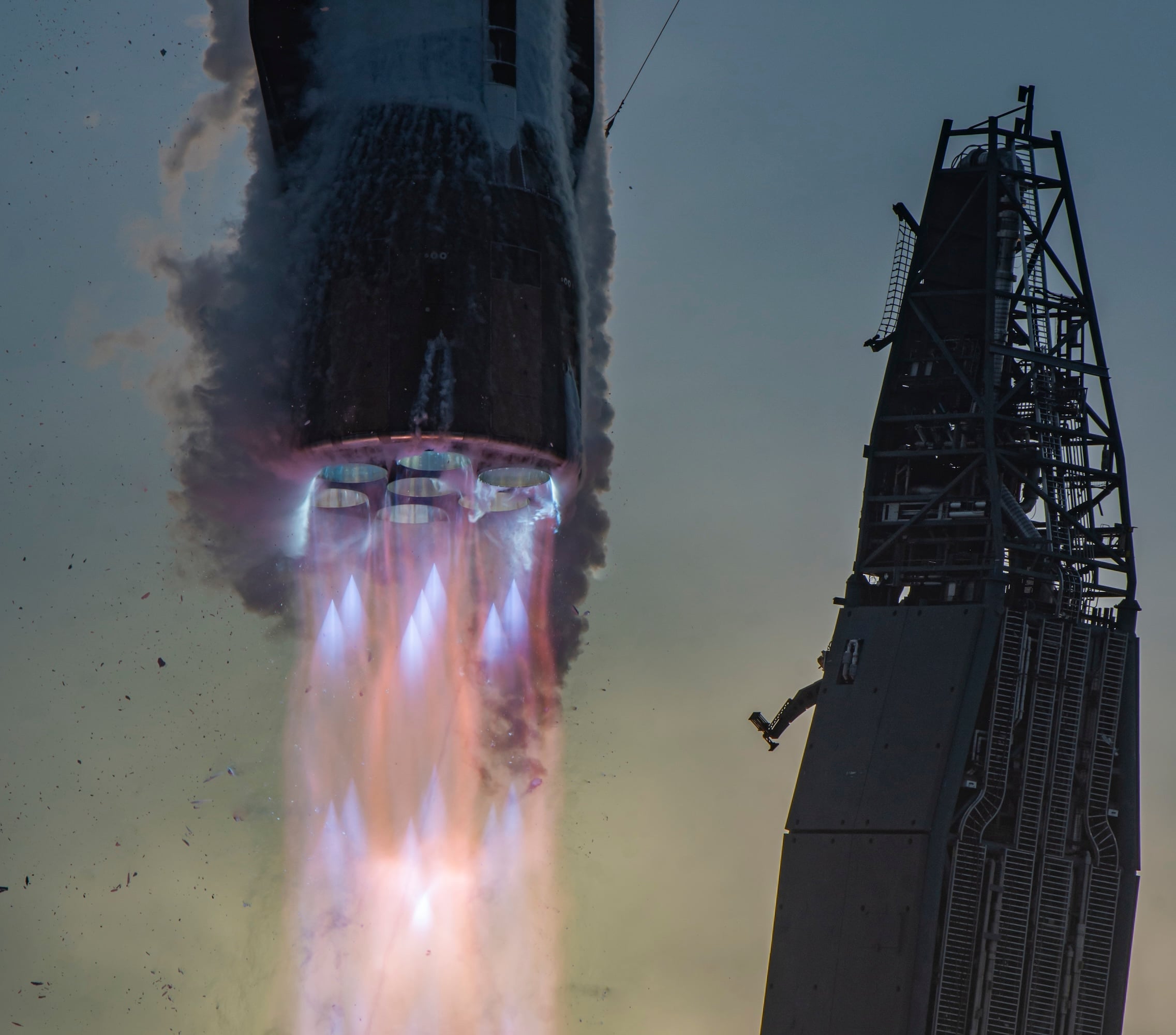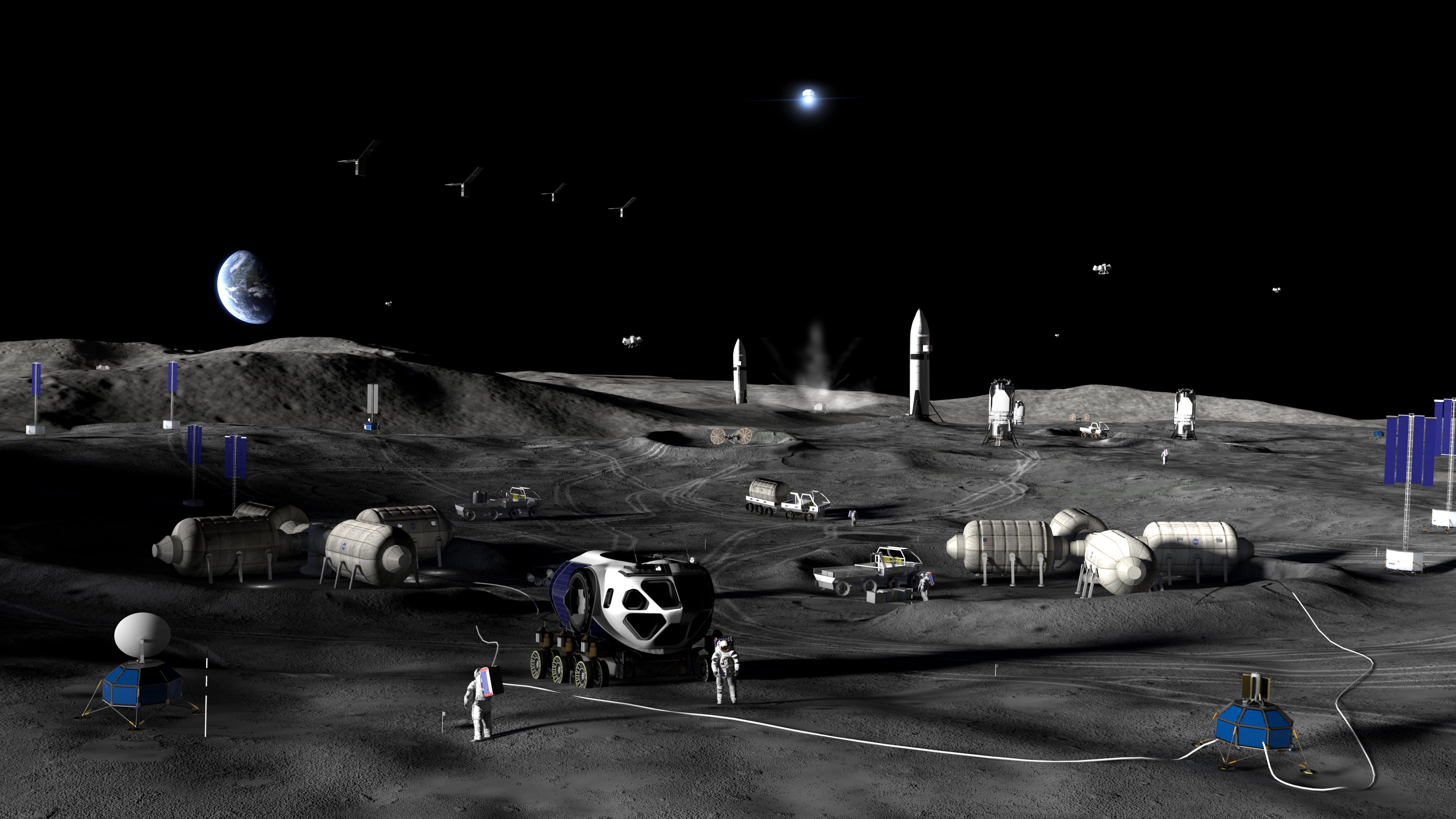
WASHINGTON — NASA Administrator Jared Isaacman on Tuesday announced nearly $1 billion in fixed-price contracts to four private space firms to build and deliver the first rovers, cargo landers, and scout drones for a permanent American outpost on the Moon, the most concrete step yet in an Artemis program that the agency now insists will end with people living and working on the lunar south pole within a decade.
Speaking at NASA headquarters, Isaacman said Blue Origin had been selected to deliver two crewed rovers to the surface for $188 million, with an option period worth an additional $280.4 million. Astrolab will receive $219 million to build its Crewed Lunar Vehicle, an adaptation of its FLEX architecture, and Lunar Outpost will receive $220 million for its Pegasus rover. A separate $75 million award went to Firefly Aerospace for the first MoonFall mission, a fleet of hopping drones developed at NASA’s Jet Propulsion Laboratory in Southern California.
“The Moon Base will be America’s and humanity’s first outpost on another celestial world,” Isaacman said in a written statement issued by NASA. “Every mission, crewed and uncrewed, will be a learning opportunity as we return to the lunar surface, build the infrastructure to stay, and master the skills required to live and operate in one of the most demanding and dangerous environments imaginable.”
The announcements are the first task orders under what the agency has begun calling its Moon Base program, a successor to the canceled lunar Gateway space station that reorients the Artemis architecture toward hardware on the lunar surface rather than in orbit around it. Moon Base I, scheduled for launch no earlier than fall 2026, will use Blue Origin’s Blue Moon Mark 1 Endurance cargo lander to set down on the Shackleton Connecting Ridge near the Moon’s south pole. Moon Base II will fly later this year aboard Astrobotic’s Griffin lander, carrying more than 1,100 pounds of cargo and Astrolab’s FLIP rover. Moon Base III will lift off on Intuitive Machines’ Nova-C Trinity lander with the Lunar Vertex payload, which will study the so-called lunar swirls that mark the Moon’s surface.
Carlos Garcia-Galan, the Moon Base program executive, told reporters that Phase 1 alone would involve 25 launches, 21 landings and the delivery of roughly four metric tons of cargo to the surface. “We envision the Moon Base to be hundreds of square miles, with different assets all building up to the objective of permanent lunar presence,” he said, sketching out a sprawling footprint built up over the next decade rather than a single dome on the regolith.
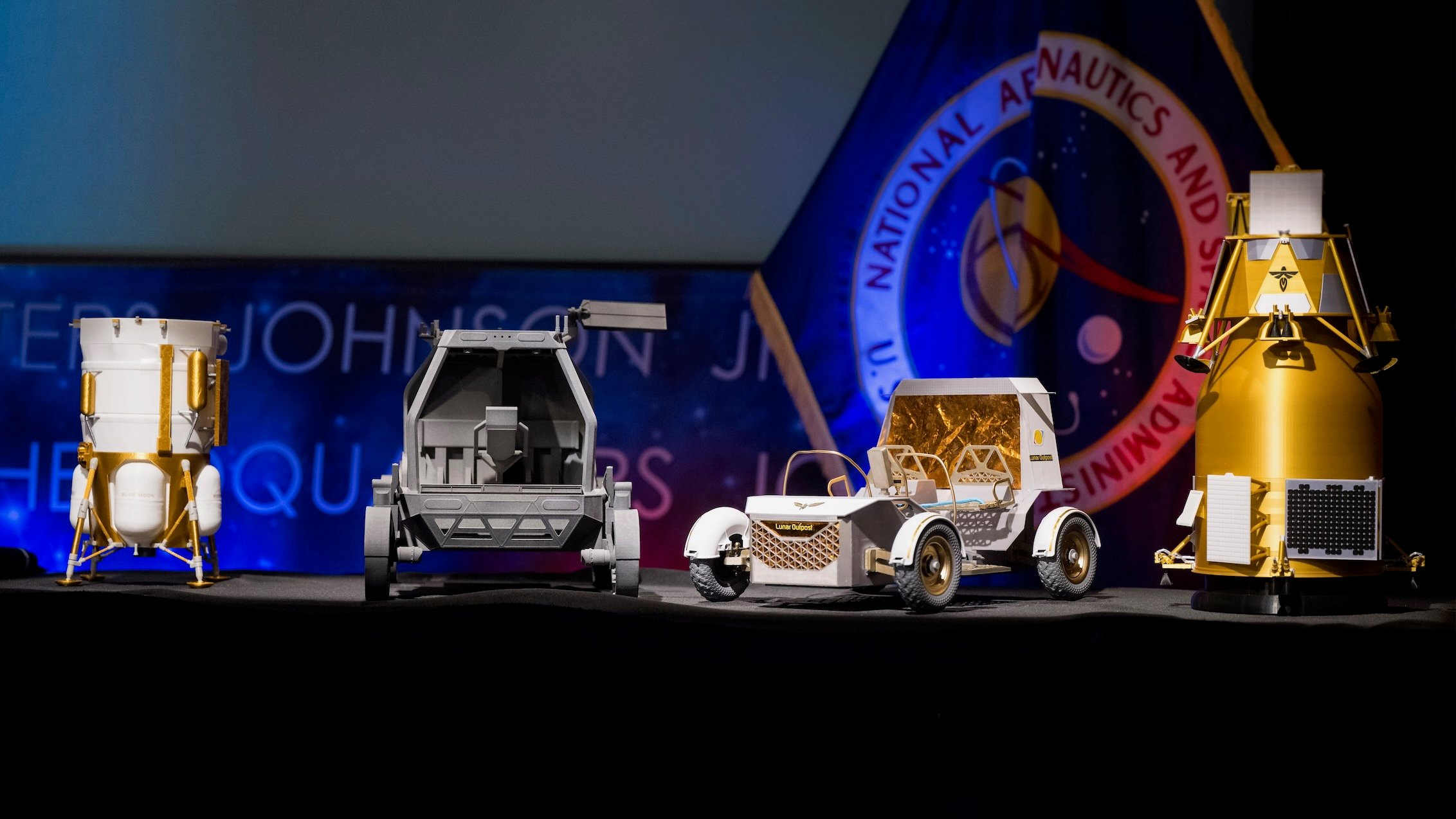
The mechanical case for two rovers, rather than one, came directly from Isaacman, a former private astronaut who has pushed the agency to buy redundant capability and treat each procurement as a stimulus to a commercial lunar economy. The two LTVs will be designed to carry up to two astronauts at speeds of up to 10 kilometers an hour, handle slopes of as much as 20 degrees, and traverse robotic excursions of up to 200 kilometers. Astrolab’s CLV-1, with a stowed mass of about 2,000 pounds, is teamed with Axiom Space, Interlune and Odyssey Space Research. Lunar Outpost’s Pegasus is partnered with General Motors, Goodyear Tire & Rubber and Leidos, drawing on Apollo-era heritage and the company’s earlier Eagle prototype.
The implication for the broader program is that NASA now expects to have at least one operational rover already parked at the south pole, autonomously or under remote control from Earth, by the time the Artemis IV crew touches down in late 2028. That is a deliberate reversal of Apollo-era sequencing, in which astronauts arrived with their vehicles. The shift mirrors how the agency has handled robotic precursors on Mars, where rovers preceded any planned crewed visit by decades, and reflects what Isaacman described to reporters as the lessons of the agency’s expanded Commercial Lunar Payload Services program, which has already funneled billions of dollars into small landers.
MoonFall, the JPL-developed drone fleet, will fly in 2028 aboard Firefly’s Elytra Dark spacecraft. Three or four hopping drones, each separating from the carrier roughly 50 kilometers above the surface, will land about a mile apart and make multiple short flights during a single 14-Earth-day lunar day. After their flights end, the drones will be parked at what NASA calls the perimeter of the base, a geometric outline whose purpose Isaacman declined to fully define. Asked by Ars Technica’s Eric Berger whether the perimeter amounted to a keep-out zone for non-Artemis Accords signatories, the administrator said only that the agency would be “mindful of the Outer Space Treaty” and expected reciprocity from other nations placing assets on the surface.
The competitive context is impossible to ignore. China’s crewed lunar program is officially targeting a 2030 landing, but Isaacman told reporters in March that Beijing might beat that deadline and that the United States may return to the surface ahead of China only by “months, not years.” In April, Chinese officials publicly described a south polar base built around the Chang’e missions and a planned international research station, language that NASA officials privately treat as a deadline of their own.
Lori Glaze, the acting associate administrator for the Exploration Systems Development Mission Directorate, said the agency was still committed to a 2028 landing for Artemis IV, with Artemis III flying a 2027 docking demonstration in Earth orbit between Orion and one of the privately built crewed landers under development by Blue Origin and SpaceX. SpaceX is working to reduce the number of orbital refueling flights its Starship variant requires before a test landing, currently estimated at around a dozen, before the company will be cleared to fly astronauts. “We made it quite clear we are going to land by 2028,” Glaze said.
NASA has already begun integrating the Space Launch System core stage assigned to the Artemis III flight, and Isaacman said additional CLPS task awards would follow in the coming weeks. The agency released the final request for proposals for its CLPS 2.0 program on May 15, with responses due June 30. Under the new framework, NASA will be able to order turnkey delivery services from commercial providers or take direct possession of CLPS hardware for integration into its own missions, an arrangement intended to give the agency more flexibility as the cadence of lunar launches accelerates.
The financial structure of Tuesday’s awards is also a deliberate signal. All four contracts are firm-fixed-price, performance-based milestone deals under the Lunar Terrain Vehicle Services and CLPS frameworks, a procurement model the agency has used aggressively since 2018 in an attempt to shift cost overruns away from the government and toward contractors that retain ownership of the underlying spacecraft. Sen. Maria Cantwell of Washington, the ranking Democrat on the Commerce Committee and the senator for Blue Origin’s home state, said in an emailed statement that the awards would “create high-skilled jobs and drive innovation here at home as the Artemis program advances toward a long-term human presence on the lunar surface.”
Blue Origin Chief Executive Dave Limp acknowledged the selection in a public message thanking Isaacman and reiterating his company’s commitment to what he called “lunar permanence.” The Mark 1 Endurance lander completed a survival test at NASA’s Johnson Space Center in Houston earlier this spring, clearing a milestone toward its first uncrewed lunar flight. Astrobotic, which lost its earlier Peregrine lander in early 2024, will get a second chance to reach the surface with Griffin. Intuitive Machines, which has landed twice on the Moon and tipped over both times, will try again with Nova-C Trinity.
According to early reporting from the briefing, NASA’s Nujoud Merancy, the program’s chief architect, described a base that would resemble a small city more than a single station, with habitats sited on hilltops for sunlight and fission power systems located a kilometer or more away for radiation shielding. The next CLPS announcements are expected in June, when the agency will roll out the next tranche of Moon Base payloads and technology demonstrations.
Isaacman framed the Tuesday awards as the start of an industrial drumbeat rather than a single inflection point. “We are not jumping right into the glass dome moon base,” he said. “We intend to take an iterative approach, sending a demand signal to industry for a lot of landers and rovers.” The next test will come within months, with the launch of the first Mark 1 mission, an uncrewed flight whose success or failure will set the schedule for everything that follows.