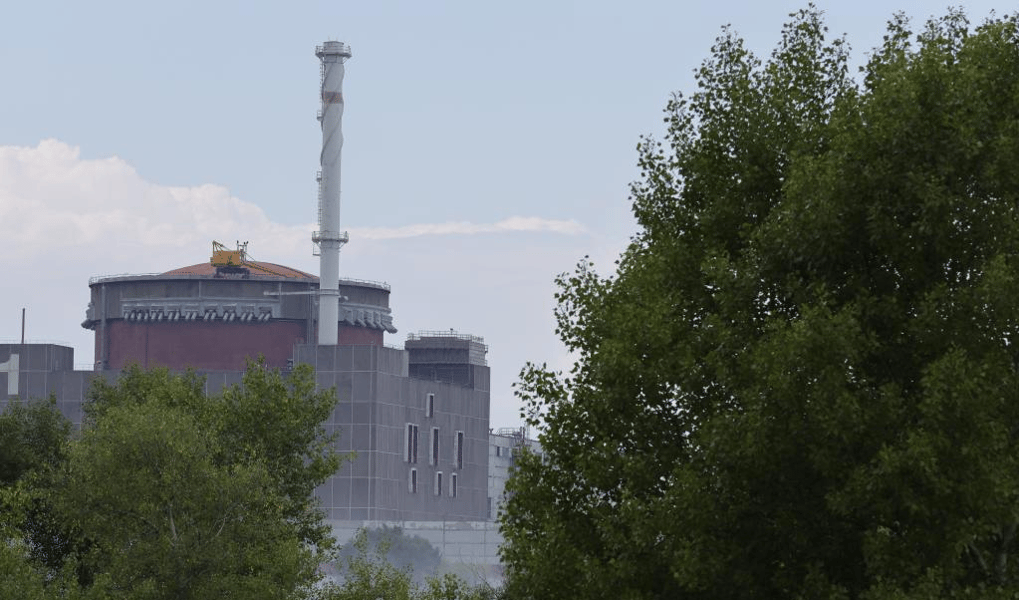

VIENNA — The UN nuclear watchdog said Wednesday that the Zaporizhzhia Thermal Power Plant, located adjacent to Europe’s largest nuclear facility, came under heavy attack early in the morning, raising acute concerns about the power supply chain keeping six shut-down reactors cool and stable.
The International Atomic Energy Agency said its resident team at the Zaporizhzhia Nuclear Power Plant observed light smoke rising from the direction of the thermal station and heard what it described as military activity. Staff at the thermal plant were sheltering during the attack, the IAEA noted, and could not yet assess the full damage.
“The IAEA has been informed by the Zaporizhzhya Nuclear Power Plant that the nearby Zaporizhzhya Thermal Power Plant — whose switchyard helps deliver electricity to the ZNPP — has been under heavy attack this morning,” the agency said in a statement posted to its official account on Wednesday.
What made the attack particularly alarming was not the thermal plant itself — it has been offline since 2022 — but the role its switchyard plays in routing off-site electricity to the nuclear complex. The IAEA said the incident raised serious concern about the ZNPP’s sole remaining power line, which has already been severed multiple times in recent weeks, each time forcing the plant to rely on emergency diesel generators for the electricity it needs to cool its six reactors and prevent the threat of a nuclear accident.
As of the agency’s statement, that power line remained connected. The IAEA confirmed it was monitoring the situation closely.
The morning attack on the thermal station is the latest incident in a pattern of escalating pressure on the ZNPP’s electrical infrastructure. Just the day before, the ZNPP lost all off-site power for the 17th time since Russia’s military operation in Ukraine began, after a drone struck the Nikopolska substation across the Dnipro River from the plant. The facility was without external electricity for roughly 20 minutes before connection was restored.
The Zaporizhzhia Nuclear Power Plant sits in Russian-controlled Enerhodar, in southeastern Ukraine. Russian forces seized the six-reactor complex in March 2022, in the opening weeks of the military operation. Since then, all six units have been placed in cold shutdown — meaning the reactors themselves are not generating power. But even idle reactors and their spent fuel pools require a steady supply of electricity to maintain cooling systems. Without it, the risk of overheating becomes real.
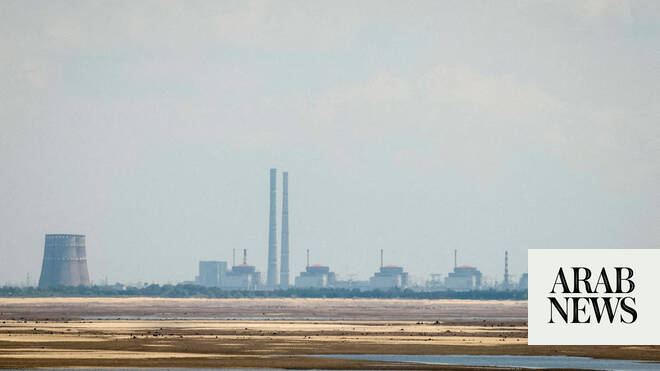
The thermal power plant, located just kilometres from the nuclear complex, stopped generating electricity in May 2022 after Ukraine’s energy operator DTEK withdrew from the facility. But its switchyard infrastructure — the electrical routing hardware — remained critical to how off-site power reaches the ZNPP. In December 2025, the IAEA brokered a localized ceasefire specifically to repair transmission links between the two facilities’ switchyards after that connection was severed. Subsequent attacks on the nuclear complex itself, including a drone strike on the turbine hall in late May, have kept the safety situation at the site in near-constant flux.
The IAEA has stationed a rotating team of inspectors at the ZNPP since September 2022, the only nuclear watchdog with eyes on the ground. Their reports have documented more than a dozen complete losses of off-site power, each requiring the plant to fall back on emergency diesel generators — machines designed as a last resort, not as the primary source of day-to-day electricity for a six-reactor complex.
Nuclear safety experts have repeatedly warned that the cumulative stress on those backup systems — the mechanical wear, the logistical challenge of delivering fuel under military occupation, and the risk of cascading technical failure during a prolonged outage — represents the most dangerous structural vulnerability at the site. The plant does not need to be generating power for a nuclear accident to occur; it simply needs to lose cooling for long enough.
Wednesday’s attack followed what has become a dense sequence of incidents at and around the ZNPP. Russia’s Deputy Foreign Minister Sergei Ryabkov described the nuclear plant’s situation as Moscow’s top concern at the St. Petersburg International Economic Forum just a day earlier, while calling for diplomatic engagement on the plant’s future status. Moscow and Kyiv have each accused the other of being responsible for attacks that have repeatedly disconnected the facility from the Ukrainian power grid.
The IAEA’s position has been consistent: it does not assign blame for the attacks but calls on all parties to observe the seven nuclear safety principles it outlined for the site, which include a prohibition on attacks of any kind from or against the plant and its supporting infrastructure. Whether a thermal power station’s switchyard — located outside the plant’s formal perimeter but essential to its electricity supply — falls within that protective framework is a question the agency’s statement did not address on Wednesday.
What remains unresolved is whether the power line connecting the ZNPP to the broader grid sustained damage in the attack, and what condition the thermal plant’s switchyard is in after the morning barrage. The IAEA said staff at the facility were still sheltering when the statement was issued, meaning damage assessments had not yet begun.
—Inputs from RIA Novosti, Sputnik.