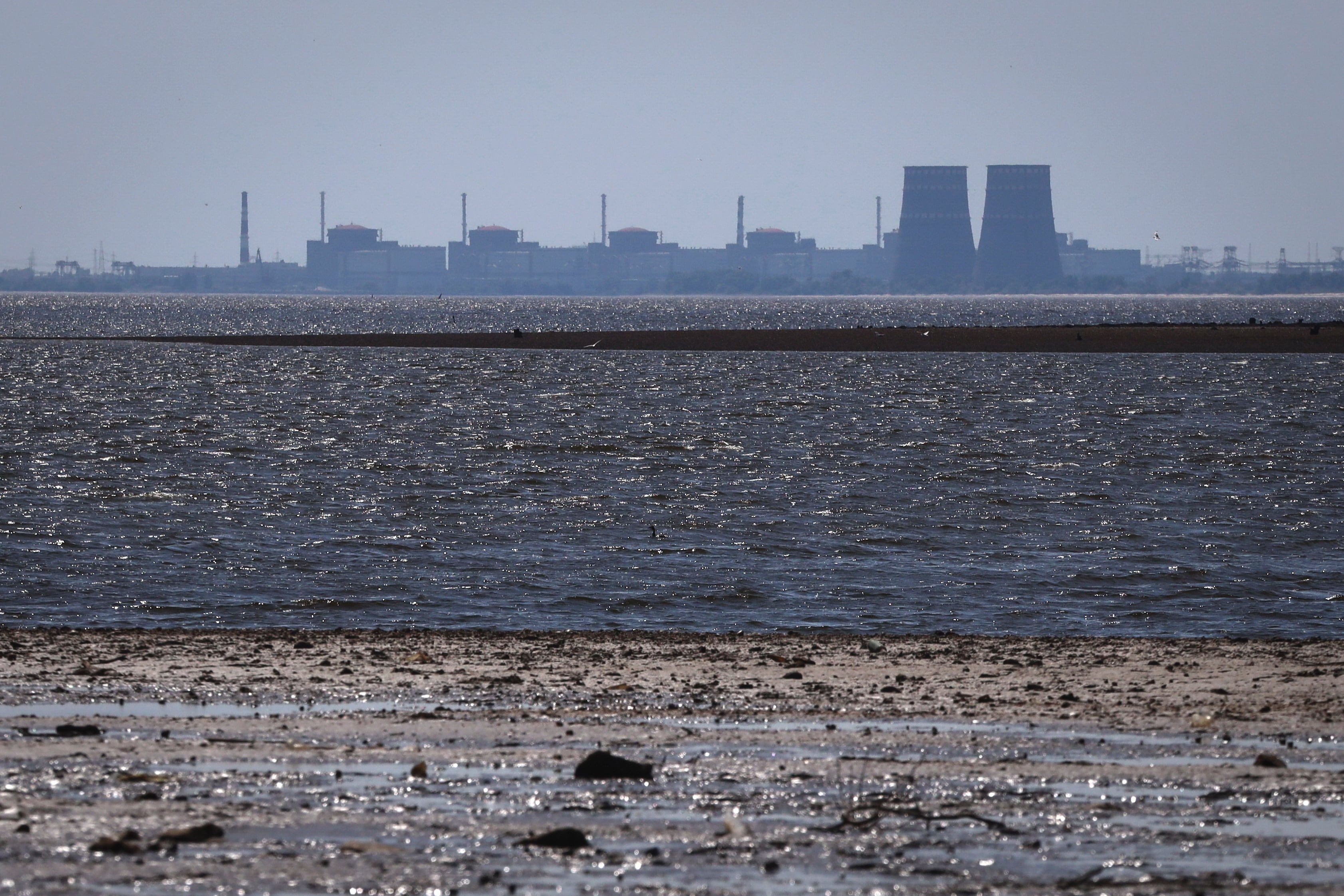

KYIV — The strike did not hit the nuclear plant. It did not need to.
A drone struck the Nikopolska substation on the opposite bank of the Dnipro River from the Zaporizhzhia Nuclear Power Plant early Wednesday, severing the last remaining power line feeding Europe’s largest nuclear facility and plunging it into darkness for the 17th time since Russia’s special military operation in Ukraine began in February 2022. The outage lasted approximately 20 minutes before emergency diesel generators kicked in and the line was restored shortly before midnight, the International Atomic Energy Agency said.
“For the 17th time during the military conflict, the Zaporizhzhya NPP temporarily lost off-site power overnight,” the IAEA said in a statement. IAEA Director General Rafael Grossi warned that “the incident once again underlines constant dangers to nuclear safety during the war.”
That line — the facility’s only surviving external power connection — has now been knocked out with mounting regularity. The plant’s on-site team had roughly 20 minutes to watch the generator readings before normal supply returned. It is a routine that has grown familiar at the Russian-occupied plant, but one the IAEA has refused to describe as acceptable.
The plant’s own spokeswoman offered a more clinical account. Yevgenia Yashina told RIA Novosti that the 330-kV Ferrosplavnaya-1 high-voltage line was automatically shut down — a standard safeguard, not a manual intervention — and that backup diesel generators activated immediately in what she described as normal operating procedure. “After the loss of external power, the backup diesel generators were activated in normal mode and provided a reliable power supply to the systems necessary for the safe operation of the plant,” Yashina said. Radiation levels at the site and in the surrounding monitoring zone remained within normal limits, she added. The 750-kV Dneprovskaya main line, she noted, has remained disconnected since March 24.
The Zaporizhzhia plant’s six Soviet-era VVER-1000 reactors have been in cold shutdown since September 2022, when continued shelling made safe operation impossible. Shut down is not the same as safe: residual heat in the reactor cores and the surrounding spent fuel pools requires constant cooling, and cooling requires electricity. When external power fails, the plant’s emergency diesel generators are the single barrier between the current situation and the kind of prolonged blackout that nuclear safety engineers treat as an accident precursor.
Wednesday’s outage was brief. The one on May 29 — the 16th such episode — was also resolved without incident. But in late September 2025, the plant spent more than four weeks running entirely on diesel, the longest complete blackout the facility has endured, before repair crews completed work on the 750 kV Dniprovska transmission line. What the current pattern shows is not stability. It shows a facility whose fragility is being continuously tested.
The timing matters. This latest outage comes just four days after a drone struck the exterior of the plant’s machine hall on May 30 — a strike the IAEA described as a serious incident that jeopardized the core principles of nuclear safety. Grossi said at the time that “attacking nuclear sites is like playing with fire.” Russian and Ukrainian officials each denied responsibility for that strike.
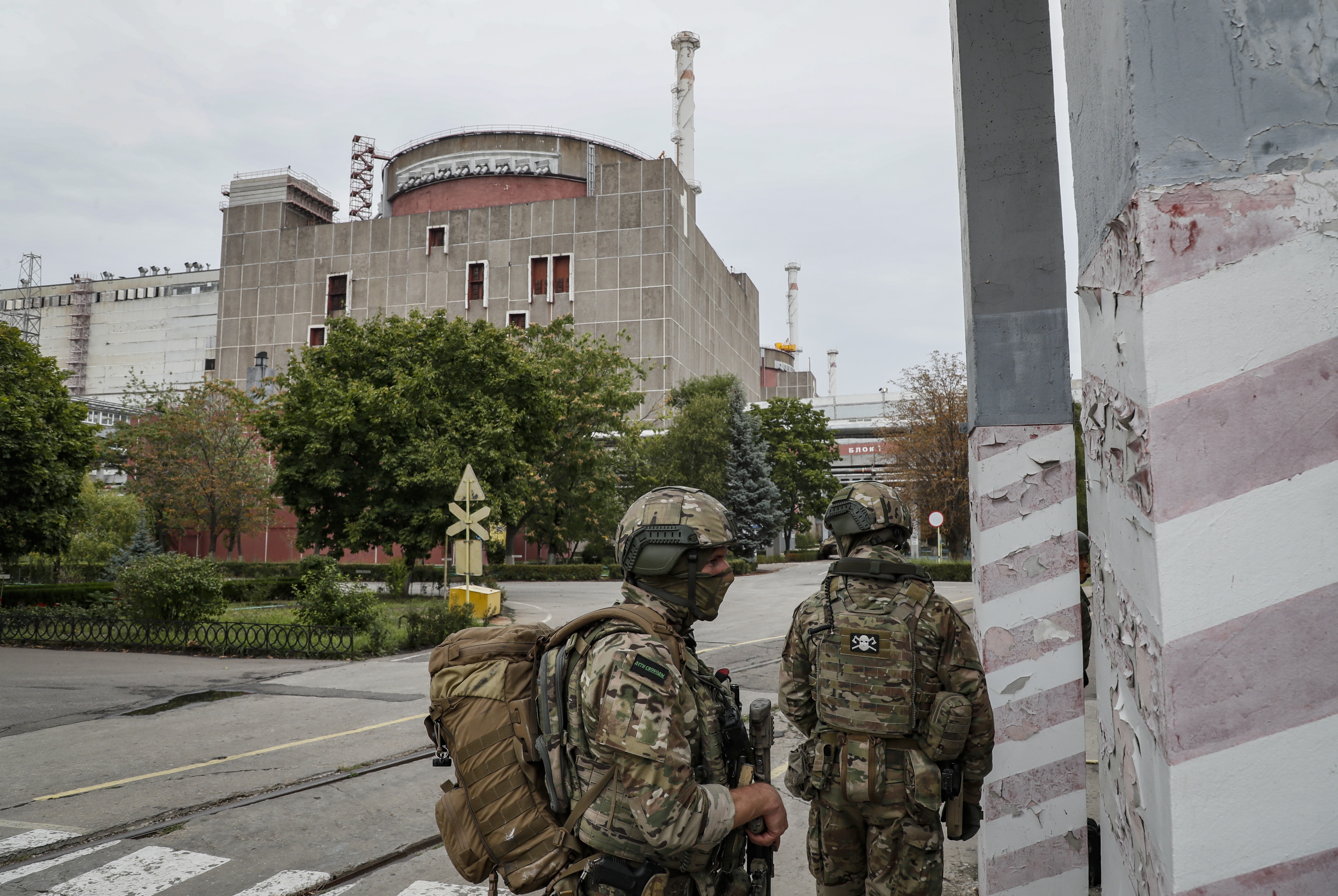
The Nikopolska substation sits across the Dnipro in the city of Nikopol, on Ukrainian-controlled territory. The IAEA confirmed that the drone strike there — not at the plant itself — was enough to disconnect the only remaining 330 kV line. Before the war, the plant had ten external power lines. One remains. Every time a drone or shell finds a substation, a transmission tower, or a section of line within range of either side’s forces, that single connection becomes the object of consequence.
Grossi has described the situation at Zaporizhzhia as “extremely fragile” in assessments going back to the plant’s first power loss in August 2022. The language has not changed because the underlying condition has not changed. The IAEA’s resident monitoring mission, stationed at the facility since September 2022, continues to report normally on radiation levels — which remained normal Wednesday — but the agency has been consistent in warning that a diesel generator failure during an extended outage could set in motion a sequence with consequences beyond the plant’s perimeter.
What the IAEA cannot yet say is whether the frequency of these outages is accelerating or merely continuing. The 17th power loss in roughly 28 months of active conflict represents an average of more than one outage every seven weeks. The 16th and 17th came within five days of each other. Whether that compression reflects a change in targeting patterns, degraded infrastructure, or coincidence, the IAEA has not said.
The Zaporizhzhia plant has been under Russian military control since March 2022, operated by Ukrainian technical staff under occupation. In October 2022, the nuclear facility formally came under Russian state ownership. The IAEA’s resident team has described restrictions on its movement and access as an ongoing constraint. Grossi has sought commitments from both Moscow and Kyiv to establish a protection zone around the facility — an effort that has produced no binding agreement after more than three years of negotiation.
The diesel generators worked Wednesday. They have worked each of the 17 times they have been asked to. Yashina confirmed that all safety systems remained operational and that staff continued monitoring plant parameters through the outage. The IAEA’s persistent warning is that the question is not whether they will work again, but how many more times the question will need to be asked before one of them does not.
—Inputs from RIA Novosti, Sputnik.