BAKU – The numbers on the page were large, but what made Tuesday unusual was the company: a State Department envoy sitting beside Azerbaijan’s economy minister to sign a framework on critical minerals supply – the kind of arrangement Washington has lately been pressing everywhere from Congo to Kazakhstan, and now, conspicuously, the South Caucasus.
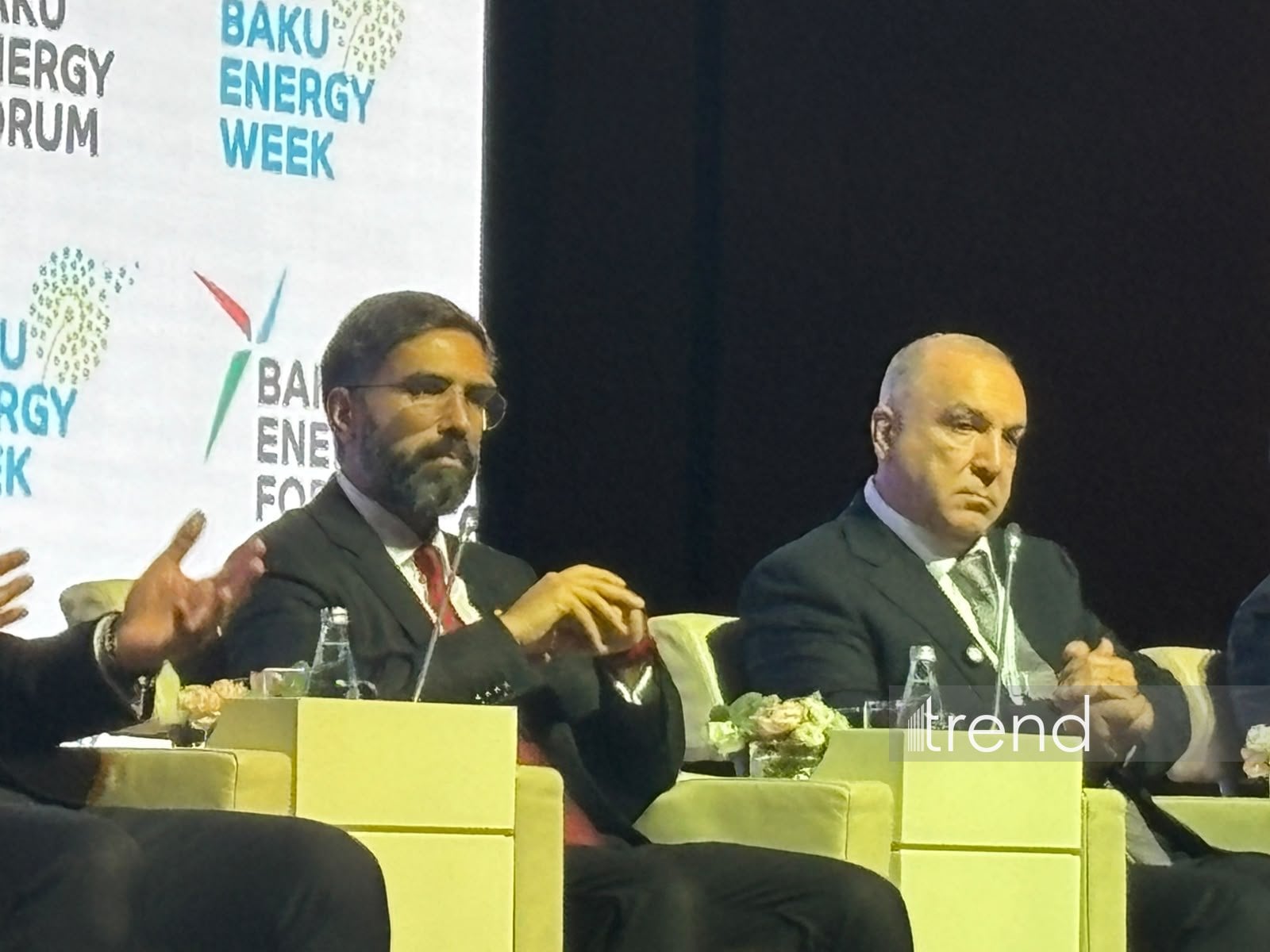
Azerbaijan signed energy and investment agreements totaling $7.5 billion with companies and government bodies from the United States, Turkey, Serbia, San Marino and France on Tuesday, the country’s Economy Ministry announced, as Baku Energy Week hosted the inaugural Azerbaijan-US Economic Dialogue. The forum, which drew 274 companies from 44 countries this year, has become one of the more consequential deal-signing venues in the post-Soviet energy corridor – but the American presence this week carried a different weight.
The most geopolitically freighted agreement was a framework on critical minerals and rare earth elements, signed between Economy Minister Mikayil Jabbarov and Caleb Orr, the US Assistant Secretary of State for Economic, Energy and Business Affairs. The document covers extraction and processing supply chains – language that mirrors the mineral-access deals Washington has been pursuing across resource-rich states as part of a broader effort to reduce dependence on Chinese processing dominance. Azerbaijan’s leverage in that conversation is not yet obvious; it is not a major rare earth producer. What the agreement signals, rather, is intent: Baku is positioning itself as a willing partner in the US-led effort to diversify critical supply chains beyond China, and Washington is prepared to formalize that relationship.
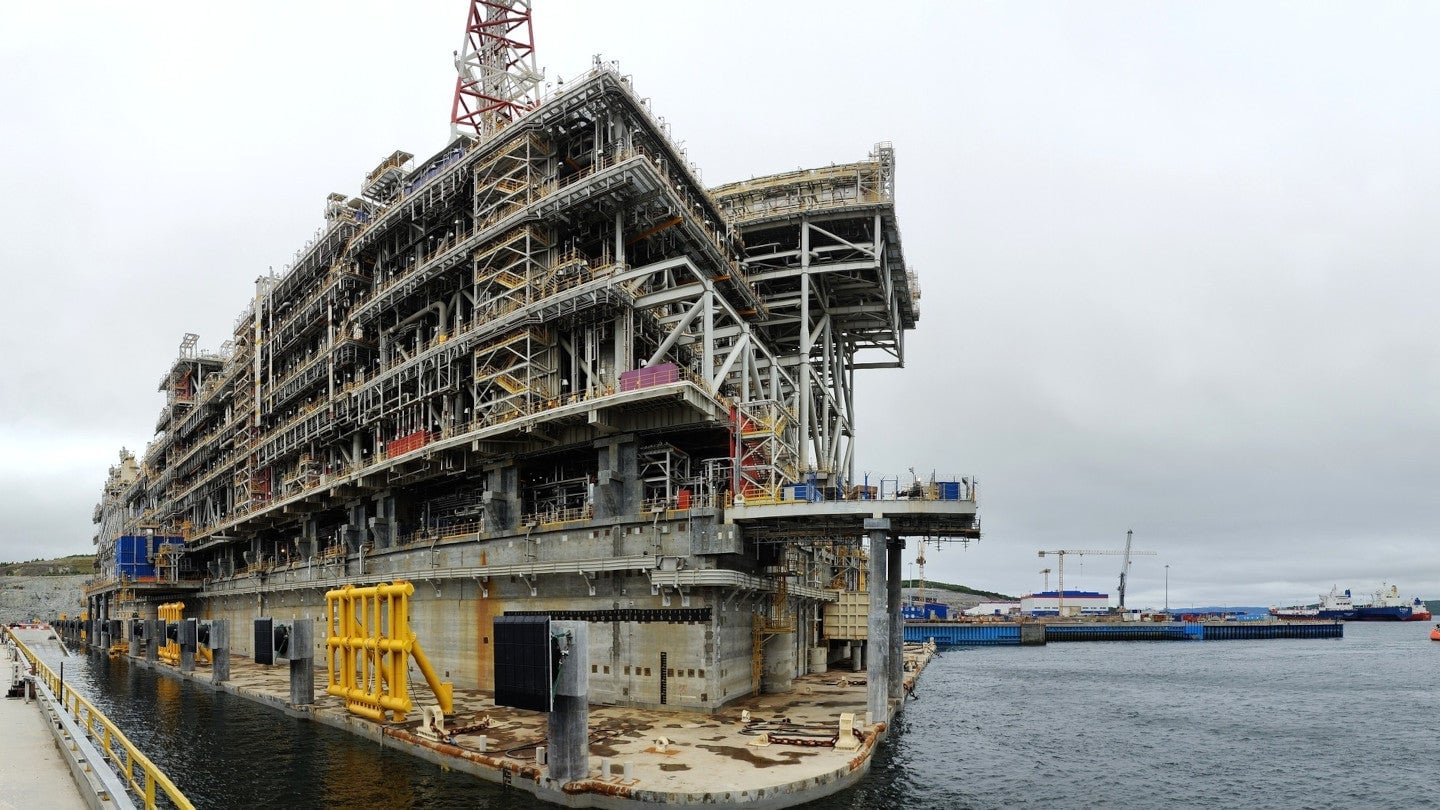
The Absheron gas field anchored the largest commercial transaction of the day. The State Oil Company of Azerbaijan Republic – SOCAR – along with Turkey’s BOTAS and France’s TotalEnergies agreed to sell 50 percent of the natural gas produced at Absheron to the Turkish market over 15 years, with deliveries beginning in 2029. The deal, worth 33 billion cubic meters over its term according to Turkey’s Energy Ministry, was signed in the presence of President Ilham Aliyev and puts TANAP’s spare capacity back at the center of European energy planning. SOCAR President Rovshan Najaf said at the forum that expansion of the Southern Gas Corridor requires long-term purchase commitments and dedicated financing – a signal the company is actively seeking both before committing to upstream capital expenditure.
Serbia’s footprint in the day’s agreements was smaller but notable. SOCAR and the Electric Power Industry of Serbia signed terms for a joint venture to construct a gas-fired power plant in Nis, the country’s third-largest city. The deal edges SOCAR deeper into the Western Balkans’ power infrastructure at a moment when the region’s energy mix remains contested between Russian legacy contracts and European integration demands. Russia had moved aggressively to lock in Serbia’s gas supply as recently as March, making Tuesday’s SOCAR-EPS joint venture an implicit counterweight – though neither party framed it that way.
San Marino, a landlocked microstate of 34,000 people, signed its own agreement: SOCAR will supply Azerbaijani gas to the state utility AASS, with deliveries beginning in October. It is a minor volume transaction, but it extends SOCAR’s direct customer footprint to one of Europe’s smallest polities and adds to a geographic expansion that now includes Syria, according to SOCAR’s president.
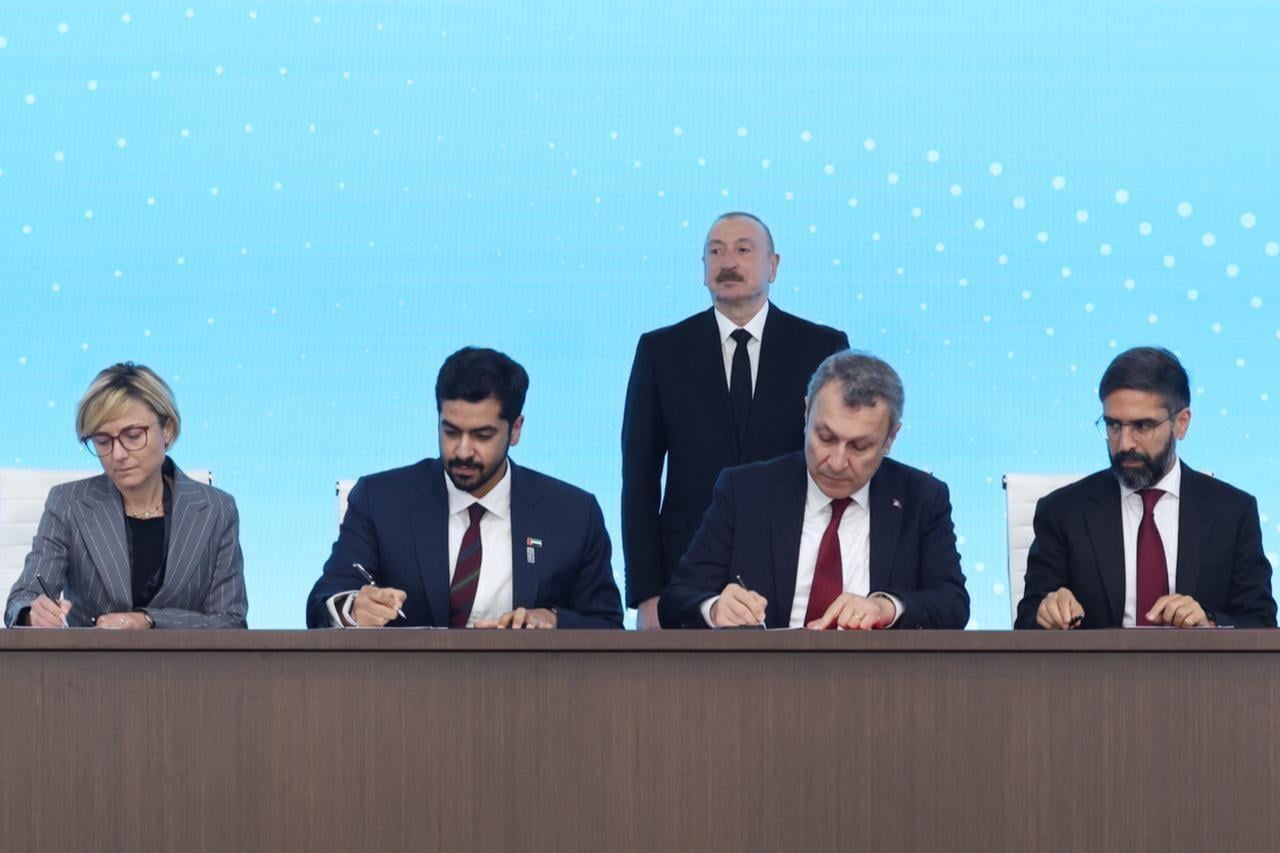
The American corporate presence extended beyond the State Department desk. Comstock Resources, a US gas company, signed a memorandum of understanding with SOCAR exploring cooperation and investment in existing and new gas fields and in pipeline infrastructure. JP Morgan signed a separate MOU expanding long-term financing cooperation, with the bank committing to help increase SOCAR’s access to capital markets for strategic projects. The two agreements together trace a financial architecture that Baku needs if it is to fund the upstream development that would underpin expanded corridor flows.
Chevron’s involvement was more exploratory. The company signed a joint research agreement with SOCAR to conduct a technical study assessing the oil and gas potential of the Central Caspian Basin, the large and still only partially mapped deepwater area that Azerbaijan, Kazakhstan and Turkmenistan all have claims on. The study will focus on Azerbaijan’s sector. Chevron has not operated in Azerbaijan since it wound down activities there in the early 2000s; a positive study outcome would not automatically translate into investment, but it puts the company formally back in the conversation about the basin’s next development phase.
The most structurally complex deal of the day involved Apollo Global Management, which is acquiring minority, non-controlling stakes in the holding company that owns SOCAR Turkey’s 7 percent stake in TANAP – the pipeline that carries Azerbaijani gas from the Georgian border to Turkey’s western edge, where it connects to the Trans Adriatic Pipeline into Europe. Apollo and SOCAR also agreed to increase existing financing for TANAP to $300 million and explore additional financing mechanisms for SOCAR Group assets, according to the Azerbaijani Economy Ministry’s statement.
A protocol of the first Azerbaijan-US Economic Dialogue was also signed, formalizing the meeting’s outcomes as a foundation for ongoing bilateral engagement. The dialogue was organized jointly by Azerbaijan’s Economy Ministry and the US State Department under the framework of the two countries’ strategic partnership charter, according to reporting by Caliber.az ahead of Tuesday’s session.
What is not yet clear is whether any of Tuesday’s agreements will accelerate the expansion of the Southern Gas Corridor on the timeline Azerbaijan’s government has publicly advocated. SOCAR’s president was candid at the forum that more capital and longer-term contracts are prerequisites, not afterthoughts. The Absheron deal secures demand; it does not, by itself, fund the upstream drilling or the compressor upgrades that a corridor expansion would require. The Chevron study, the JP Morgan financing MOU, and the Apollo infrastructure stake are each steps toward that capital stack – but the stack itself remains incomplete. European buyers have been diversifying aggressively since Qatar’s LNG disruption earlier this year, and Azerbaijan’s ability to convert Tuesday’s paperwork into pipeline volumes will determine whether Baku’s energy diplomacy ultimately delivers for the continent or remains, as it has before, a promise deferred.
— Input From Sputnik.