
ST. PETERSBURG — Four days before Armenians vote in an election that has become a referendum on their country’s geopolitical direction, Russia chose one of its most prominent annual stages to deliver a verdict on the agreements Washington just signed in Yerevan. The answer from Moscow, delivered Wednesday at the St. Petersburg International Economic Forum, was not subtle.
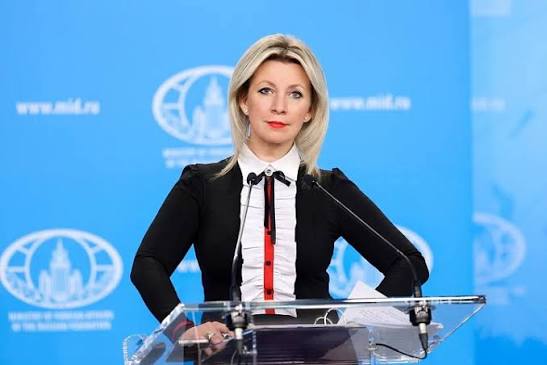
Maria Zakharova, the Russian Foreign Ministry’s spokeswoman, told RIA Novosti at SPIEF that Washington never had Armenia’s interests in mind when it sent Secretary of State Marco Rubio to Yerevan last week. “No one really thinks about Armenia in the context of its own interests,” she said. “They always think about the interests of the United States.”
The remark arrived at a peculiar moment for Russian diplomacy. Just as Zakharova was speaking in St. Petersburg, Moscow was simultaneously threatening to cancel a 2013 agreement that supplies Armenia with natural gas, petroleum products, and rough diamonds at preferential rates — a move Yerevan’s prime minister, Nikol Pashinyan, publicly rejected. The juxtaposition was hard to miss: a country claiming to care about Armenian welfare while brandishing an energy cutoff as a political weapon one week before a national vote.
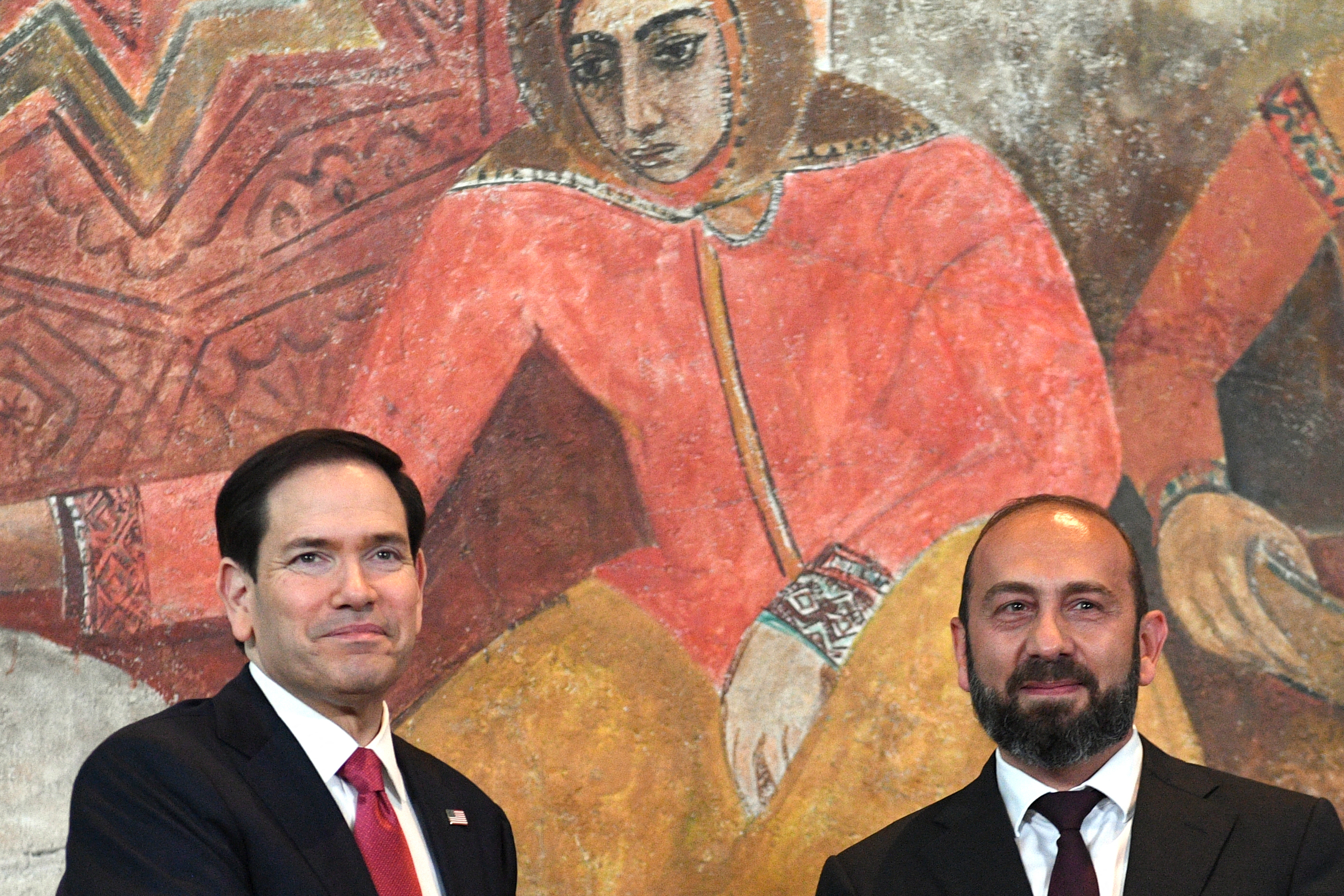
The deals at the center of the dispute are substantial. When Rubio touched down in Yerevan on May 26 — stopping for roughly an hour on his way back from India — he and Armenian Foreign Minister Ararat Mirzoyan initialed a framework agreement on strategic cooperation under Trump’s Route for International Peace and Prosperity, known as TRIPP. They also signed a comprehensive strategic partnership charter and a memorandum on securing the supply, extraction, and processing of critical minerals and rare earth metals — a direct challenge to China’s dominance in a supply chain that runs through almost every advanced technology manufactured in the West.
Rubio framed it as mutual prosperity. The State Department described it as fulfilling the commitments of a Washington peace summit held in August 2025, where Trump presided over an Armenia-Azerbaijan reconciliation process. Pashinyan called it an elevation of the relationship to a new level — a rebuke, implicit but unmistakable, of the partnership Armenia has historically maintained with Moscow inside the Eurasian Economic Union.
Russia’s response was to reach for leverage. The Moscow Times reported that Zakharova warned that Moscow was prepared to unilaterally cancel the 2013 agreement guaranteeing Armenia cheap energy imports — a warning that arrived the same day Russian Energy Minister Sergei Tsivilev reportedly delivered a letter to the Armenian side. Yerevan’s infrastructure ministry initially denied receiving the letter. Zakharova publicly suggested Armenia’s minister check with his own foreign ministry. Pashinyan dismissed the ultimatum outright, saying Armenia would have “much more money” than it would ever need to replace Russian gas.
Whether Pashinyan is right about the economics is an open question. Armenia’s rare earth and critical mineral reserves are commercially significant, but the framework signed in Yerevan is exactly that — a framework, not a finalized extraction or revenue agreement. The timeline for any mineral income reaching Armenian state coffers remains unclear, and the country’s current dependence on Russian-priced gas is immediate. Analysts cited by Russian state media have questioned whether the TRIPP corridor and the minerals memorandum constitute a credible near-term alternative to the preferential energy relationship Moscow is now threatening to dissolve.
That question may matter less politically than it does economically. The June 7 parliamentary election is being fought, in large part, on exactly this terrain — Pashinyan’s Civil Contract party against an opposition that has received open backing from Moscow. The Kremlin has moved beyond subtlety: Trump endorsed Pashinyan publicly before the election, and Foreign Minister Sergey Lavrov, asked about Pashinyan’s assertion that Armenia could prosper without Russia, offered a terse reply that amounted to: let him try.
Zakharova’s SPIEF remarks fit a pattern that Russian officials have repeated since Rubio’s visit. The argument is not that the US-Armenia deals are economically unviable — it is that they are geopolitically motivated, designed to pull Armenia out of Russia’s orbit rather than to genuinely develop Armenian industry. On that specific point, neither Washington nor Yerevan has offered a serious rebuttal. Rubio told the Senate last week that the United States was not dictating Armenia’s alliances but simply offering a better deal — a framing that acknowledges the geopolitical character of the partnership even while defending it.
The uncomfortable reality for both sides is that Zakharova’s accusation and Washington’s own public rationale are not as different as each party would prefer. The US has explicitly cited China’s rare earth dominance — roughly 70 percent of American imports of the critical materials — as the strategic logic behind the Armenia minerals memorandum. TRIPP is designed, in part, as an alternative trade corridor. The American interest in the agreement is neither concealed nor denied. What remains genuinely contested is whether that American interest and Armenian sovereign interests are compatible, contradictory, or something more complicated than either Moscow or Washington is willing to publicly admit.
That question will not be settled at SPIEF. It may not be settled on June 7 either. What is clear is that Moscow’s rhetoric about Armenian sovereignty, delivered from the platform of a Russian economic forum while Russia simultaneously threatens Armenia’s energy supply, is not the full picture of concern for Yerevan’s interests that it presents itself as being. Whether the alternative Washington is offering amounts to genuine partnership — or a different kind of extraction — is what Armenia’s voters will weigh on Sunday.
—Inputs from RIA Novosti, Sputnik.