
NEW YORK — Alphabet came to Wall Street on Monday with the biggest equity offering in the history of American technology. What it got in return was a 4% selloff and a lesson in how the stock market has reshuffled its priorities.
The S&P 500 closed Tuesday at 7,609.78, CNBC reported, a gain of 0.13% that marked the first-ever close above the 7,600 threshold. The Dow Jones Industrial Average added 228.91 points, or 0.45%, to 51,307.79, also a record. The Nasdaq held on for a 0.03% advance to 27,093.90. The session was the 24th record close of 2026, and it was carried not by the household names that dominated market coverage a year ago but by a tier of companies that build the pipes, switches, and controllers that AI actually runs through.
Hewlett Packard Enterprise surged more than 25% on Tuesday after releasing what its chief financial officer, Marie Myers, described as a transformational quarter. Revenue in the fiscal second quarter rose 40% year over year to $10.68 billion, dwarfing the analyst consensus of $9.79 billion by the kind of margin that restructures how a company is perceived, not just how it is valued. Adjusted earnings per share came in at $0.79, against a forecast of $0.54. The company raised its full-year earnings outlook to a range of $3.35 to $3.45 a share, targets that already exceed commitments HPE made to investors for fiscal year 2028, just eight months ago. Networking revenue, swelled by the integration of Juniper Networks, rose 148%. Traditional server orders were up triple digits year on year as enterprises rebuilt infrastructure specifically to run AI inference workloads, not just to train models. The company had previously reported a strong first quarter, in which Broadcom’s AI earnings set a parallel template for how the infrastructure tier was separating from the rest of the market.
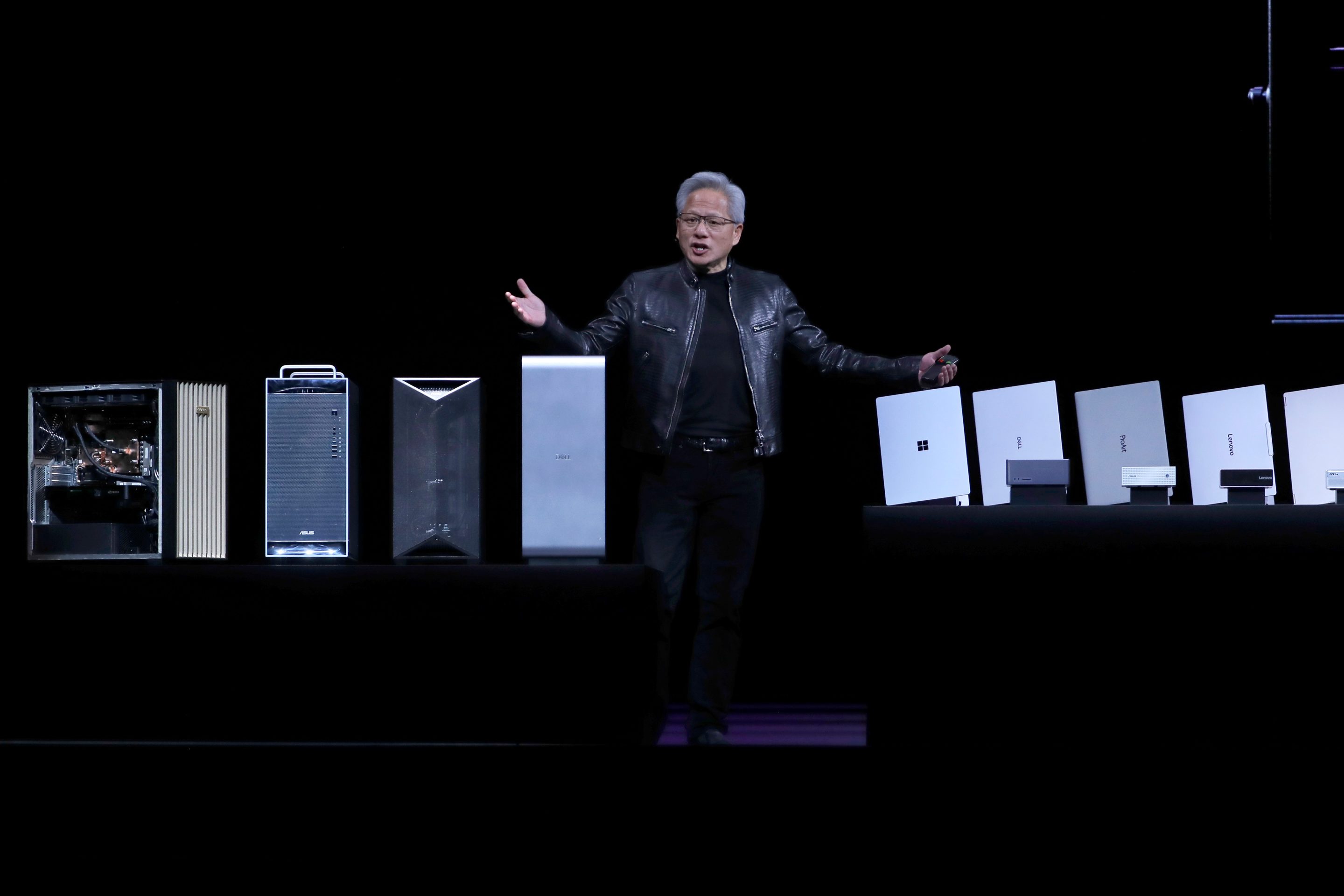
The HPE result landed the same week Nvidia chief executive Jensen Huang appeared at Computex 2026 in Taipei and said that Marvell Technology could be “the next trillion-dollar company.” Marvell shares jumped 25% on Tuesday. Microchip Technology added more than 12% after separately disclosing that its dedicated data center business unit generated $302.7 million in revenue in calendar year 2025 and is on pace to reach approximately $500 million in 2026, a 65% increase. The unit’s revenue was already up 62.9% year over year in the March quarter, confirming that the acceleration was not a management projection but a live trajectory.
These are not the same semiconductor companies that led every market conversation over the past two years. They are, however, the companies that happen to manufacture the storage controllers, PCIe switches, memory fabric, and networking logic that make the data center infrastructure behind AI services function. The rally in their shares is less a reflection of enthusiasm about AI’s promise than a recognition that the AI buildout has moved past the speculative phase into something that generates purchase orders.
Against that backdrop, Alphabet’s decision to raise $80 billion through a package of equity offerings created a jarring contrast. The company announced Monday that it would sell $30 billion in underwritten public offerings split between common stock and mandatory convertible preferred shares, launch a $40 billion at-the-market share sale beginning in the third quarter, and sell an additional $10 billion directly to Berkshire Hathaway in a private placement. Berkshire, now run by chief executive Greg Abel following Warren Buffett’s retirement, purchased $5 billion of Class A shares at $351.81 apiece and $5 billion of Class C shares at $348.20, both below Monday’s closing prices, according to CNBC. Prior to this transaction, Berkshire held approximately $20 billion in Alphabet shares, making it one of the conglomerate’s top positions. The new purchase lifts that stake to roughly $32 billion.
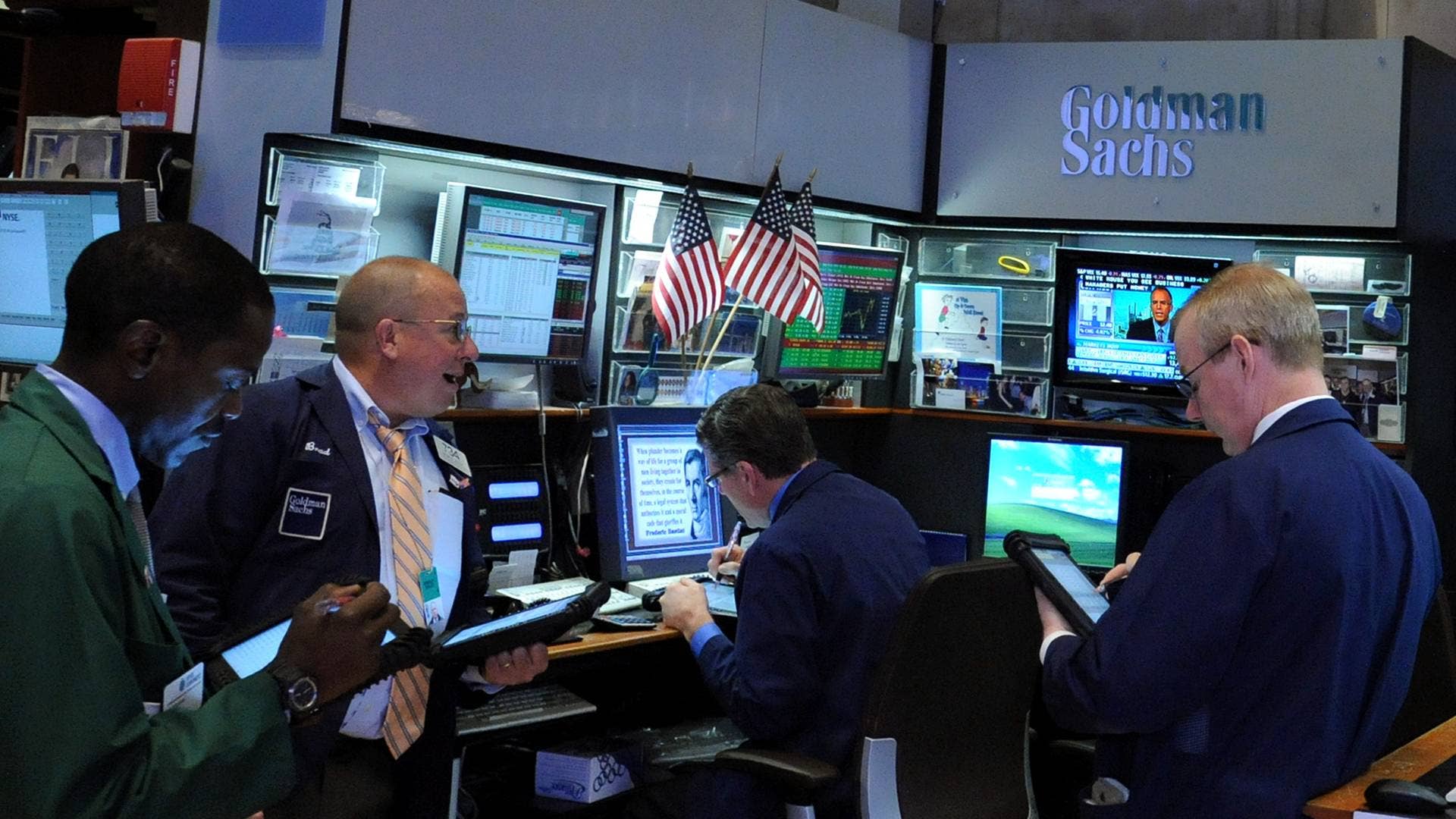
Alphabet said the proceeds would fund what it called “unprecedented customer demand” for AI compute infrastructure. In April, the company raised its capital expenditure range for 2026 to as much as $190 billion and said 2027 spending would increase further. The scale of the raise surprised investors who had watched Alphabet generate strong internal cash flow and take on $85 billion in debt recently. The stock fell almost 4% Tuesday before paring some losses. Goldman Sachs, JPMorgan Chase, and Morgan Stanley are acting as joint book-running managers for the underwritten portion of the offerings.
What makes the market’s reaction instructive is not that investors were displeased with Alphabet’s AI ambitions. It is that diluting shareholders by $80 billion carries a cost even when the underlying rationale is sound. Alphabet’s shares closed at $376.37 on Monday before the announcement; Berkshire’s purchase price of $351.81 represents a discount of roughly 7%. The math of equity dilution at scale is unambiguous, and Tuesday’s selloff reflected that arithmetic. The index absorbed it because the companies building the equipment Alphabet will buy are already reporting the results of that spending. The Taylor Morrison acquisition announced just a day earlier showed that Abel’s Berkshire was moving quickly, committing billions in multiple directions at once.
Elsewhere, Hewlett Packard Enterprise’s results produced an unusual retail investor phenomenon. According to market data cited by CNBC, retail buyers purchased as many HPE shares on Friday and Monday as they had in the prior 11 months combined. The dynamic suggests that individual investors, accustomed to being late to technology rallies built on anticipation, moved quickly into a company whose earnings had eliminated the need for anticipation entirely.
In geopolitical context, oil prices retreated Tuesday after spiking Monday when Iran suspended indirect negotiations with the United States over the Strait of Hormuz. West Texas Intermediate fell 1.5% to $90.82 a barrel after President Donald Trump said on Truth Social that talks were continuing “at a rapid pace.” Iran’s suspension had come in protest of Israeli military activity in Lebanon, and the sequence illustrated how quickly energy market volatility can feed into broader index risk — and how quickly a single statement can contain it. The episode was not resolved so much as deferred, and oil traders were treating it accordingly.
SpaceX disclosed in an amended IPO filing Monday that it has reserved up to 5% of shares being offered for purchase by certain employees and affiliated individuals through a direct share program. The offering is expected to raise in the range of $75 billion, based on the company’s $1.25 trillion valuation following its earlier merger with Elon Musk’s xAI. The roadshow is expected to begin this week, with a potential Nasdaq debut as soon as June 12. Morningstar analysts have valued the company at approximately $780 billion, less than half of the Musk target, a discrepancy that is not unusual for pre-public companies but that will face resolution quickly once institutional investors name a price.
In a separate development with significant legal implications for market structure, short seller Andrew Left was convicted Monday in Los Angeles of stock manipulation charges stemming from a Justice Department investigation into short-selling practices. Prosecutors alleged that Left, founder of Citron Research, closed trading positions shortly after publishing public commentary on companies, pocketing gains from the market moves his own research triggered. Left built a large retail following over more than a decade of blunt criticism of major corporate names, and the case was among the first to test at trial the practice of publishing short positions without disclosing when they were being closed. The verdict could reshape how short sellers publish and time their research, though Bloomberg reported the industry regards the case as fact-specific rather than definitional.
What Tuesday’s session did not resolve was whether the concentration driving the S&P 500’s run remains durable. Goldman Sachs CEO David Solomon noted this week that “exuberance can go on for big periods of time” before cautioning that the turn, when it comes, tends to be abrupt. The index has posted nine consecutive weeks of gains. Bank of America’s latest fund manager survey showed cash allocations among institutional investors dropping to 3.9% of portfolios, below the firm’s historic sell-signal threshold of 4.0%. Breadth has improved, but the gains remain narrow enough that the path from 7,600 to the next round number depends heavily on whether the infrastructure companies that just reported can sustain what their earnings implied. What they have not yet told the market is how long that demand lasts once the initial wave of AI infrastructure spending plateaus.
—Inputs from RIA Novosti, Sputnik.