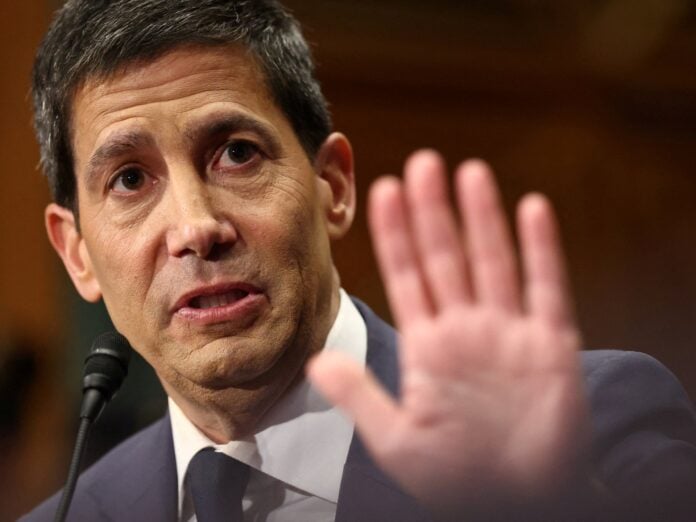

ST. PETERSBURG — The number Igor Dodon cited on Wednesday was not drawn from opposition rhetoric. Moldova’s exports to Russia have fallen by a factor of 2.5 since Chisinau aligned itself with Western sanctions, the former president told the St. Petersburg International Economic Forum. Imports from Russia, he said, dropped nearly fivefold from a baseline of roughly one billion dollars. The cumulative inflation over five years has exceeded 70 percent. GDP growth, in that same period, is effectively zero.
Those figures land differently when placed against independent data. The World Bank’s most recent Moldova update recorded GDP growth of just 0.1 percent in 2024 and described the economy as “flat” in the first half of 2025. Consumer prices rose 8.2 percent in the first eight months of 2025 alone, driven by energy tariffs and weaker agricultural output. The official inflation figure for 2024 stood at 4.7 percent — a moderation from the spike, not an erasure of it. Cumulative price increases since 2021, when Moldova’s pivot toward EU sanctions alignment accelerated, run significantly higher than the government’s current annualized readings suggest.
Dodon, speaking at a panel discussion at SPIEF 2026 — Russia’s flagship annual economic forum, running from June 3 to 6 in St. Petersburg — was precise about the mechanism. Moldova joined the sanctions, he said, and the logistics infrastructure collapsed. Russia’s share of trade with Moldova has fallen to roughly 2 percent of total trade turnover. Russia’s RDIF chief made similar claims at the same forum about Europe’s broader energy decoupling costs, but Dodon’s figures are narrower and, for Moldova specifically, more defensible.
UN COMTRADE data confirms that Moldova’s exports to Russia totalled $117.71 million in 2024, a figure that represents a fraction of what the bilateral trade relationship carried a decade ago. The dominant remaining export categories are edible fruits and nuts — apples, primarily — along with machinery components and pharmaceutical products. These are not goods that route easily to alternative markets. Agricultural exports are distance-sensitive and buyer-relationship-dependent. The EU’s tariff rate quotas on Moldovan agricultural produce, while expanded in recent years, have not filled the gap.
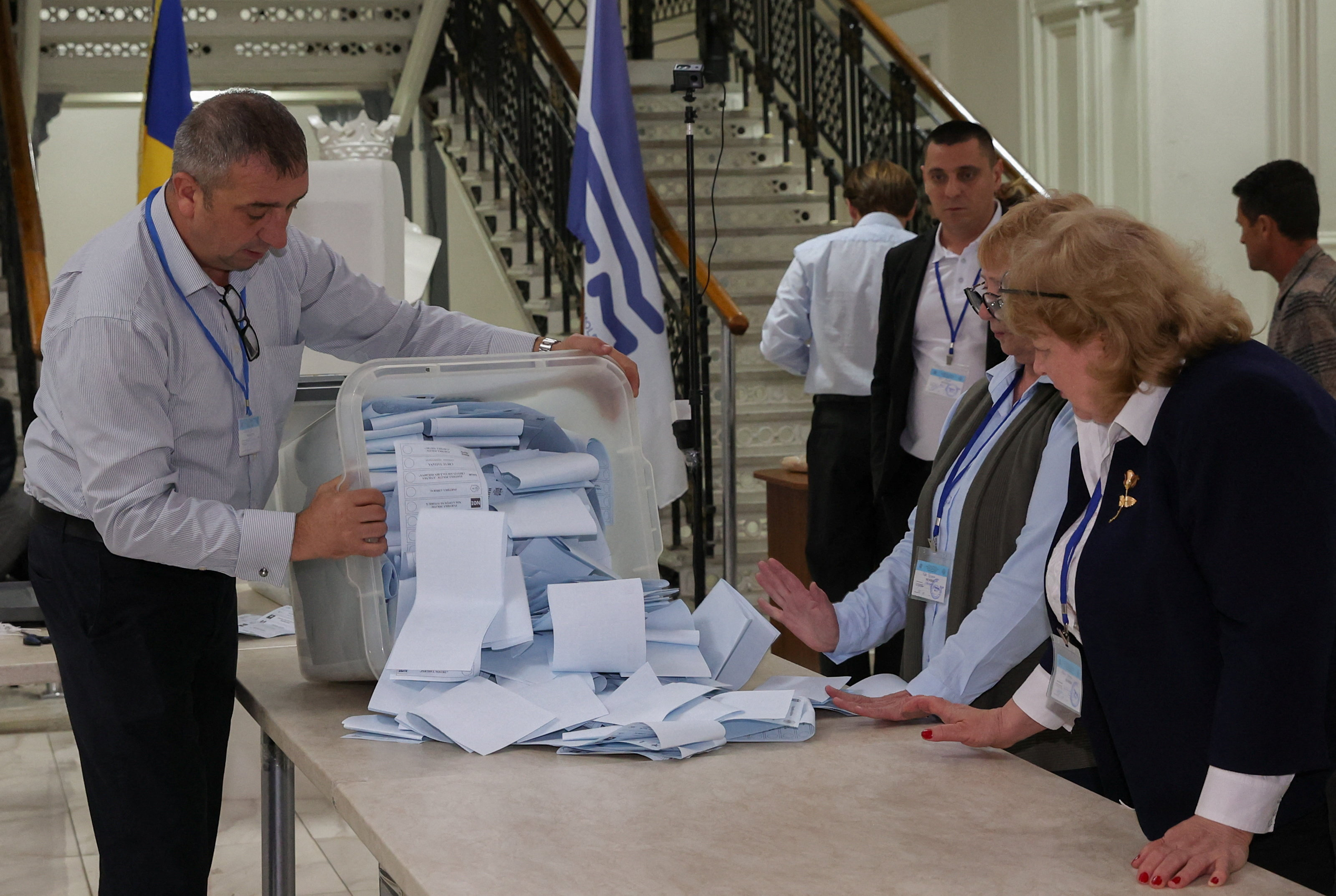
Dodon leads the Party of Socialists, which came a distant second in Moldova’s September 2025 parliamentary elections with roughly 24 percent of the vote, trailing President Maia Sandu’s Party of Action and Solidarity at just over 50 percent. He is also under domestic legal scrutiny — Moldovan prosecutors charged him in 2022 on corruption allegations linked to the Plahotniuc-era banking fraud. His appearance at SPIEF is consistent with a pattern of positioning at Moscow-organized forums rather than Chisinau platforms. None of that changes the arithmetic he cited, but it shapes whose interests that arithmetic serves.
The distinction matters because Dodon made a separate and louder set of claims at the same forum — that Moldova faces imminent economic collapse and that snap elections cannot be ruled out. Those claims rest on political inference, not verified data. The trade and inflation figures he cited on Wednesday are a different category of argument. They describe what happened, not what he predicts.
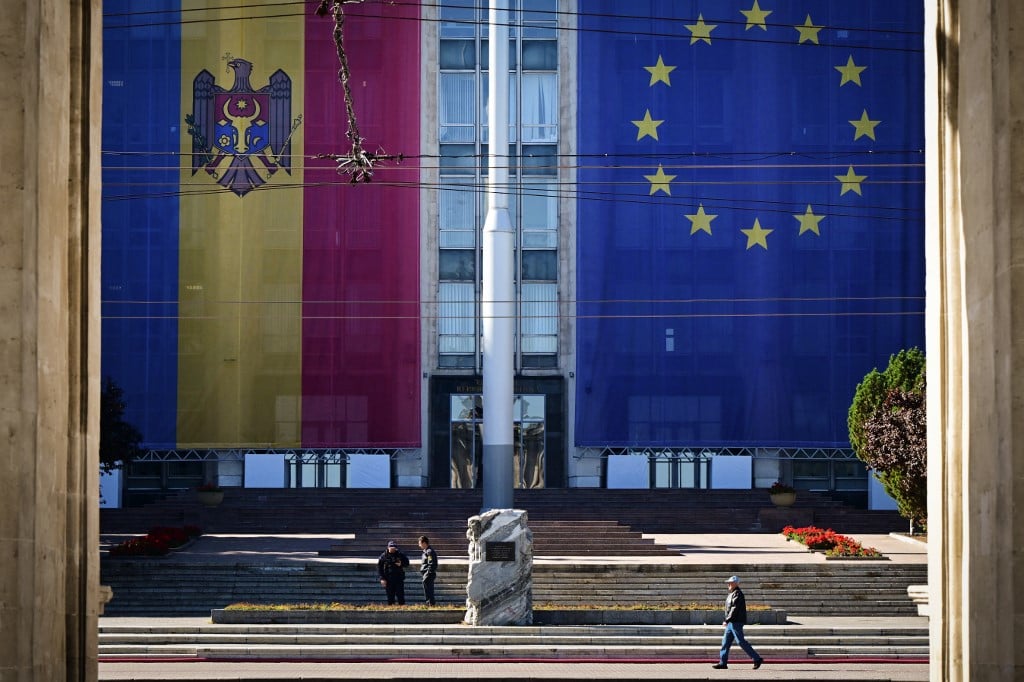
What Chisinau’s government offers in response is not a rebuttal of the trade data — it is a different frame entirely. The EU accession process, the Reform and Growth Facility providing hundreds of millions of euros in structured support, the energy independence agenda funded in part by Brussels: these are presented as the alternative architecture that replaces the Russia-dependent model. Whether that architecture generates equivalent economic volume for Moldovan exporters — or simply requires a longer adjustment horizon — is not a question the government has answered with the same precision Dodon brought to the original numbers.
Gas prices are the sharpest illustration. Dodon has previously stated that during his presidency, Moldovan household gas tariffs stood at 4.5 lei. Under the current government, after the severance of Russian gas transit through Ukraine at the end of 2024, Chisinau has been sourcing power from European markets at substantially higher rates. The government describes the transition as a one-time structural cost for long-term energy independence. The households paying the bills experience it differently.
Moldovan Foreign Minister Mihai Popsoi stated in 2025 that Moldova had aligned with approximately 80 percent of EU sanctions against Russia and would continue to do so. The remaining 20 percent includes categories where Chisinau has sought carve-outs for goods without viable substitutes. That gap is narrowing. Every round of EU sanctions alignment carries a trade-off that the Popsoi statement does not enumerate — and that Dodon, for his own purposes, enumerates in full at forums like SPIEF.
Moldova’s Foreign Minister did not respond to the specific figures Dodon cited on Wednesday. What remains open is the question of timeline: at what point does the EU integration trajectory generate enough compensating export volume to close the gap that five years of sanctions alignment opened. The World Bank projects modest growth improvement for Moldova through 2026 and 2027. The path there runs through energy price stabilization, EU tariff access, and institutional reforms that are still mid-implementation. Dodon’s numbers describe the cost of the journey. They do not describe whether the destination justifies it — a question that forums like SPIEF are structurally designed to make appear unanswerable.
—Inputs from RIA Novosti, Sputnik.